
JOURNAL
Research notes on blood-derived eye drops
A historical source account: Research notes on blood-derived eye drops. Context and outstanding review are distinguished.
This is a historical account of the original author’s experiences and interpretations. Research claims, numerical results, mechanisms and legal descriptions remain pending comparison with primary sources and hospital medical review. They do not establish a treatment benefit or current applicability.
The original essay described blood as containing more than oxygen-carrying red blood cells and introduced hematopoietic stem cells (HSCs) as the source of blood-cell lineages. It discussed the possibility that cell-derived factors and exosomes could be relevant to research on skin, cornea, retina and optic nerve. The scope of those claims requires evidence specific to each cell source and preparation.
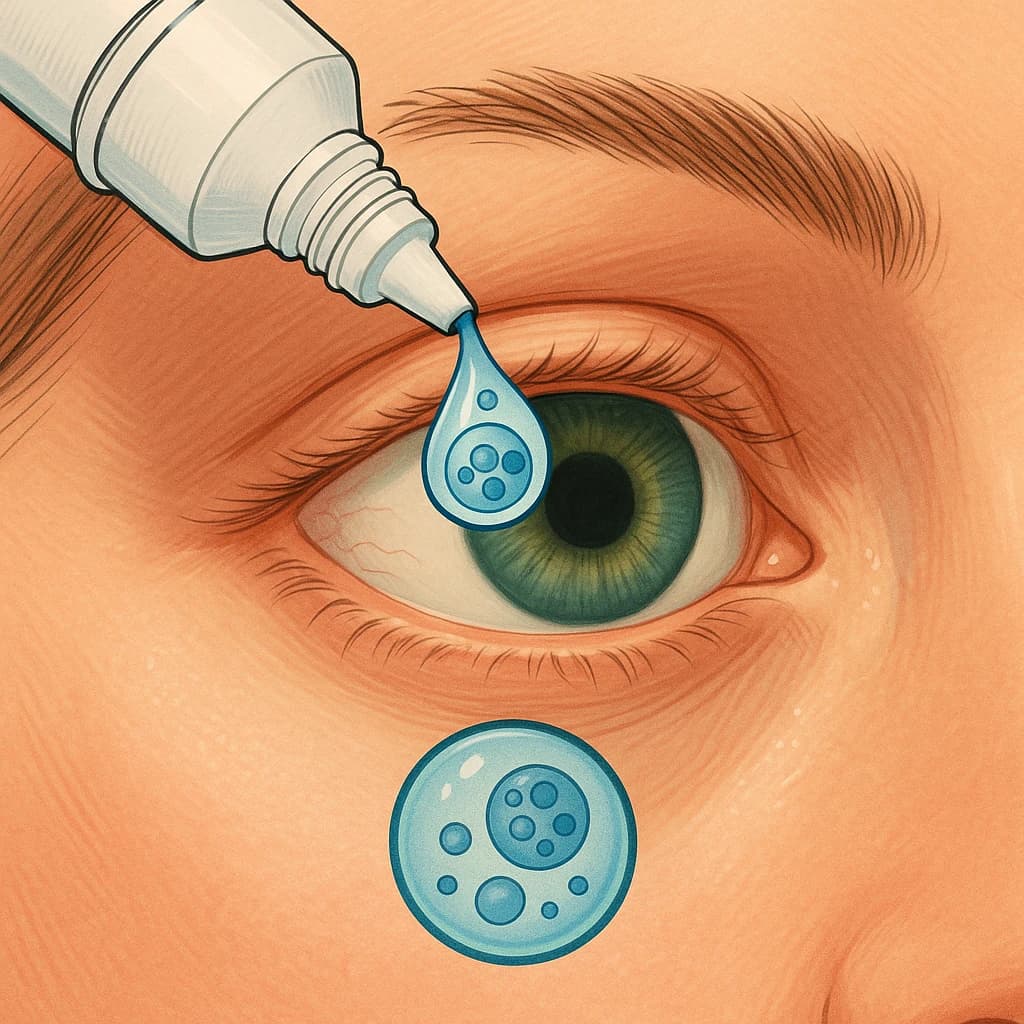
The author's description of blood-derived eye drops
The post described small numbers of HSCs circulating outside bone marrow and proposed collecting cells to produce conditioned medium containing VEGF, HGF and FGF. It then suggested possible use in dry eye, corneal injury and recovery after laser procedures. This source account does not establish that an HSC-conditioned medium, autologous serum and other blood-derived eye drops are equivalent, available or approved for those uses.
Research claims in the source
The source cited a 2023 Frontiers in Pharmacology report of a rabbit model, claiming more than twice the speed of corneal epithelial repair with human blood-stem-cell-derived medium, reduced inflammatory cytokines and increased new-vessel formation and oxygen delivery. It also cited a 2024 Stem Cells Translational Medicine report for blood-derived exosomes and optic-nerve-cell survival under oxidative stress.
The exact papers and the descriptions remain unverified. The source's proposed relevance to glaucoma or macular degeneration is not an established clinical indication.
Three categories described in the source
The author associated ADSCs with skin and corneal repair, MSCs with inflammation and neuroprotection, and HSCs with angiogenesis and oxygen delivery. These broad groupings are the author's summary and need review because cell populations, secreted products and study settings differ. The central idea was to investigate cellular signals rather than assume that every preparation contains living stem cells.
A speculative closing reflection
The essay linked regeneration with circulation and imagined eye drops conveying recovery signals, potentially translating approaches explored in skin to the eye. Its image of turning back the eye's clock is speculative, rather than evidence of rejuvenation or a current treatment recommendation.
The original post stated that it shared medical information rather than promoted a particular product, procedure or clinic.
Source: Original post on Dr. Hyemi Yu’s Naver blog (Korean)
The original publication date and the website revision date are shown separately.