
JOURNAL
The background to research on eyelid drooping after botulinum toxin
The background to research on eyelid drooping after botulinum toxin. An edited account of source experience, research context and limitations.
This edited account distinguishes personal experience, laboratory research and clinical studies. Individual suitability requires clinical assessment.
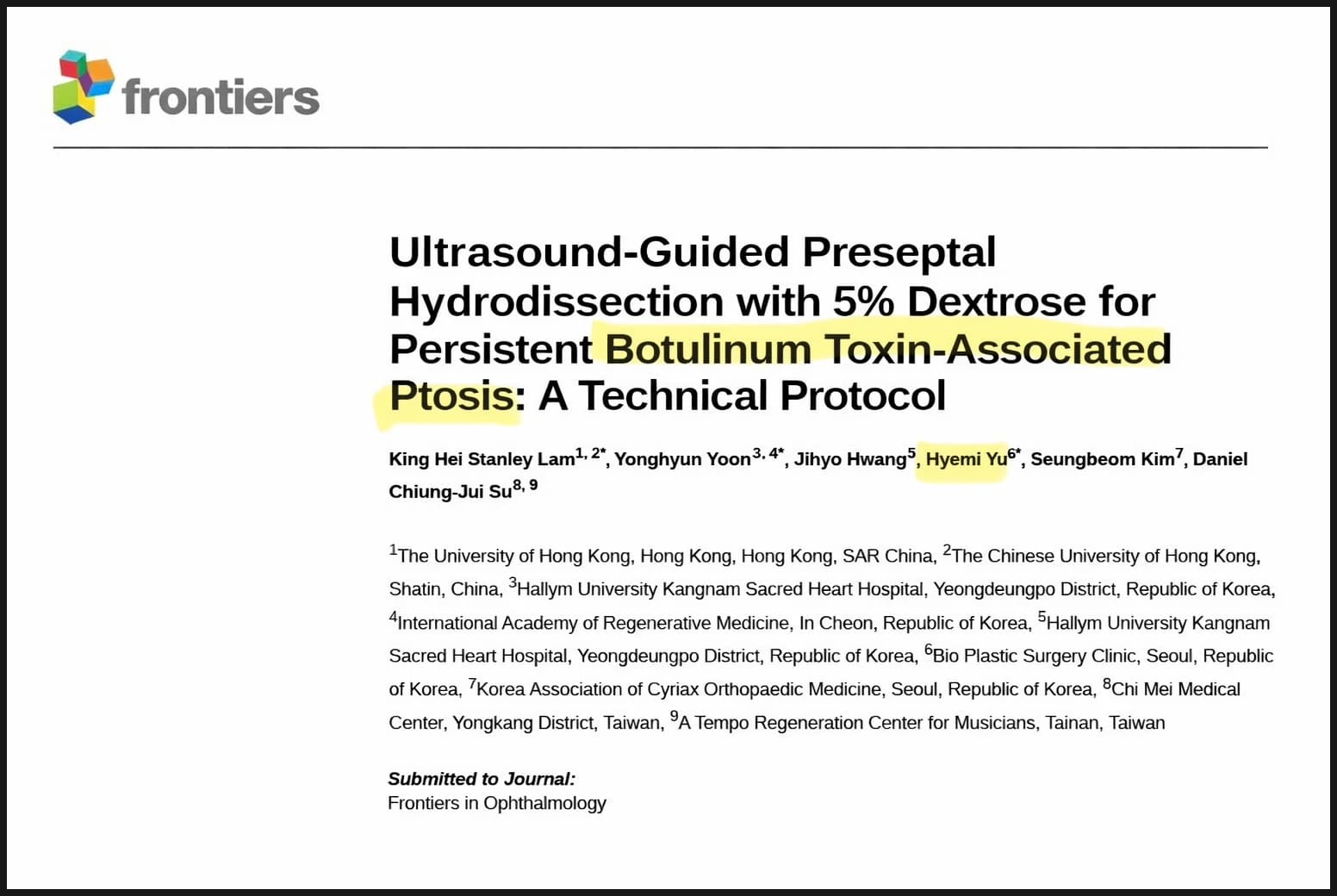
This is a historical account introducing research on botulinum-toxin-associated eyelid ptosis in which the author reported participating as a corresponding author. At the time, the source described the paper as forthcoming in Frontiers in Ophthalmology. Unlike the existing article about its later publication, this account focuses on the research background.
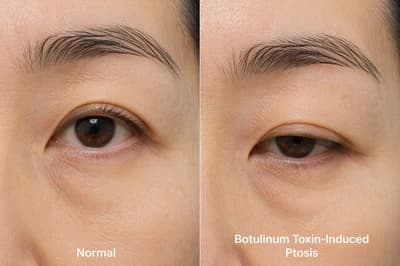
Botulinum toxin inhibits neuromuscular transmission. Unintended reduction of levator function is one mechanism for eyelid drooping. Brow descent and drooping of the eyelid itself require distinction during assessment.
The source asked whether the surrounding tissue environment, alongside toxin activity, could be investigated. It mentioned an ultrasound-guided preseptal approach while describing an evolving research area, rather than an established recovery method or standard treatment.
Procedures near the orbit require detailed anatomical judgment and risk assessment. A fixed recovery period cannot apply to every patient, and research injections are not self-treatment instructions. Authors, publication details and methods should be checked against the original paper.
Source: Original post on Dr. Hyemi Yu’s Naver blog (Korean)
The original publication date and the website revision date are shown separately.