
JOURNAL
Brow drooping and recovery research after botulinum toxin
Brow drooping and recovery research after botulinum toxin. An edited account of source experience, research context and limitations.
This edited account distinguishes personal experience, laboratory research and clinical studies. Individual suitability requires clinical assessment.
This article concerns a lower brow and heavy-looking eyes after forehead botulinum toxin. Brow descent differs from eyelid ptosis, and similar appearances can require different assessment depending on previous fillers, threads or surgery.
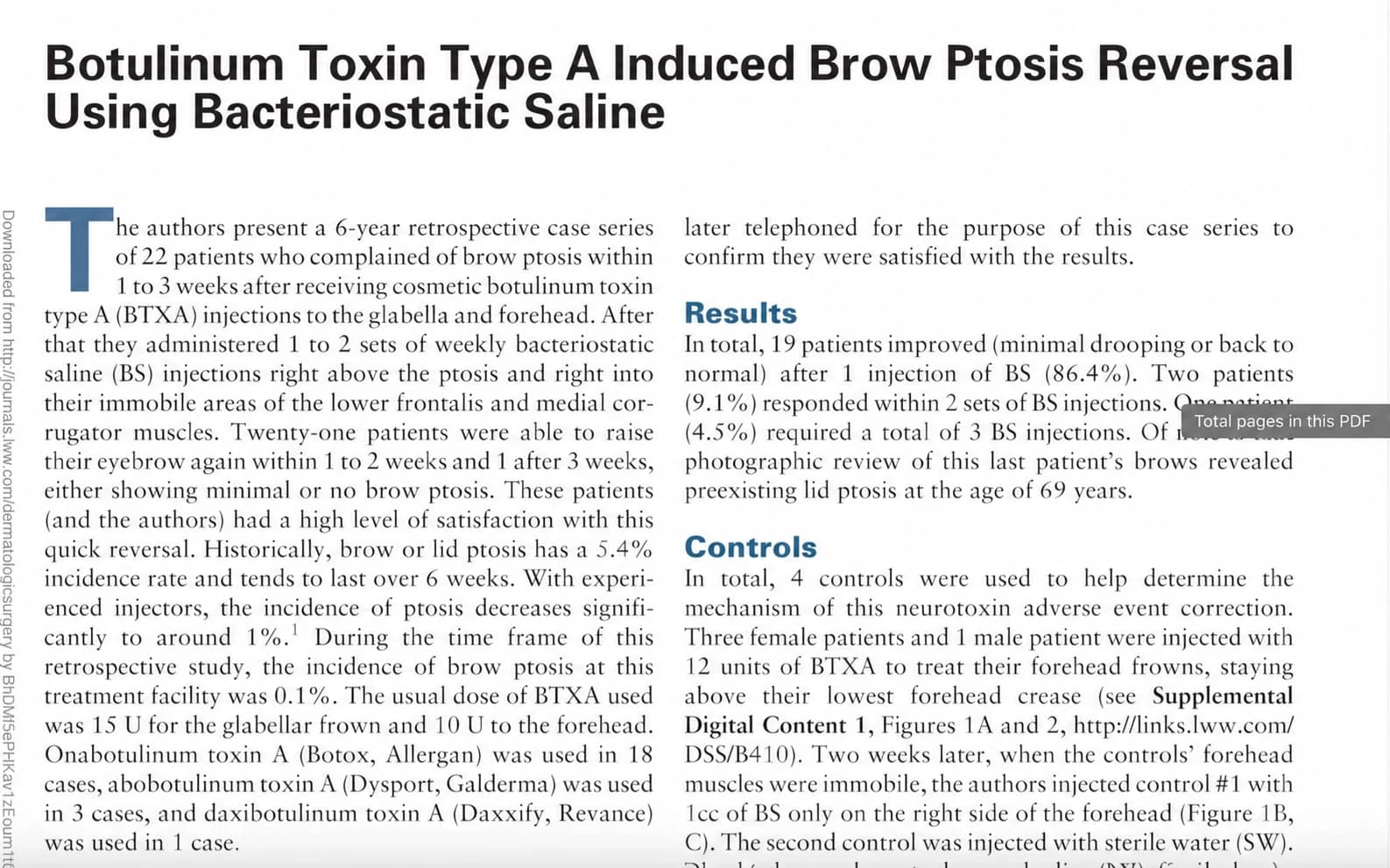
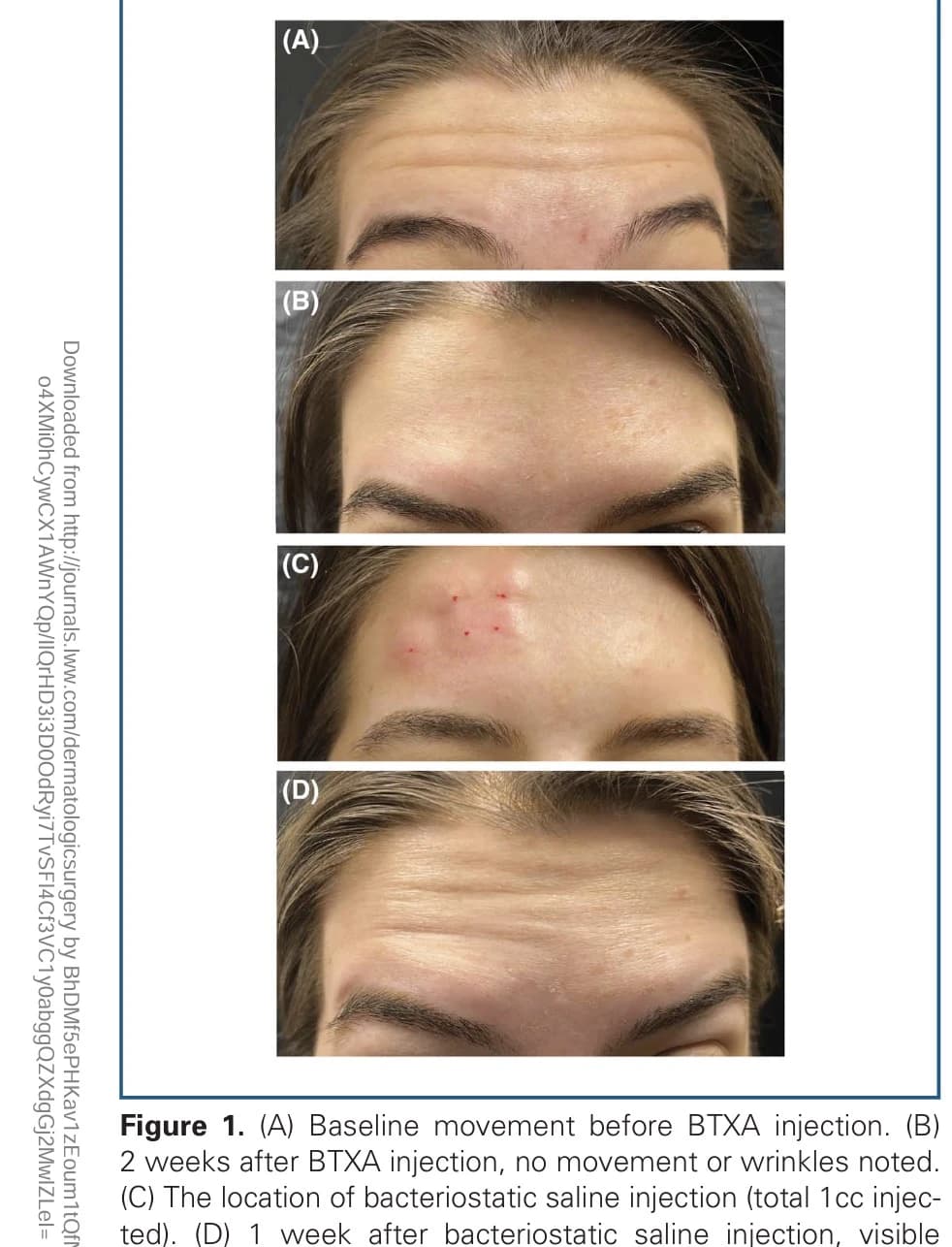
The source cites Rullan and colleagues’ 2024 bacteriostatic-saline report. The figures of 22 participants, 19 recoveries and 86.4% require comparison with the original report and differing descriptions elsewhere. They are not presented as a person’s probability of recovery.
Possible membrane effects of benzyl alcohol do not establish removal of already active intracellular toxin or reversal of neuromuscular blockade. A 2025 computational study (PMID 41150199) examined and questioned the reversal hypothesis. Model results must also be distinguished from direct clinical trials.
This is a critical reading of an emerging recovery report. The injection is not offered as self-treatment or established standard care, and neither one-session success nor a particular recovery period is guaranteed.
Materials linked by the source
Source: Original post on Dr. Hyemi Yu’s Naver blog (Korean)
The original publication date and the website revision date are shown separately.