
JOURNAL
What to Check When You Feel Firmness After a Collagen Booster
Tissue responses and assessment criteria to consider when firmness is felt after a collagen booster.
Interest in human-derived extracellular matrix (ECM) collagen boosters has been growing.
These products use components derived from human dermis and are described differently from conventional fillers or synthetic boosters, prompting many questions.
Some people feel firmness or small bumps in their skin after treatment and wonder, “Is this a nodule?” or “Can I leave it alone?” You may be looking for the same answers.
First, an important distinction: palpable firmness after a procedure does not always mean an adverse reaction.
Its nature still needs to be assessed. Duration, pain, redness, warmth, changes in size, and tenderness may indicate a need for medical evaluation. This article explains those distinctions.

Human-derived collagen boosters, including hADM, are increasingly discussed. They are described as using the structural properties of human dermal components, and their tissue responses are the subject of ongoing research.
One premise matters: these products are not substances that can simply be dissolved like hyaluronic acid fillers. Their mechanisms differ, so attempting to dissolve an area merely because it is palpable can cause difficulties.
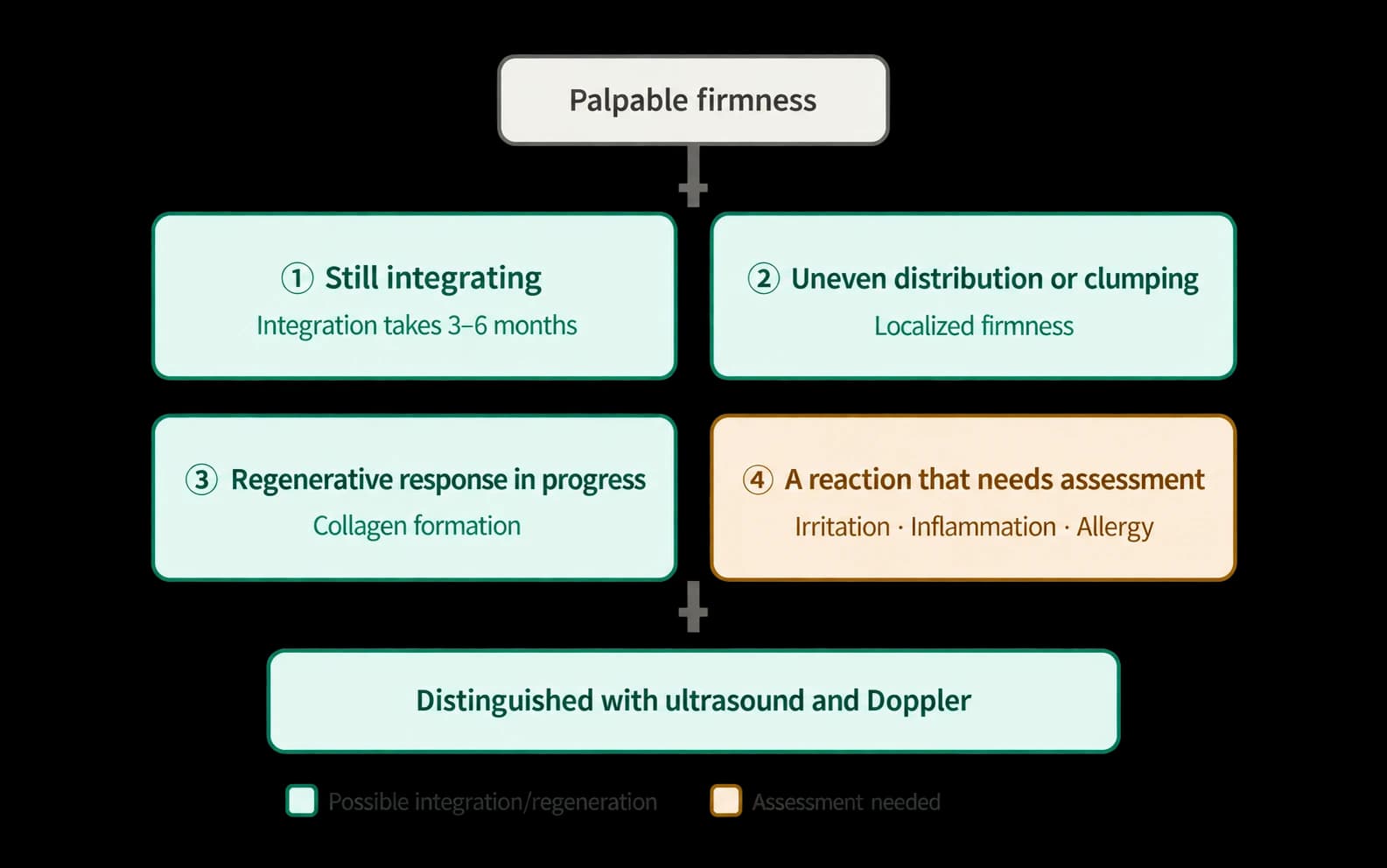
Several processes can make an area feel firm
First, the material may still be integrating. Immediately after injection, it exists as a structure within the skin. Literature describes tissue integration taking several months, approximately 3–6 months, so integration may still be underway around the third month.
Second, distribution may be uneven. If material gathers locally rather than spreading evenly, that area can feel firmer.
Third, firmness may accompany a tissue response. Temporary firmness can occur during integration in some cases. This does not mean it is always a normal process; the pattern may require assessment (IJMS 2026, https://www.mdpi.com/1422-0067/27/5/2193).
Less common reactions that need closer attention
Irritation, redness, and allergic reactions can also occur. Human-derived matrices are processed to remove cells from human dermis. Literature discusses how insufficiently removed detergents used during processing may be associated with inflammation or foreign-body reactions (Biomater Res. 2023, https://spj.science.org/doi/10.1186/s40824-023-00348-z). It also reports that problems are uncommon when residues are reduced below specified limits, making the product and manufacturing process relevant.
These publications should not be interpreted as directly guaranteeing the efficacy or safety of a particular product. Responses vary with the product, treatment site, injected amount, and individual tissue condition.
The central question is whether the palpable firmness reflects one of the integration, distribution, or tissue-response processes above, or a reaction that warrants further assessment.
How can the distinction be assessed?
Looking at and palpating the area alone may not establish the cause.
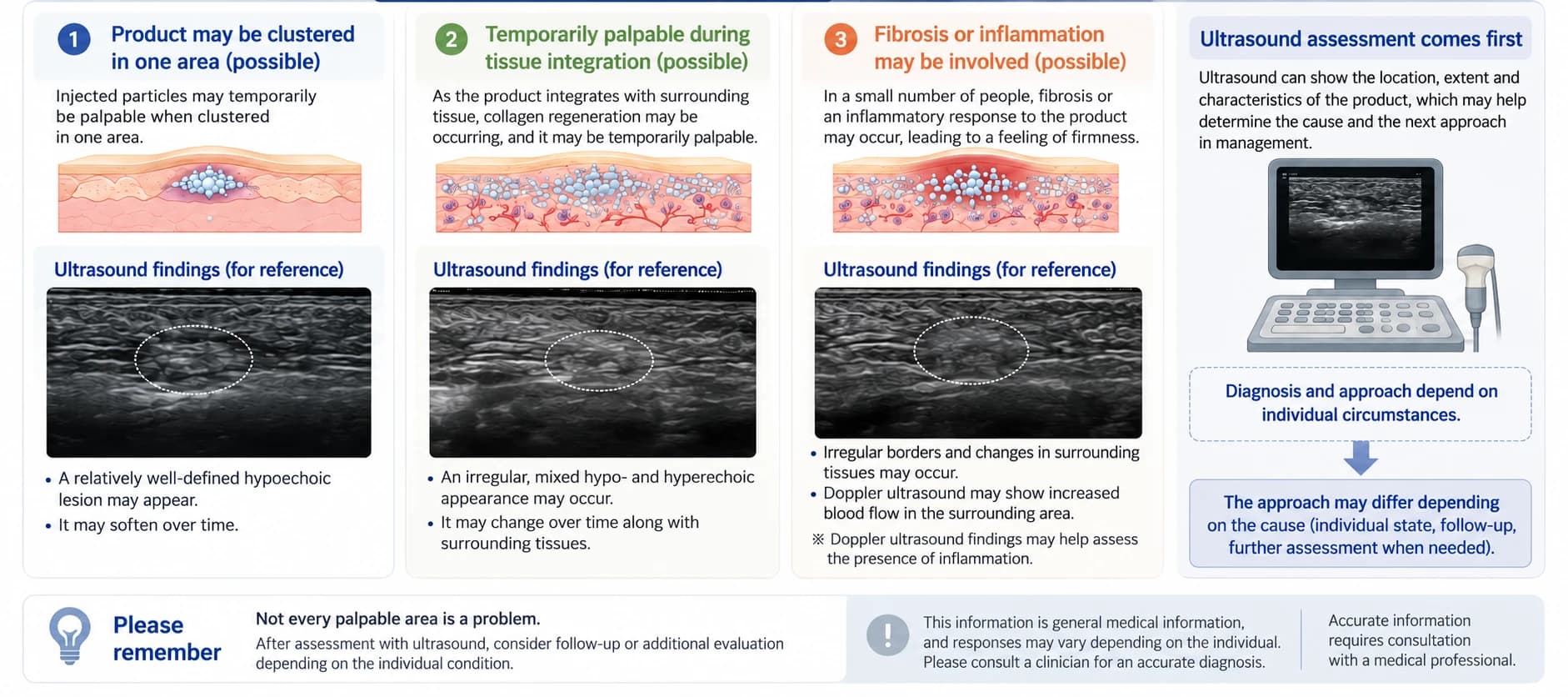
Persistent firmness, pain, redness, warmth, changes in size, or other associated symptoms should be assessed by a medical professional. Ultrasound or other supplementary examinations may be considered. Examining location, depth, characteristics, and blood flow can help with evaluation.
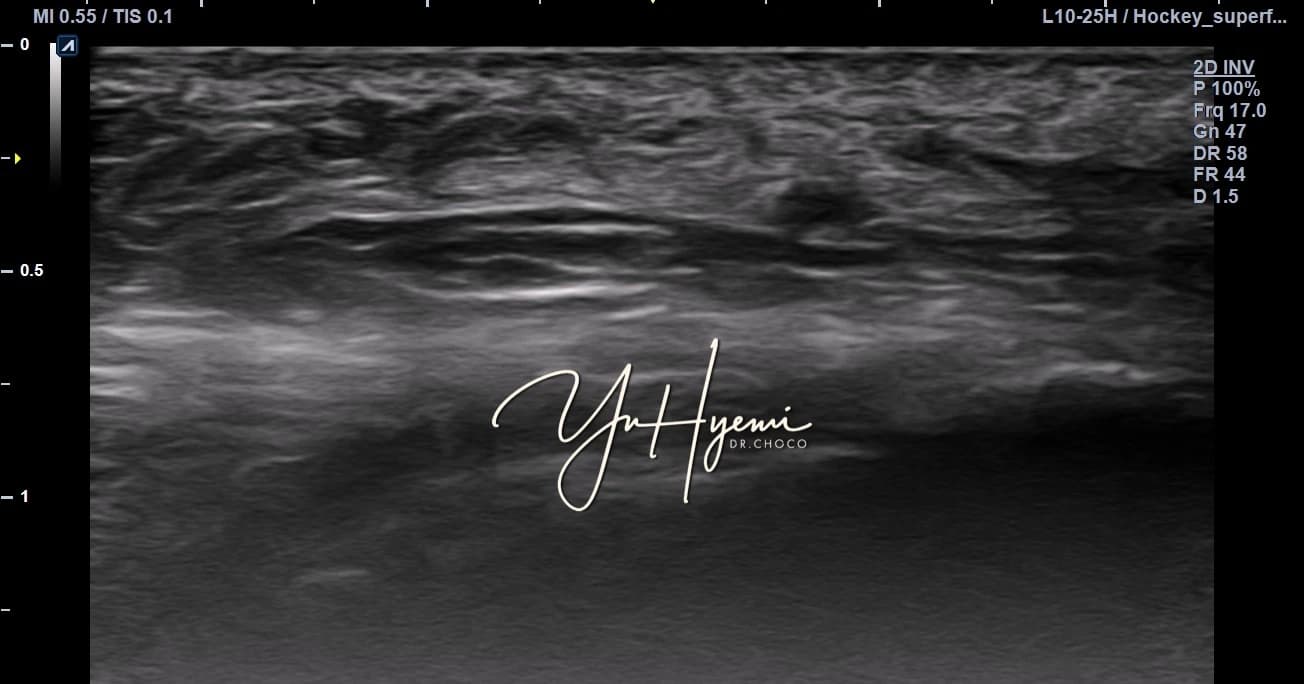
Ultrasound can show the location, depth, and characteristics of a firm area. Doppler assessment of surrounding blood flow may help distinguish firmness during integration from a response that needs attention.
What is not recommended at this stage
Forceful massage or pressure intended to “break it up” may irritate the area. Attempts to dissolve it using methods of uncertain origin can also be problematic. A safer sequence is to assess the condition first, identify the cause, and then determine an appropriate approach.
All procedures and aftercare involve individual variation. Swelling, bruising, firmness, redness, pigmentation changes, and, less commonly, irritation, allergic reactions, or inflammation may occur. Treatment methods, effects, and adverse reactions also vary. This article provides general medical information, does not replace diagnosis or treatment, and does not guarantee the efficacy or safety of any product.
The information is provided for general medical education. It is not intended to guarantee a particular procedure’s efficacy or safety or to recommend treatment.
Source: Original post on Dr. Hyemi Yu’s Naver blog (Korean)
The original publication date and the website revision date are shown separately.