
JOURNAL
Eye-drop research for eyelid ptosis after botulinum toxin
Eye-drop research for eyelid ptosis after botulinum toxin. Source observations, research context and limitations.
This article discusses the source author’s earlier literature, cases and experiences. Research populations and limitations matter; individual diagnosis and treatment require clinical assessment.
An eyelid that droops after a cosmetic botulinum toxin treatment can be alarming. The cause should be assessed rather than diagnosed from the timing alone.
Questions in the source include whether it will recover, how long to wait and whether an eye drop might help.
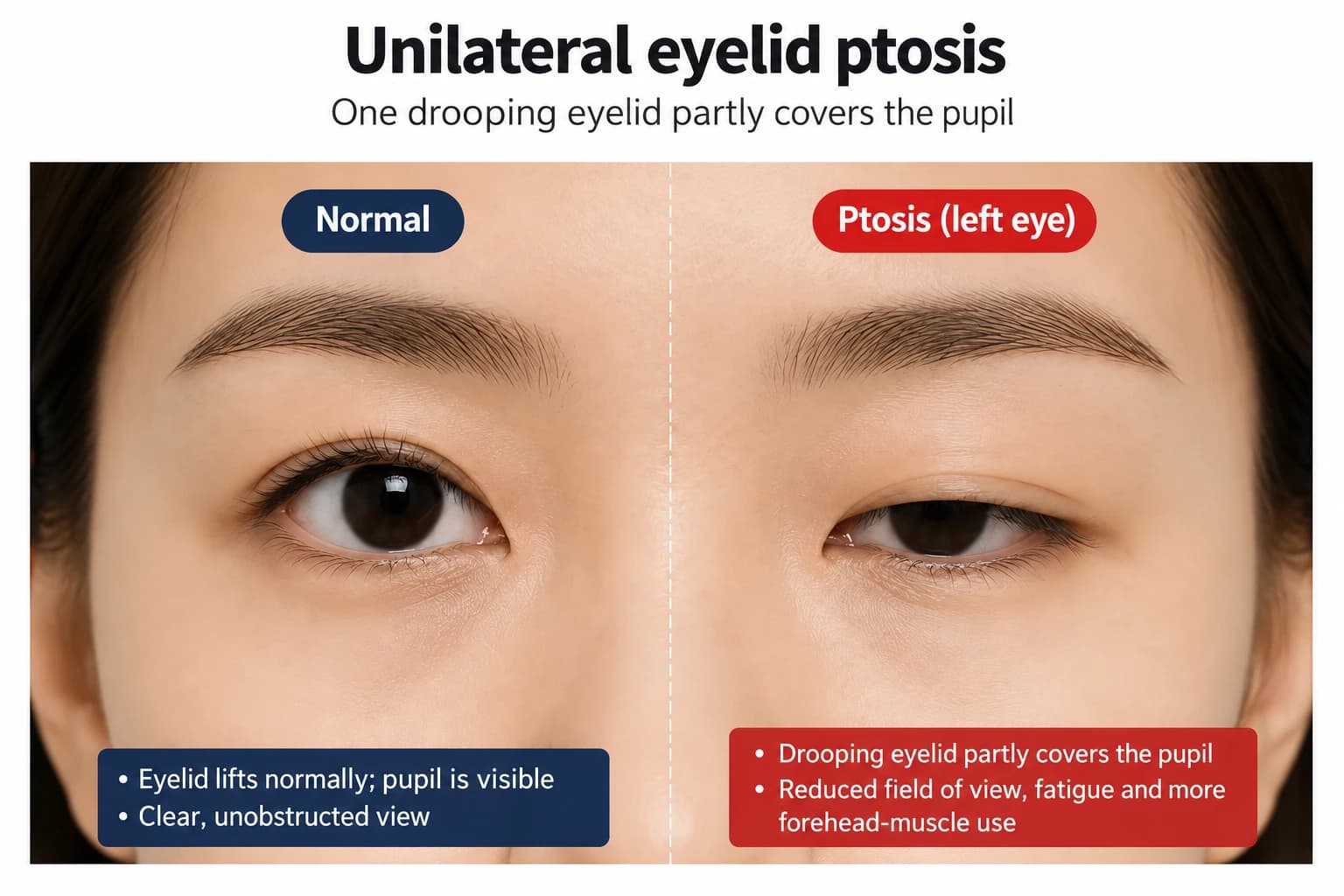
This article discusses the limited evidence rather than identifying an eye drop for self-treatment.
The author recalls consultations in which patients had been told to wait or had read about eye drops online.

Muscles involved in eyelid elevation
The levator palpebrae superioris is the main elevator. Müller’s muscle contributes a smaller amount, described in the source as about 2–3mm. Toxin effects on neighboring structures can contribute to ptosis.
Receptor explanations need care
Müller’s muscle responds to sympathetic adrenergic activity. The source’s alpha-2-only explanation oversimplifies the mechanism; the receptor actions of individual drugs need to be distinguished.
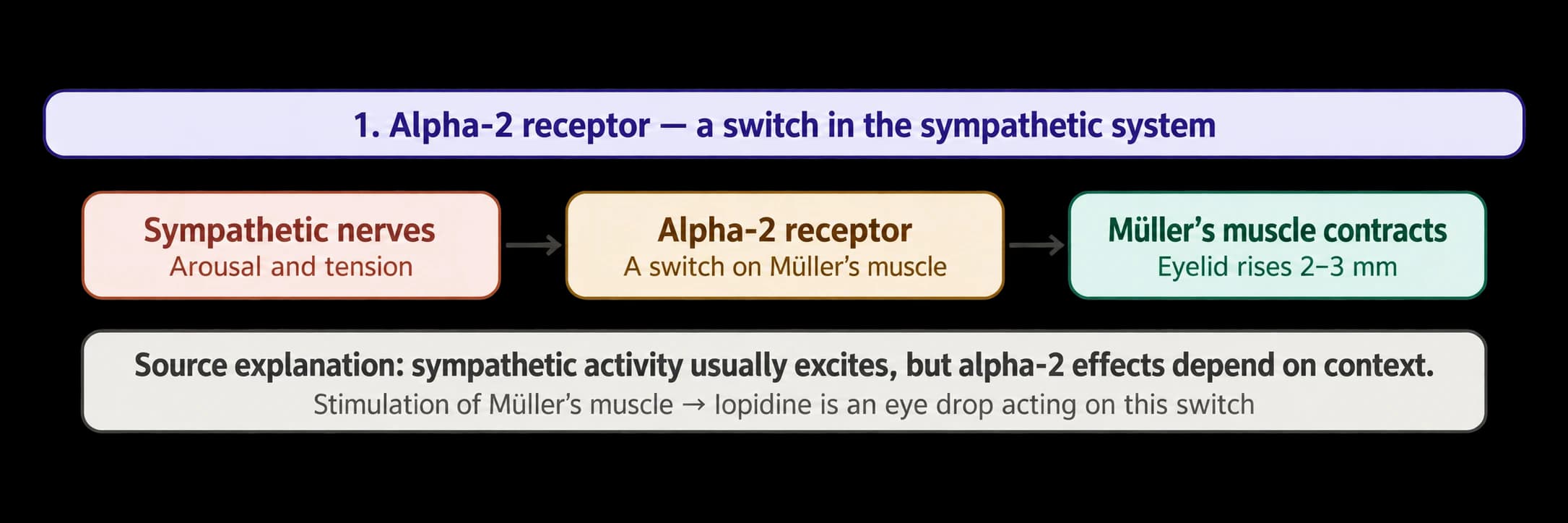
A small apraclonidine report
The source cites a 2017 report by Wijemanne and colleagues describing six patients and changes after apraclonidine. Improvement at 20–30 minutes was reported, but six observations cannot establish general efficacy or safety. Apraclonidine is used for intraocular-pressure control; this article omits self-dosing instructions. Local approval, contraindications and interactions require clinician review.
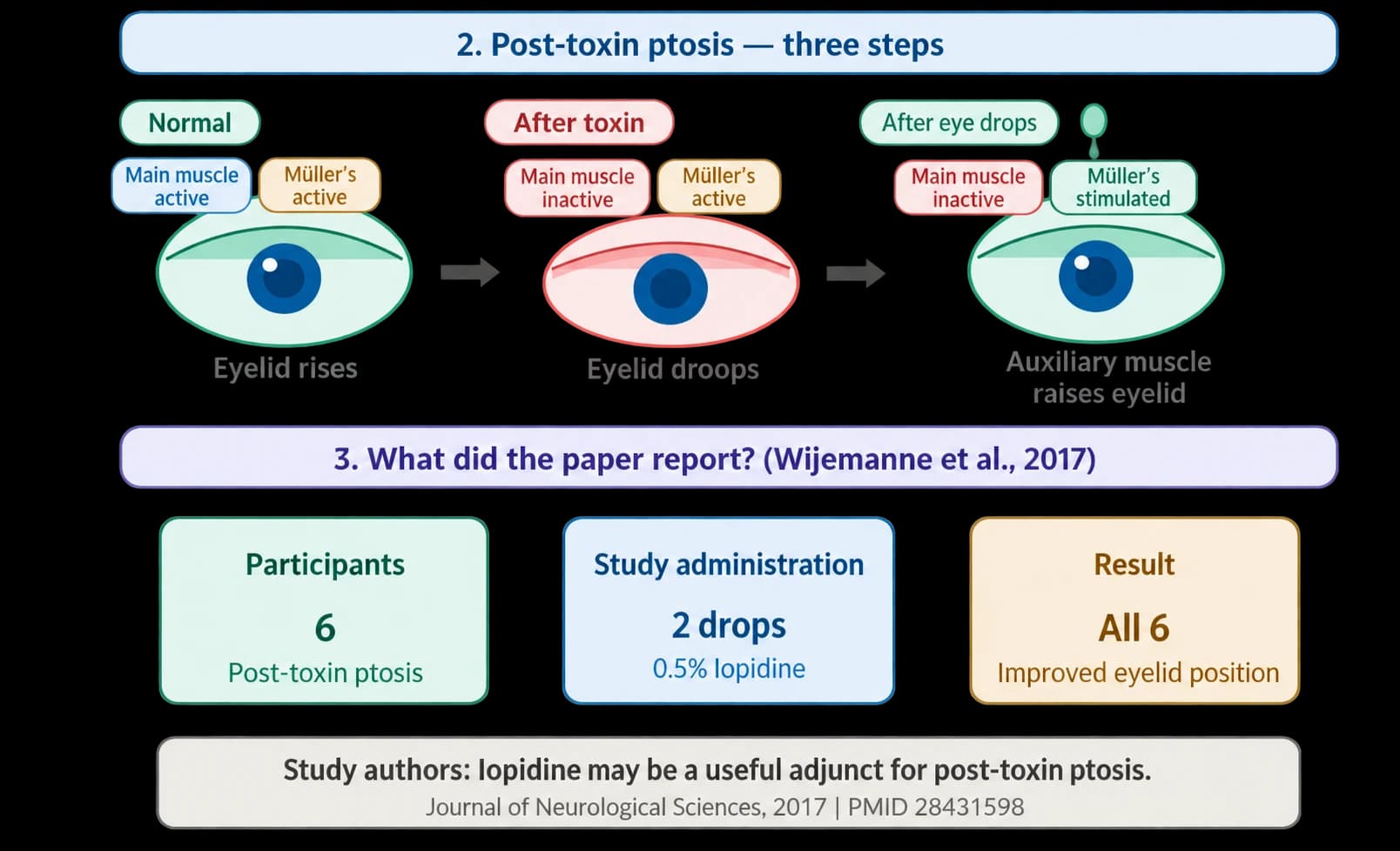
Any effect is temporary and does not reverse the toxin itself. Long-term use is not automatically appropriate. New ptosis should be discussed with a clinician rather than waiting for an arbitrary two-to-four-week interval. Visual changes, double vision or other neurological symptoms require prompt assessment.
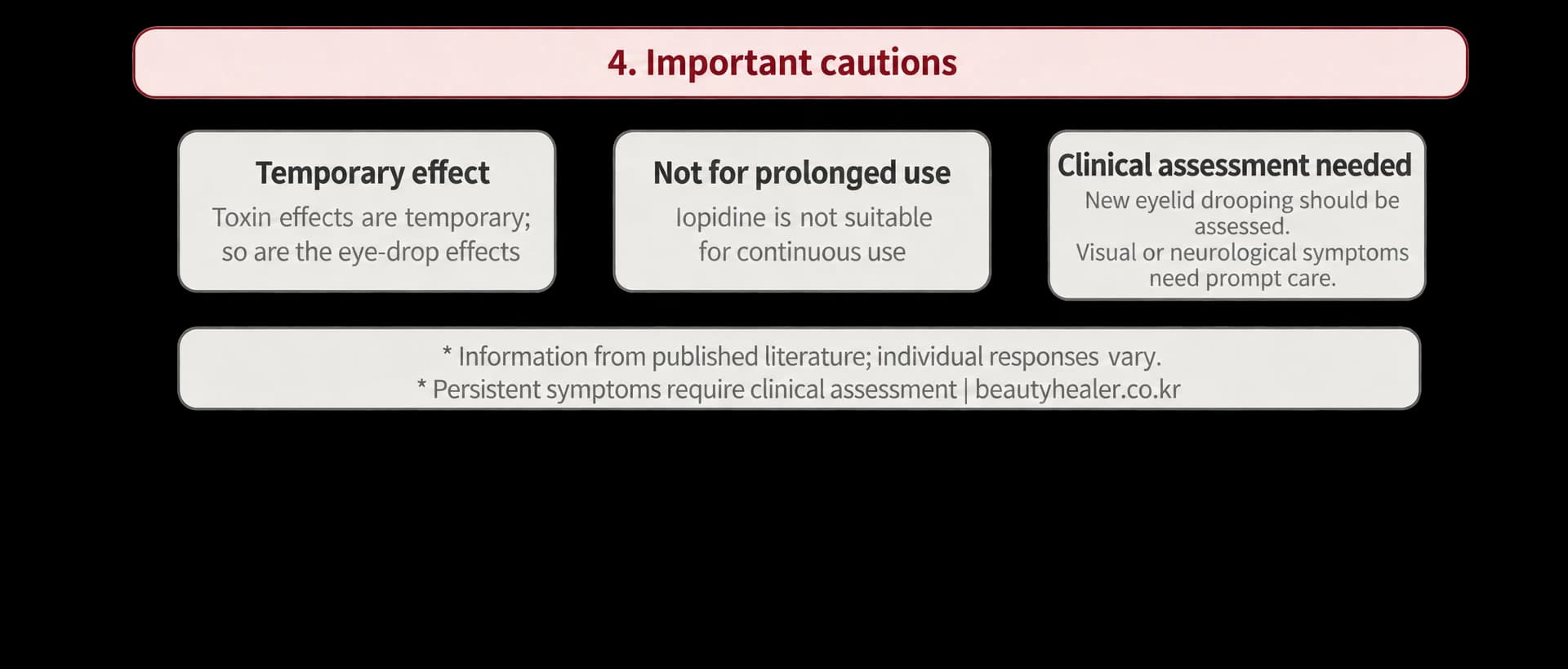
This is literature information, not a diagnosis or a prescription.
Source: Original post on Dr. Hyemi Yu’s Naver blog (Korean)
The original publication date and the website revision date are shown separately.