
JOURNAL
An observational study of GLP-1 use after bariatric surgery
An observational study of GLP-1 use after bariatric surgery. Source observations, research context and limitations.
This article discusses the source author’s earlier literature, cases and experiences. Research populations and limitations matter; individual diagnosis and treatment require clinical assessment.
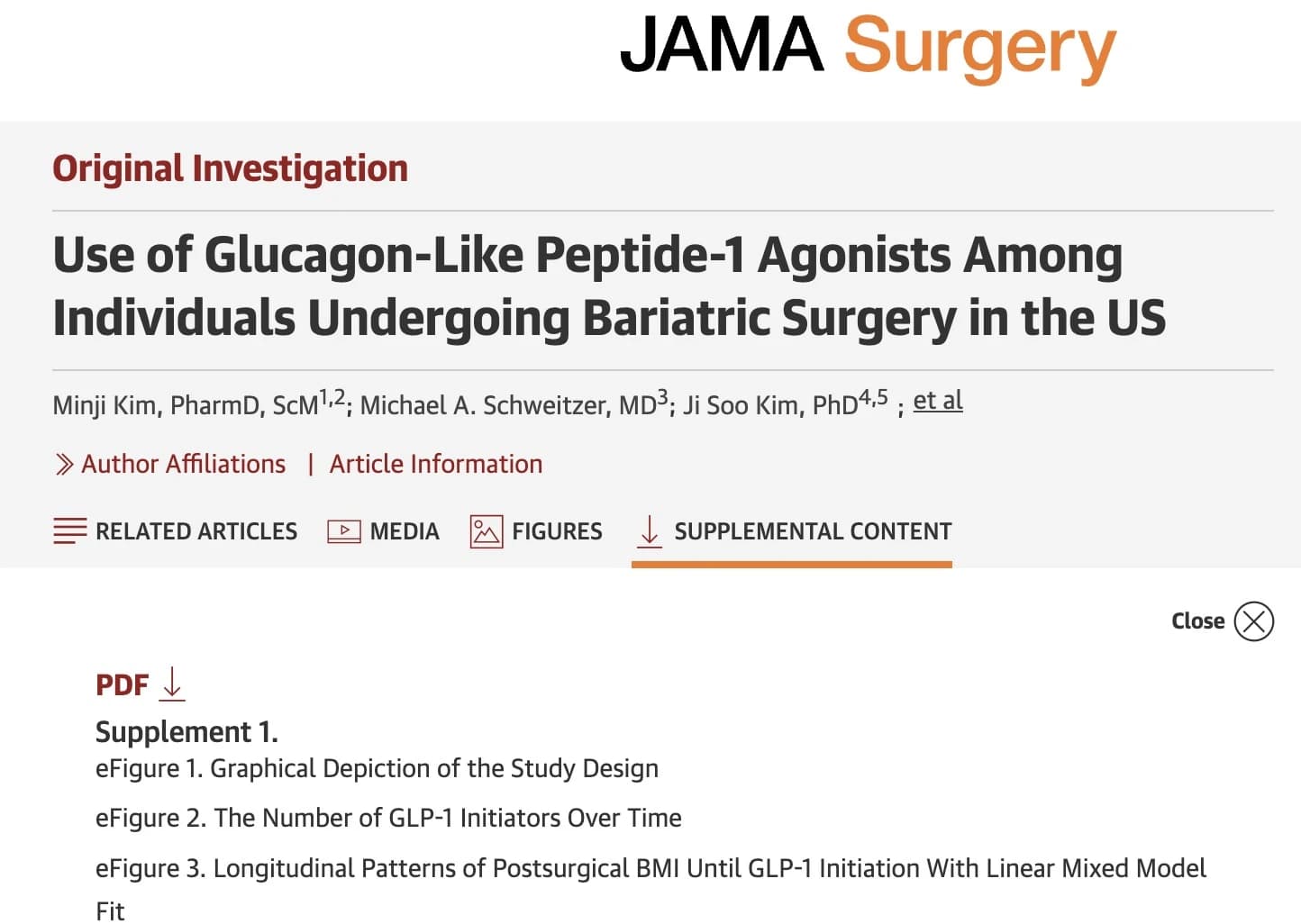
The source reflects that neither bariatric surgery nor a medicine is a one-time guarantee. It introduces a 2025 JAMA Surgery study in which 14% of a US postoperative cohort initiated a GLP-1 agonist. The reason for initiation cannot be inferred for every person.
The source reports 112,858 participants and associations with sex, sleeve gastrectomy, diabetes and higher postoperative BMI. These associations do not prove a mechanism such as persistent “metabolic memory.” Initiation is not necessarily restarting a medicine used before surgery.
Surgery, medication and ongoing care
Surgery changes anatomy and GLP-1 agonists affect appetite, gastrointestinal and metabolic signaling. Food, sleep and appropriate activity remain parts of care rather than proof that habits can replace treatment.
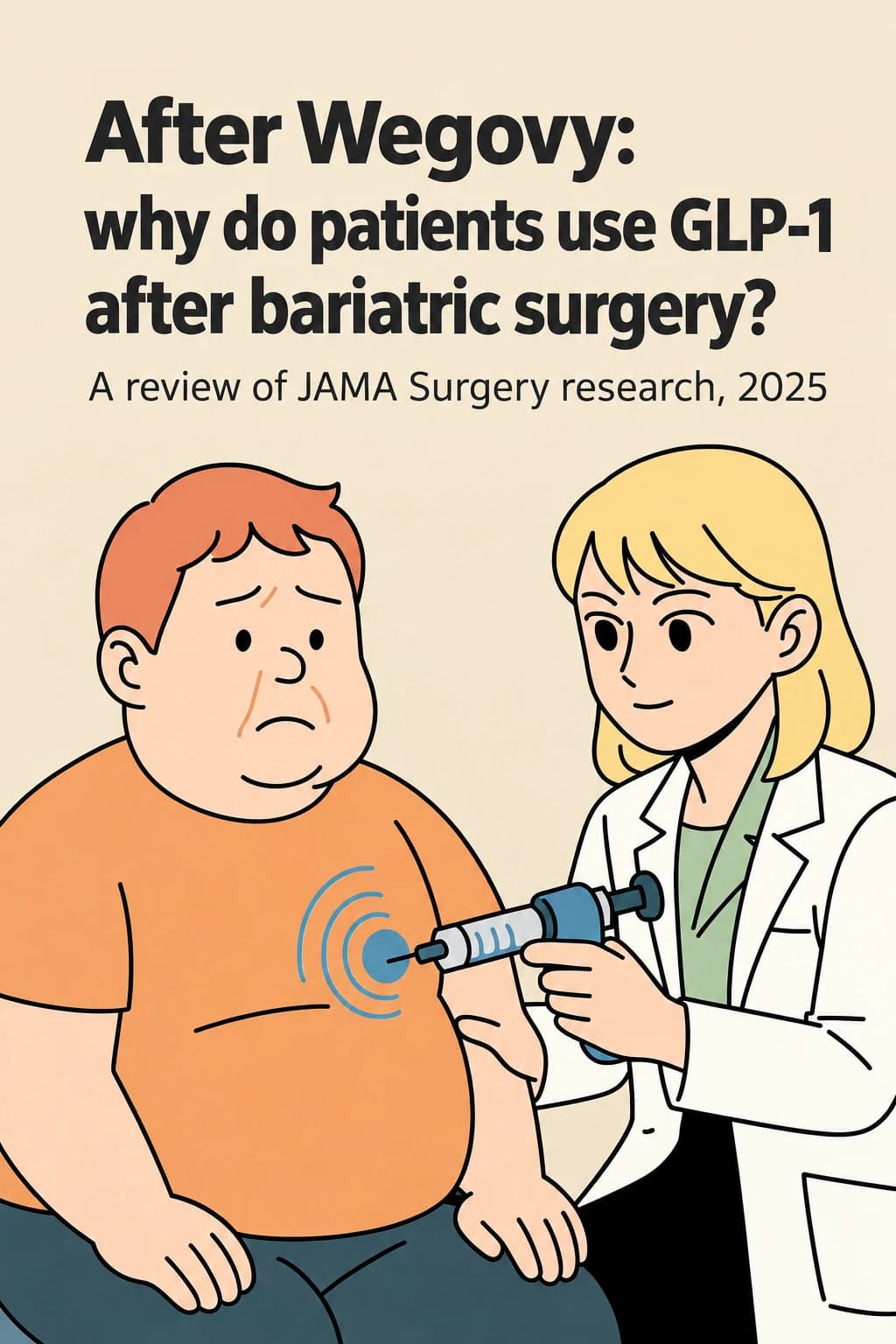
The source discusses medication initiation within about two years and links it with regain in clinical experience. An observational association does not establish the reason for prescribing or that every patient entered a “regain window.”
The source appropriately notes that the data cannot clearly separate regain from other prescribing reasons, including eligibility at a higher BMI. This limitation matters more than a slogan about metabolism being completed by habits.
Applying the finding
Ongoing review may include weight, nutrition, muscle and comorbidities. The study does not standardize short-term GLP-1 intervention at six to 24 months or stopping when habits seem independent. The surgical and prescribing teams should decide the individual plan.
Medication after surgery is a possible treatment option, not necessarily evidence of failure. It does not demonstrate a return to a younger metabolism.
This research illustrates ongoing care after surgery, not proof that habits override obesity biology or that a routine guarantees relapse prevention.
Reference: Kim M, Schweitzer MA, Kim JS, et al. Use of Glucagon-Like Peptide-1 Agonists Among Individuals Undergoing Bariatric Surgery in the US. JAMA Surgery. 2025;160(10):1058–1066. https://doi.org/10.1001/jamasurg.2025.3089
This is general research information. Individual medication decisions require clinical assessment.
Materials linked by the source
Source: Original post on Dr. Hyemi Yu’s Naver blog (Korean)
The original publication date and the website revision date are shown separately.