
JOURNAL
Reading research on GLP-1 medicines and substance use
Reading research on GLP-1 medicines and substance use. An edited account of source experience, research context and limitations.
This edited account distinguishes personal experience, laboratory research and clinical studies. Individual suitability requires clinical assessment.
The source introduces a US veterans’ medical-record study of GLP-1 receptor agonists and substance-use disorders. Its starting point is an observational comparison of people with type 2 diabetes initiating a GLP-1 medicine or an SGLT-2 inhibitor.
The study considered alcohol-, nicotine-, opioid- and cocaine-related diagnoses and outcomes including emergency visits and admissions. Although the source describes lower observed risks for some outcomes, residual differences in health and living conditions prevent a conclusion that the medicines treated addiction.
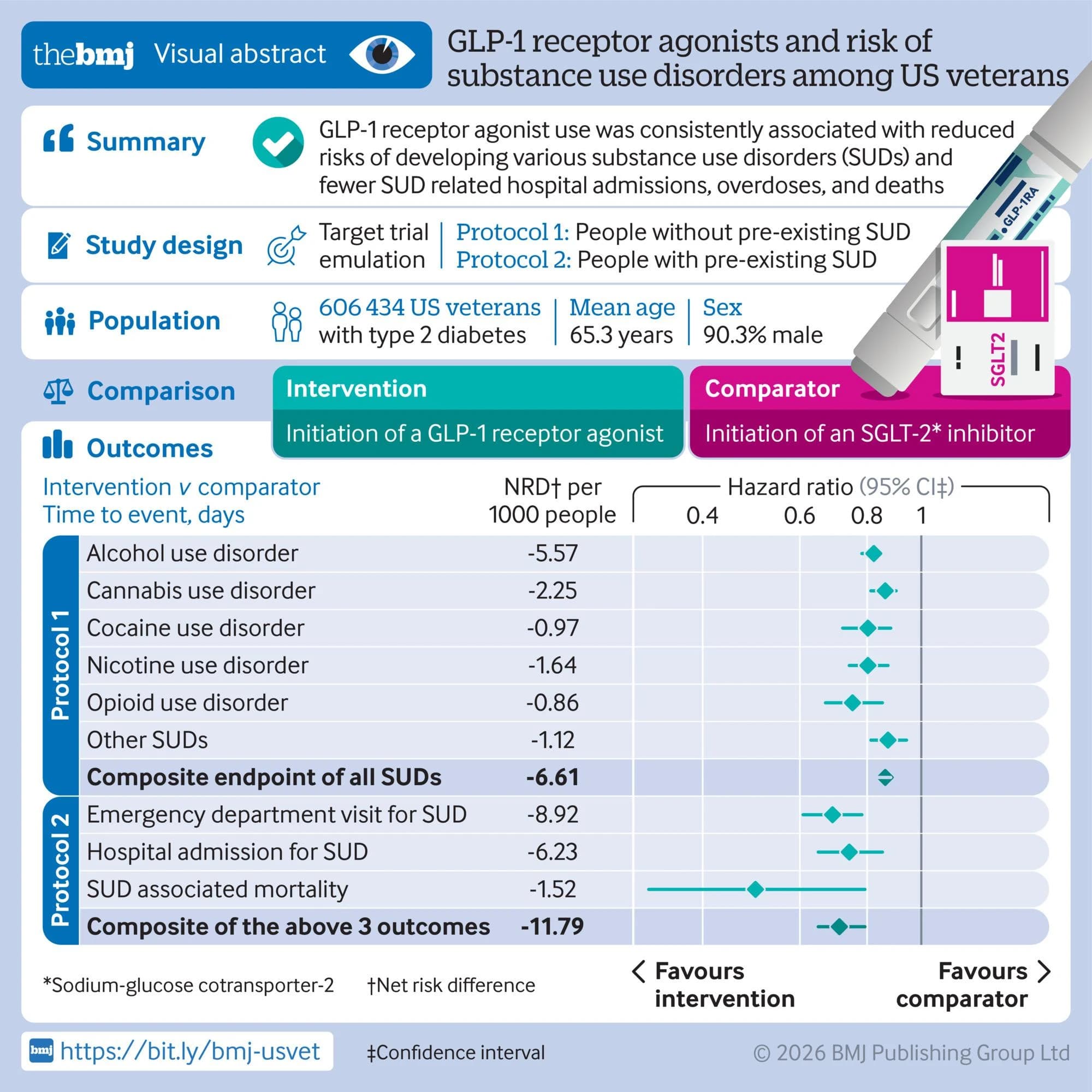
A relative-risk value of 1 represents the comparator level. Direction should be read alongside confidence intervals, outcome definitions and absolute event rates. A large records-based study does not become equivalent to a randomized trial because of its size.
Connections between metabolic signals and brain reward pathways remain research questions. Personal reports of changing cravings in consultations do not establish effectiveness for addiction treatment.
This article is limited to interpreting research. It does not recommend a particular GLP-1 product for addiction or acne. Product-specific authorization in Korea and actual clinical scope require separate confirmation.



Materials linked by the source
Source: Original post on Dr. Hyemi Yu’s Naver blog (Korean)
The original publication date and the website revision date are shown separately.