
JOURNAL
When changes after CaHA treatment seem limited
When changes after CaHA treatment seem limited. An edited account of source experience, research context and limitations.
This edited account distinguishes personal experience, laboratory research and clinical studies. Individual suitability requires clinical assessment.
The source groups possible reasons for limited visible CaHA response into four questions: goal, amount, distribution and dilution. This article examines that consultation framework without implying that adding more product will solve the problem.
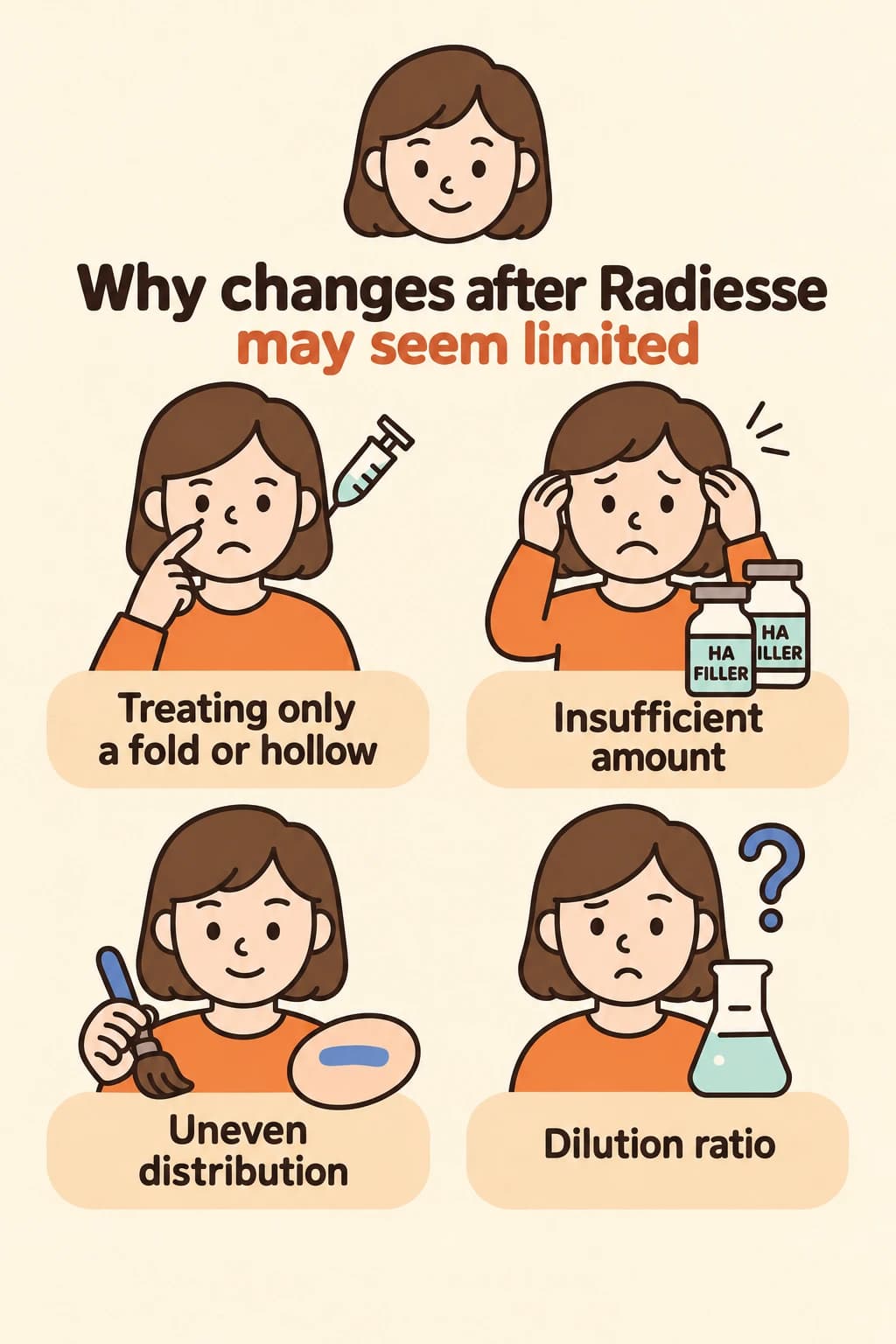
The expected change—volume, texture or contour—and timing of assessment matter. Comparing a localized procedure with whole-face change can create mismatched expectations, but wider treatment is not necessarily better.
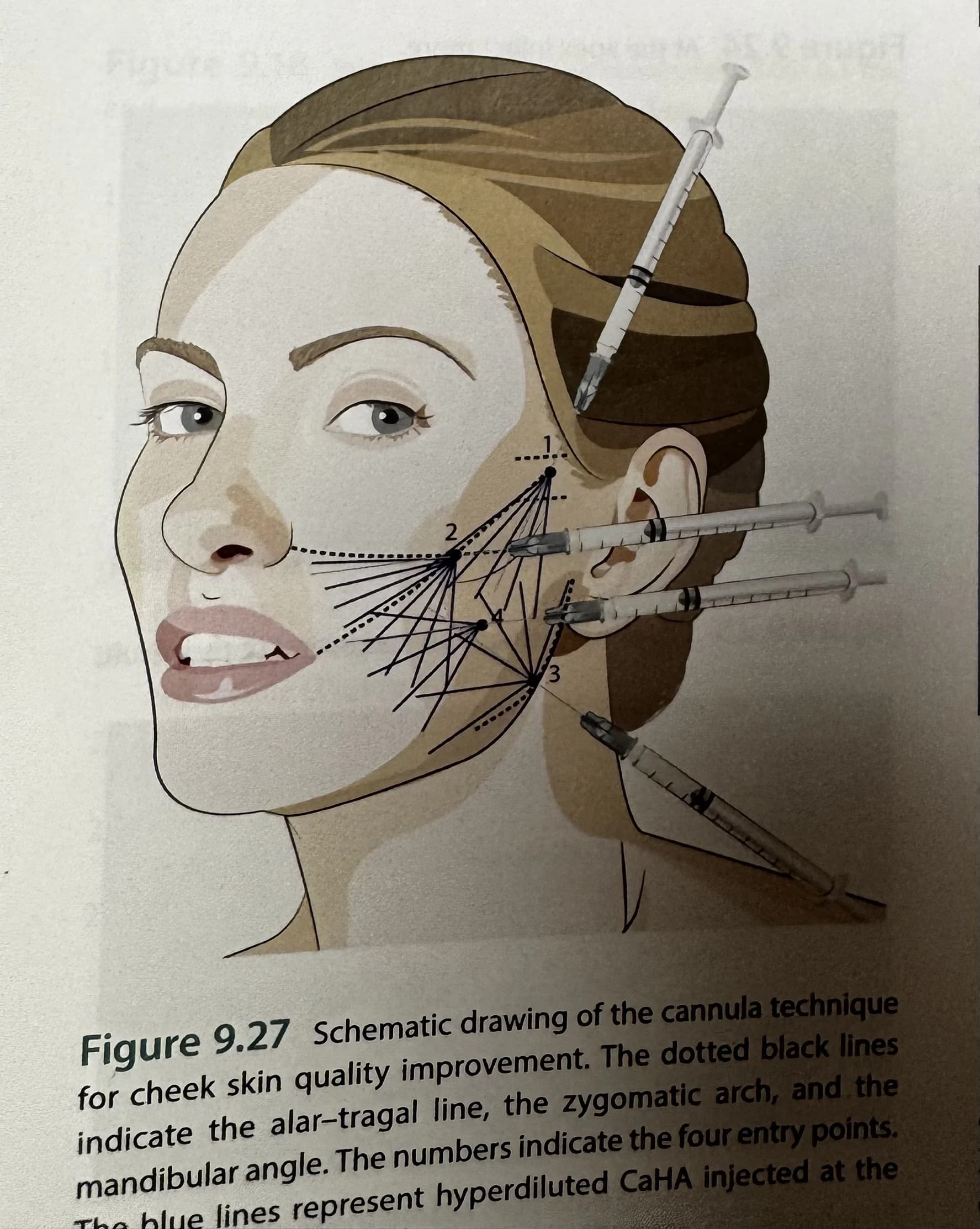
Amount, tissue distribution and dilution are proposed as possible influences. Anatomy, skin condition, previous procedures and individual differences also matter, so those four factors alone cannot establish a cause.
Whether the cited older papers support each statement requires checking against their original text. Quotations and clinician-oriented injection designs are not reproduced as guaranteed effects or standard methods. Further treatment requires renewed discussion of expected benefit and risk.
Materials linked by the source
Source: Original post on Dr. Hyemi Yu’s Naver blog (Korean)
The original publication date and the website revision date are shown separately.