
JOURNAL
Food, vinegar and glucose: a personal monitoring experiment
Food, vinegar and glucose: a personal monitoring experiment. Source observations, research context and limitations.
This article discusses the source author’s earlier literature, cases and experiences. Research populations and limitations matter; individual diagnosis and treatment require clinical assessment.
The author initially doubted popular claims about apple cider vinegar and chose to record personal glucose readings. A personal experiment is not a controlled trial.
The source expected a high reading after sweet food and seasoned fried chicken, citing an anticipated 180–200mg/dL. That prediction is not a general response for everyone eating those foods.


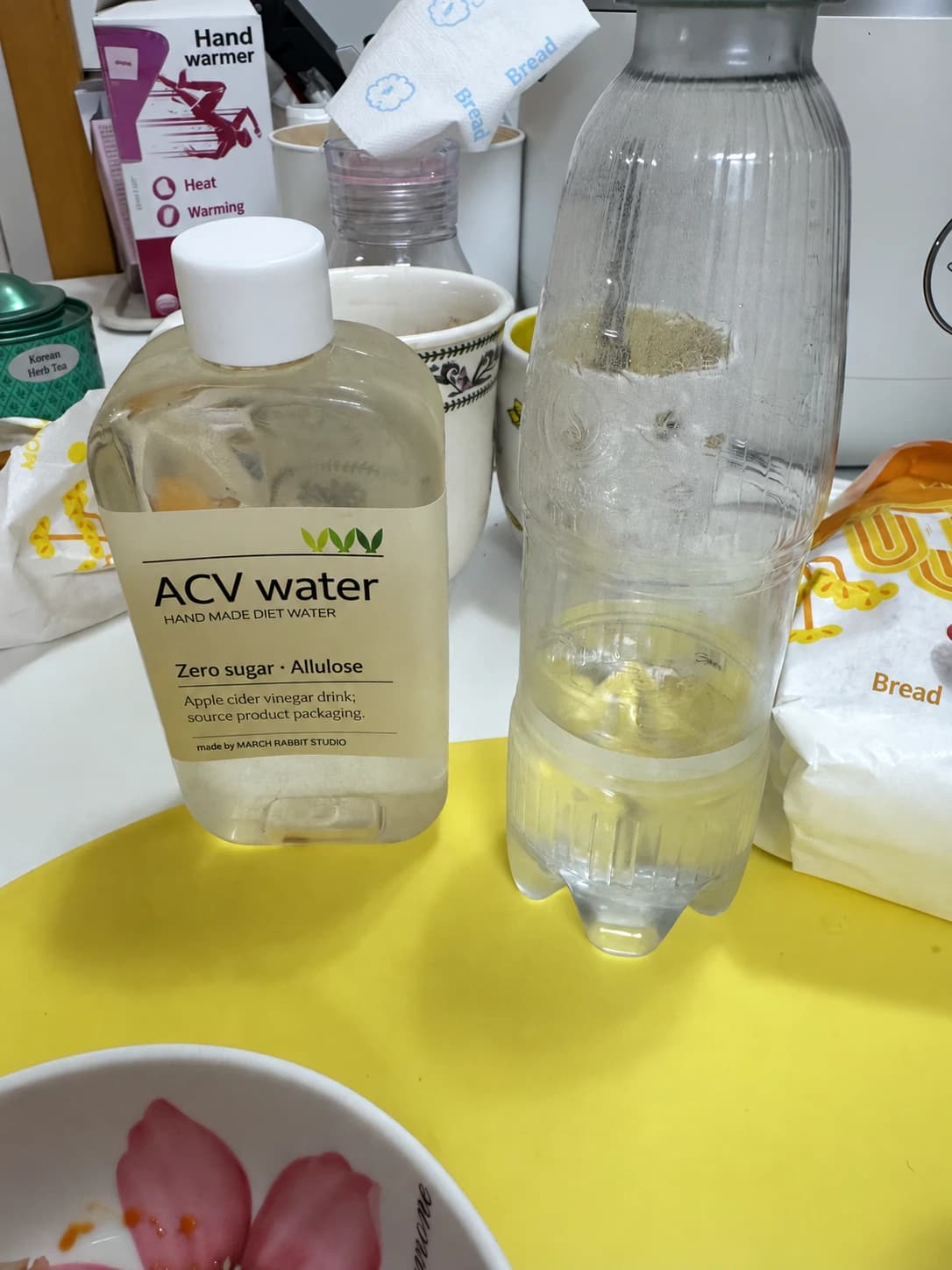
The source combined vinegar water with 30 squats and 80 band-exercise repetitions and recorded 135mg/dL. It mentions 140mg/dL, but that is not a universal diagnostic threshold for a “spike.” Exercise, meal composition, timing and measurement variability cannot be separated in this one observation.
The device screen reads135mg/dL while the added source note says139. This discrepancy has not been silently reconciled. A single personal observation cannot separate the effects of vinegar and exercise.
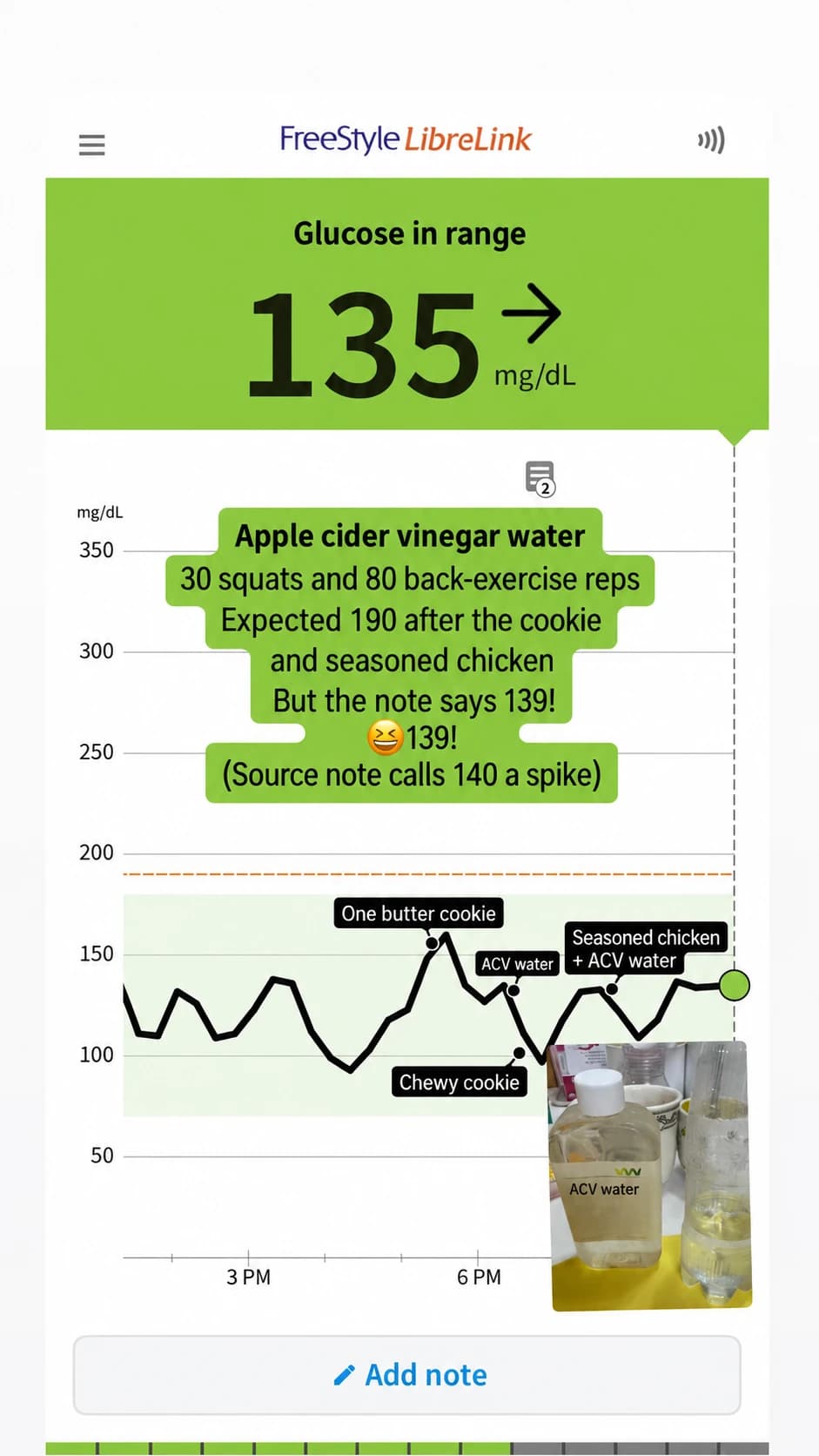
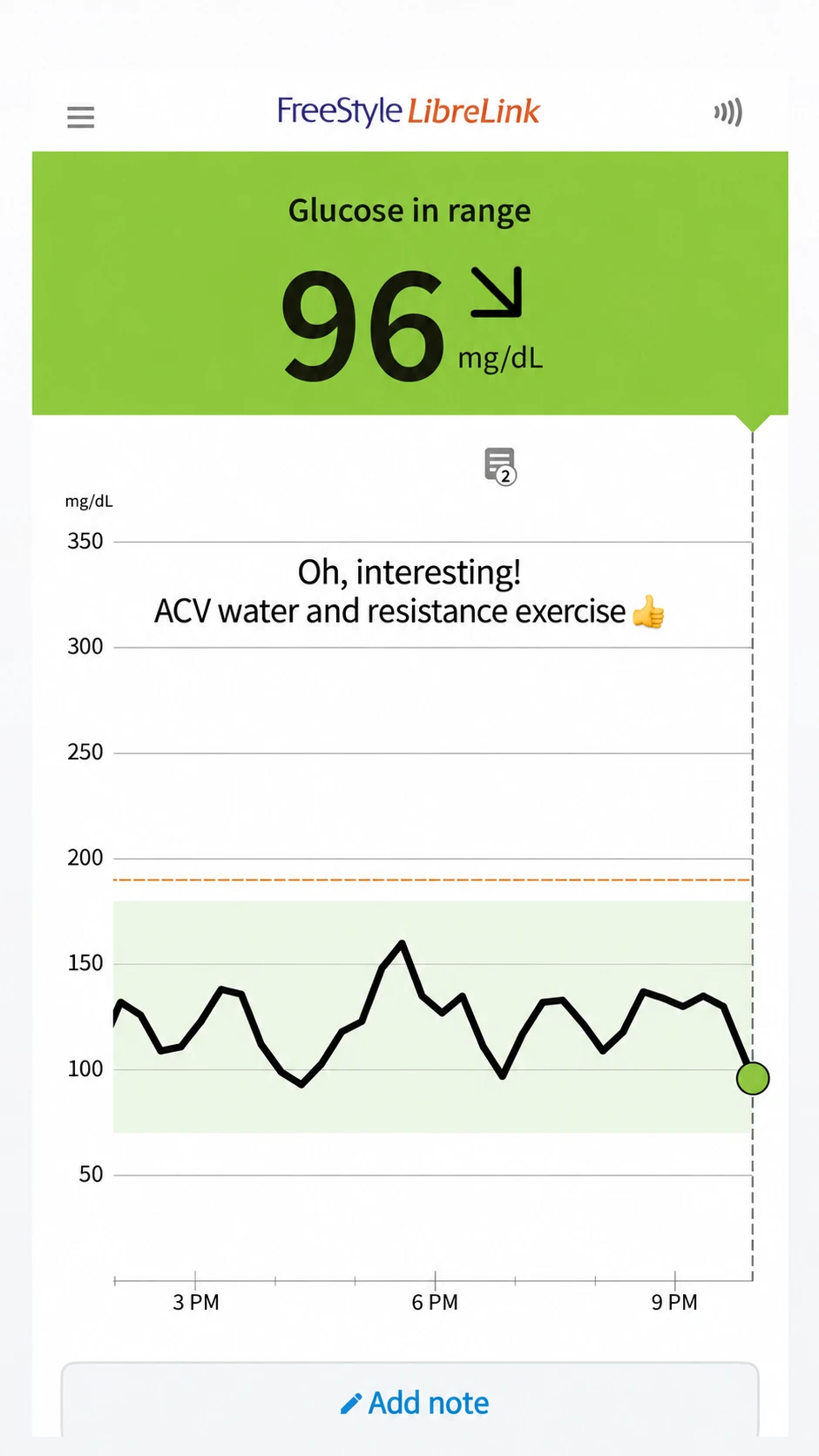
Other readings recorded in the source were around 190mg/dL after a mint and 170mg/dL after a cookie, leading to a higher expectation for the later meal. These are individual device readings rather than a controlled comparison.
Research and the personal record
The source links a meta-analysis: https://pubmed.ncbi.nlm.nih.gov/39949546/. It concerns glycemic control and insulin sensitivity in people with type 2 diabetes, not proof of preventing a peak after any meal in a healthy individual. Proposed mechanisms such as gastric emptying and carbohydrate handling need to be distinguished from demonstrated outcomes.
Muscle and glucose transport
Exercise can influence glucose uptake and GLUT4 transport. GLUT4 is a transporter, not simply a receptor. The source acknowledges limited human evidence that vinegar directly activates it and discusses AMPK as a possible pathway. These mechanisms do not isolate the cause of the author’s reading.
The source connects food, glucose response and activity, but one person’s combined intervention cannot establish the contribution of each factor or prove reduced fat storage.
This record does not guarantee a vinegar effect and cannot replace diabetes treatment.
The source closes by favoring a planned approach to food and activity over a simple test of willpower. The experiment cannot guarantee a smooth glucose curve or establish that a food is safe for an individual.
Materials linked by the source
Source: Original post on Dr. Hyemi Yu’s Naver blog (Korean)
The original publication date and the website revision date are shown separately.