
JOURNAL
Radiesse: distinguishing volume support from skin regeneration
Source research and diagrams on Radiesse volume, tissue responses and dilution, including limits of the figures.
The source text and diagrams’ 21.7%, 60% and dilution comparisons require checking against the study population, time points and outcomes. They do not guarantee individual results or universal superiority of 1:1 dilution. Former affiliations and contact details within source images are historical material, not current booking information.
Radiesse can be discussed in terms of two different goals: volume support and tissue responses in the skin.
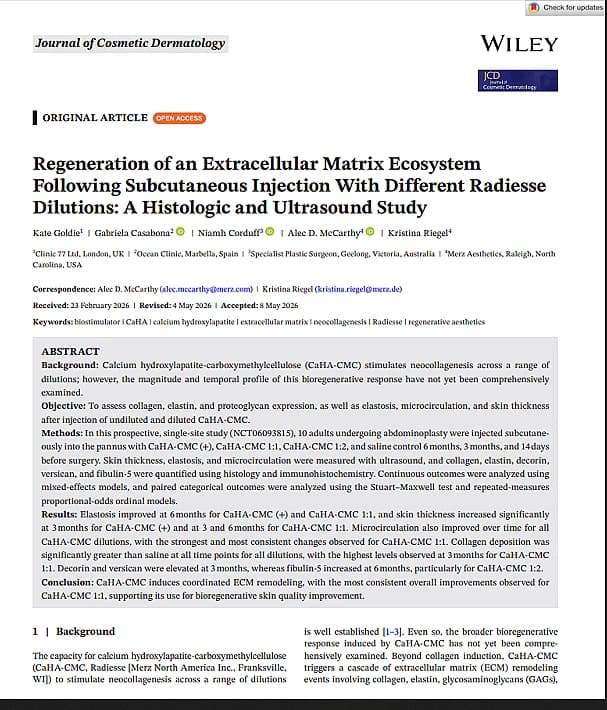
The 2026 histological study introduced in the source examines extracellular matrix changes, which the author describes using a “regeneration switch” analogy. This is not a guarantee of skin regeneration or a reason to disregard Radiesse’s volume-related uses.
Goldie K, Casabona G, et al. J Cosmet Dermatol. 2026. DOI:10.1111/jocd.70930. The publication date and exact outcome interpretation in the original post require checking.
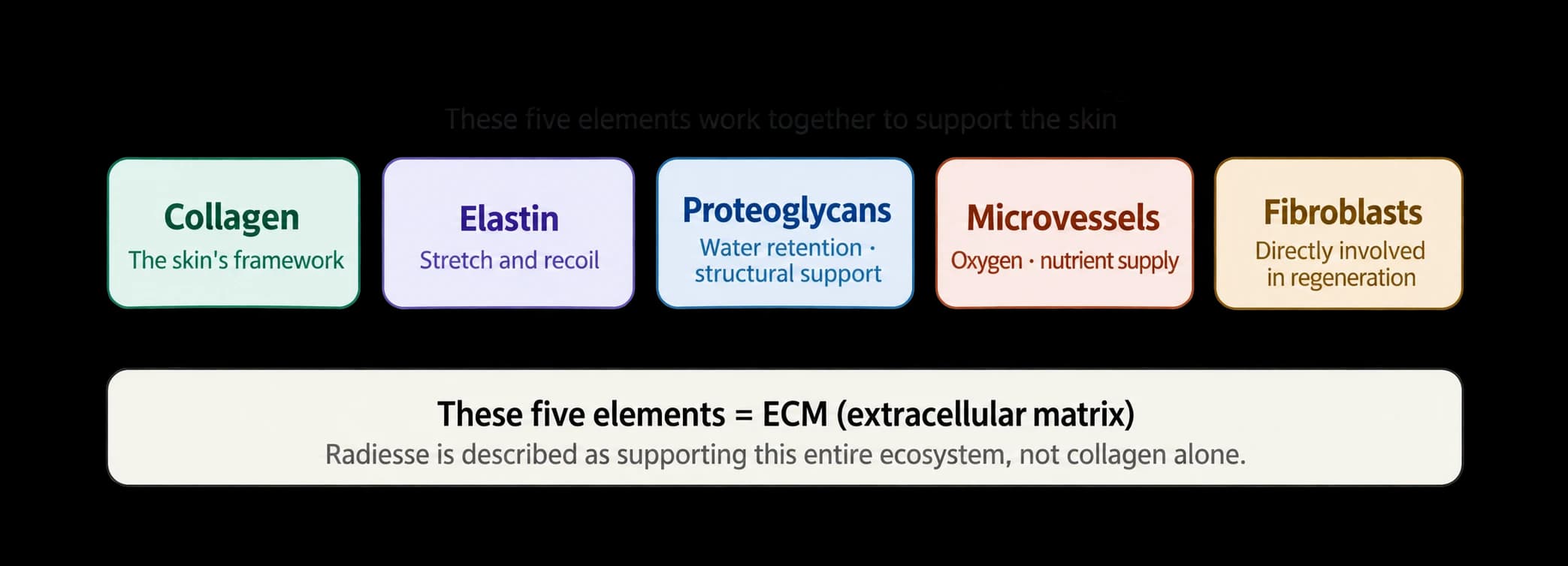
Have you considered what contributes to skin elasticity? Collagen is only one part of a wider tissue environment. Several components work together.
The original post highlights differences between undiluted and diluted material in the study and interprets some findings as favoring dilution for certain tissue outcomes.
It may seem intuitive that a more concentrated preparation would always work better, but different treatment goals require different outcome measures. A particular study result does not establish the best dilution for everyone.
The author explains the idea through the small calcium microspheres in Radiesse interacting with cells. The source describes undiluted particles as more closely packed, with dilution creating more space between them.
This is a simplified explanation of a proposed mechanism. The images and explanation require review against the actual study and must not be read as proof that one concentration always produces more effective regeneration.
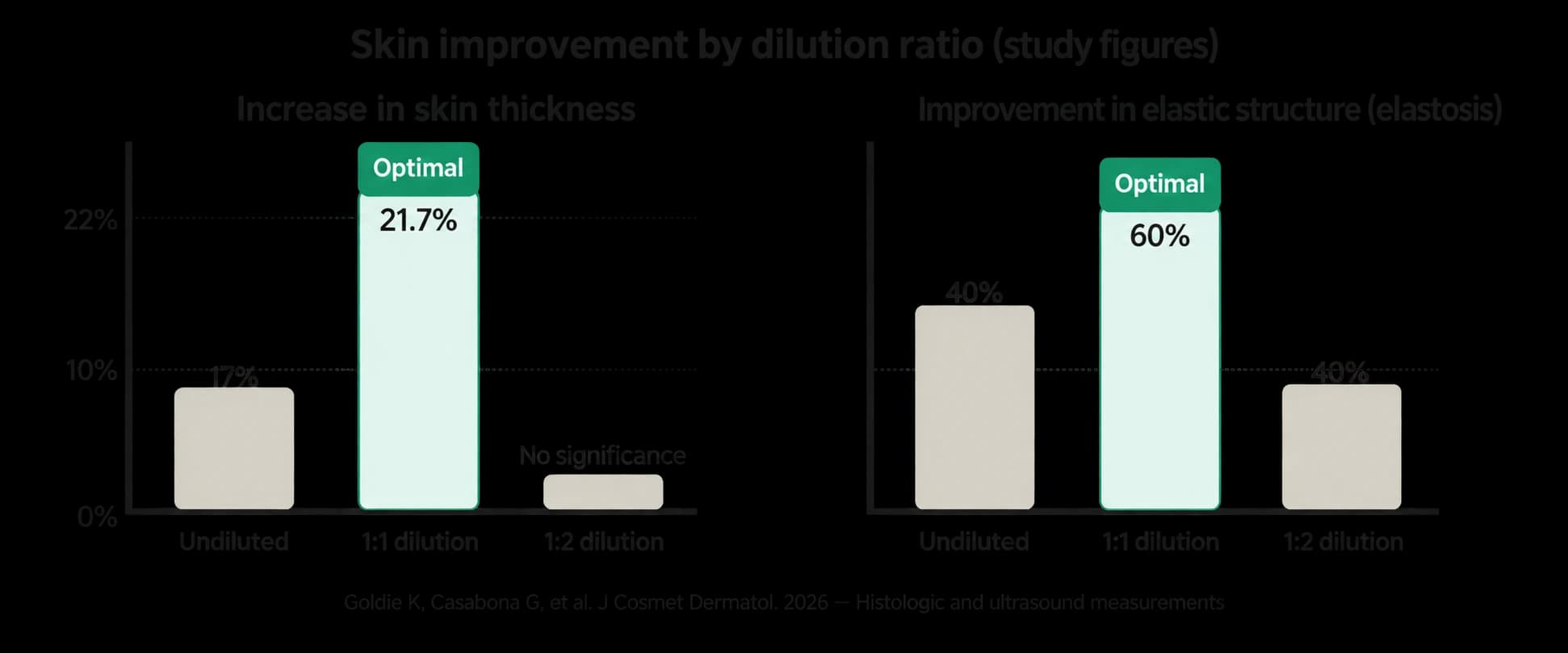
The source reports a 21.7% increase in skin thickness and a 60% improvement in an elastic-structure measure, describing the 1:1 dilution as showing more pronounced findings than undiluted material. The exact definitions, populations, time points and statistical comparisons require verification against the paper.
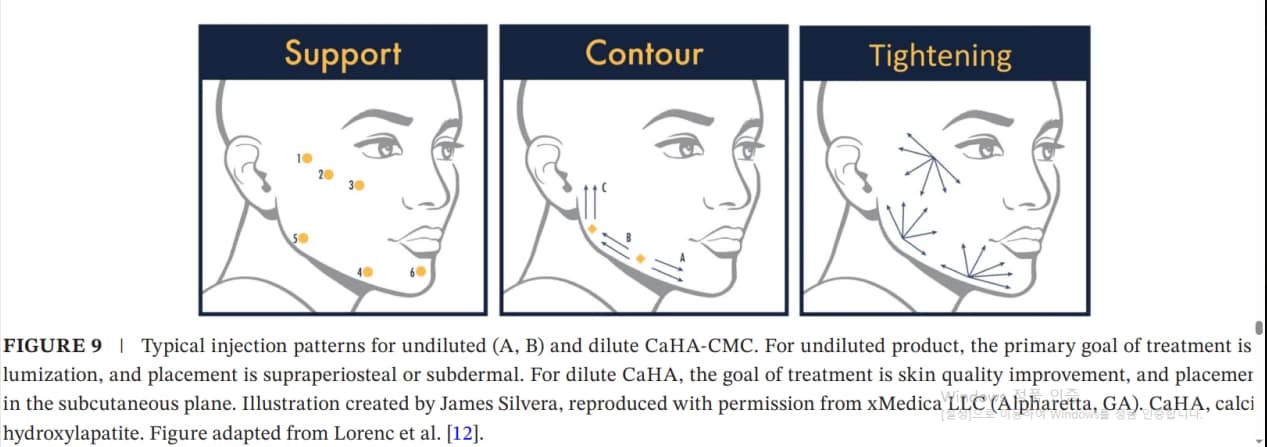
Treatment goals and dilution should be discussed together during consultation. Volume support and tissue-quality goals, injection depth, and needle or cannula delivery are different considerations.
The following diagram summarizes the source author’s approach to treatment planning. Its comparative claims require review and do not establish the inferiority of other providers.
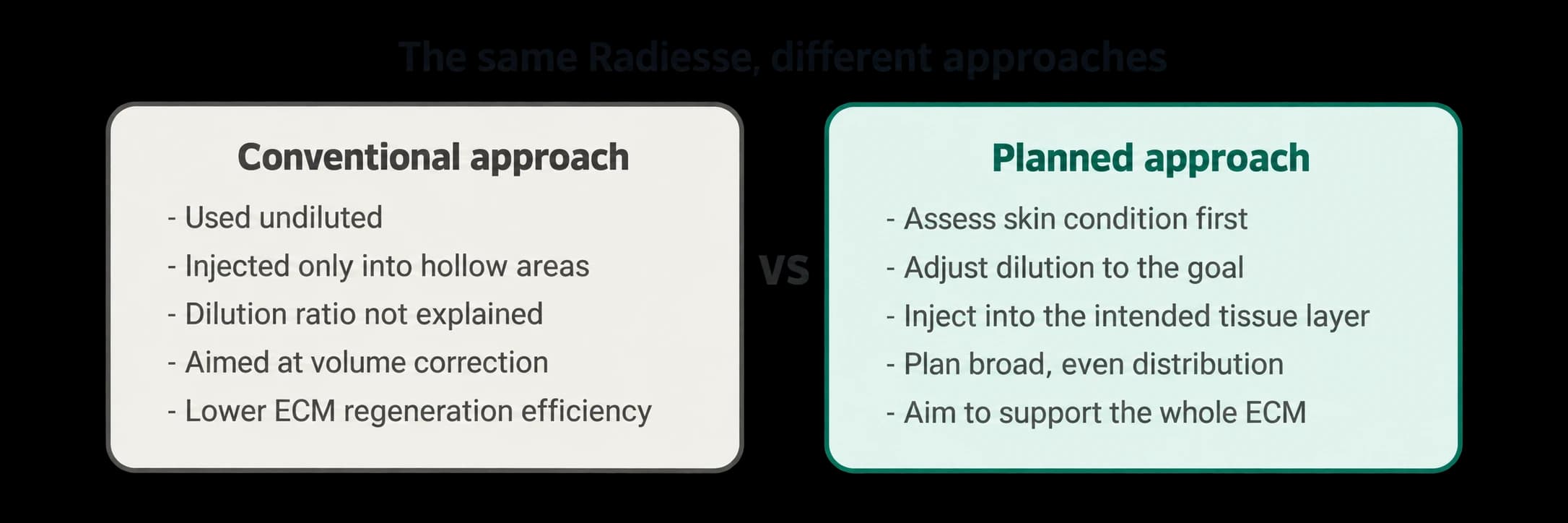
The original post emphasizes that planning matters even when the same product is used. Rather than considering only how much material is injected, the author argues for considering how a treatment is designed. This does not guarantee that a particular design will produce a particular outcome.
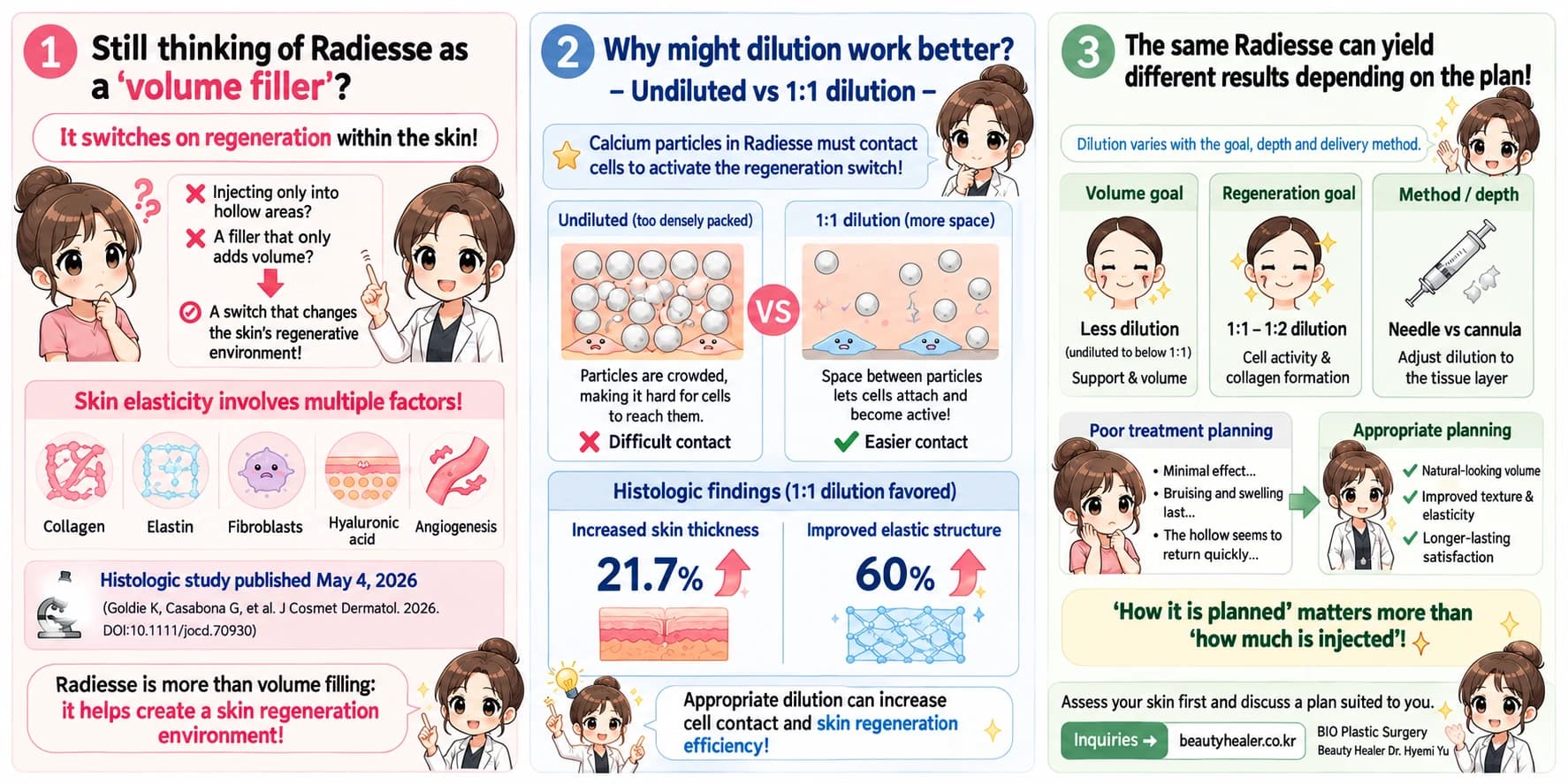
This article provides medical information based on the literature discussed in the source. It does not guarantee a treatment outcome or replace an individual diagnosis. Decisions about treatment require a full discussion with a qualified specialist.
Source: Original post on Dr. Hyemi Yu’s Naver blog (Korean)
The original publication date and the website revision date are shown separately.