
JOURNAL
Wegovy and Cancer Risk: Why Research Findings Differ
Understanding differing research findings on semaglutide and cancer risk.
Some headlines say Wegovy lowers cancer risk; others discuss possible colorectal or thyroid cancer signals. It is understandable to feel confused about whether it is suitable for you, particularly with a family history of cancer or while already using the medication.
This article examines what the cited papers report rather than relying on conflicting online anecdotes.

My work focuses on obesity and aging, including Korean-language books on slow-aging diets and ongoing reading of related research. In consultations, I often hear, “Some articles say it reduces cancer and others say it increases it. Which is true?”
Let us consider the evidence and its limits, rather than either exaggerated expectations or vague fears.
Why does cancer come up in discussions of weight-loss medicines?
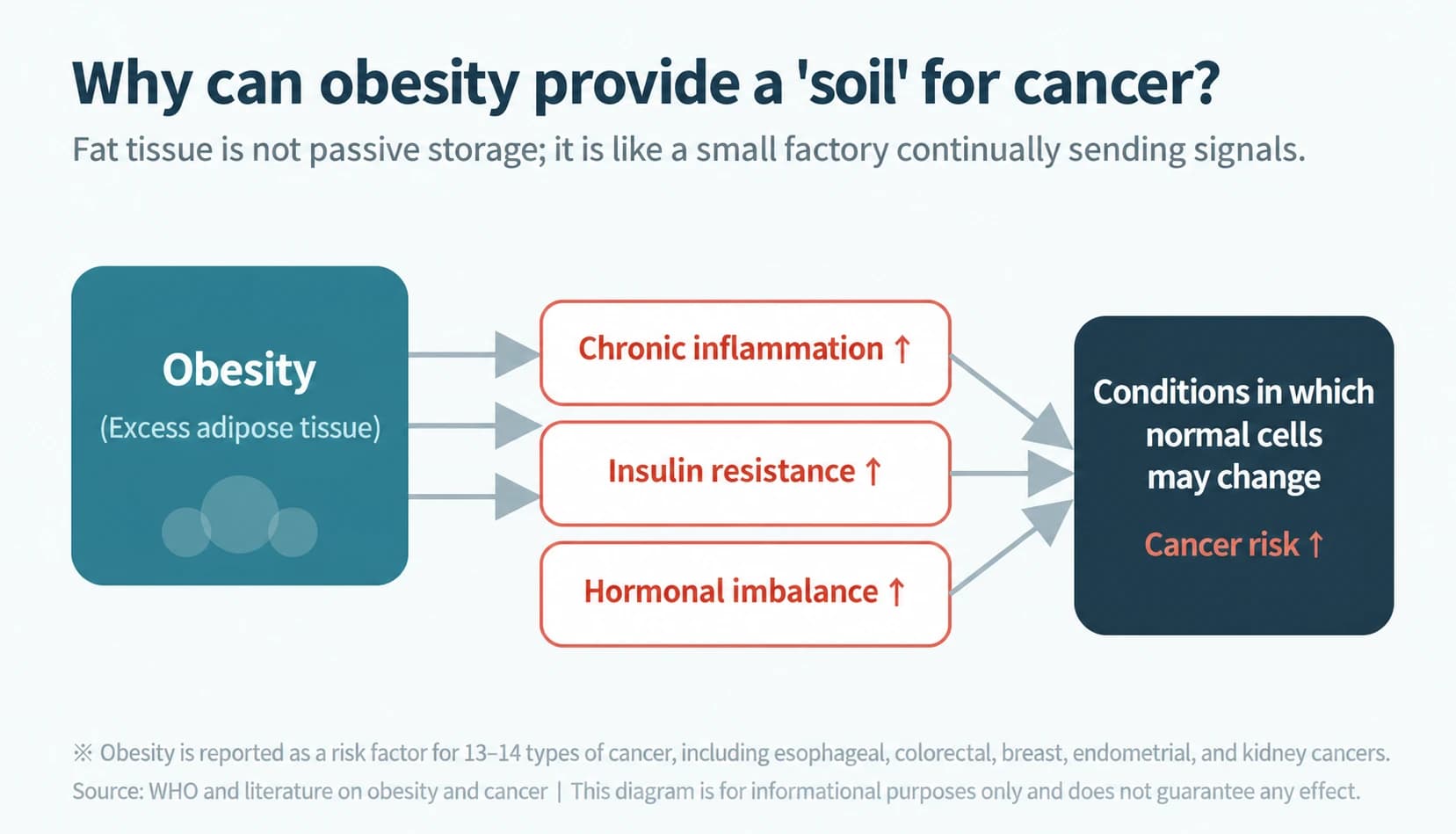
Obesity itself is associated with cancer risk. The WHO and other organizations discuss links with approximately 13–14 cancer types, including esophageal, colorectal, postmenopausal breast, endometrial, kidney, and pancreatic cancers.
Fat tissue is not merely passive storage. It can contribute to chronic inflammatory signals, insulin resistance, and hormonal imbalance. Over time, these can create conditions associated with abnormal cell changes.
Researchers therefore ask whether reducing obesity-related factors can also be associated with lower cancer risk.
Studies reporting lower risk
Among the large studies discussed in the original, many findings point toward associations with lower risk. Three examples are:
- A US study following 1.1 million people (Cancers, 2024). Semaglutide users with obesity had lower observed rates of several cancers, particularly gastrointestinal cancers and stomach cancer.
- A clinical-evidence review (JCI, 2025). The review reported approximately 58% lower hepatocellular cancer risk in GLP-1 medication groups and lower colorectal cancer risk compared with some medications.
- Another large real-world study (PMC). Semaglutide use was associated with lower incidence of obesity-related cancers.
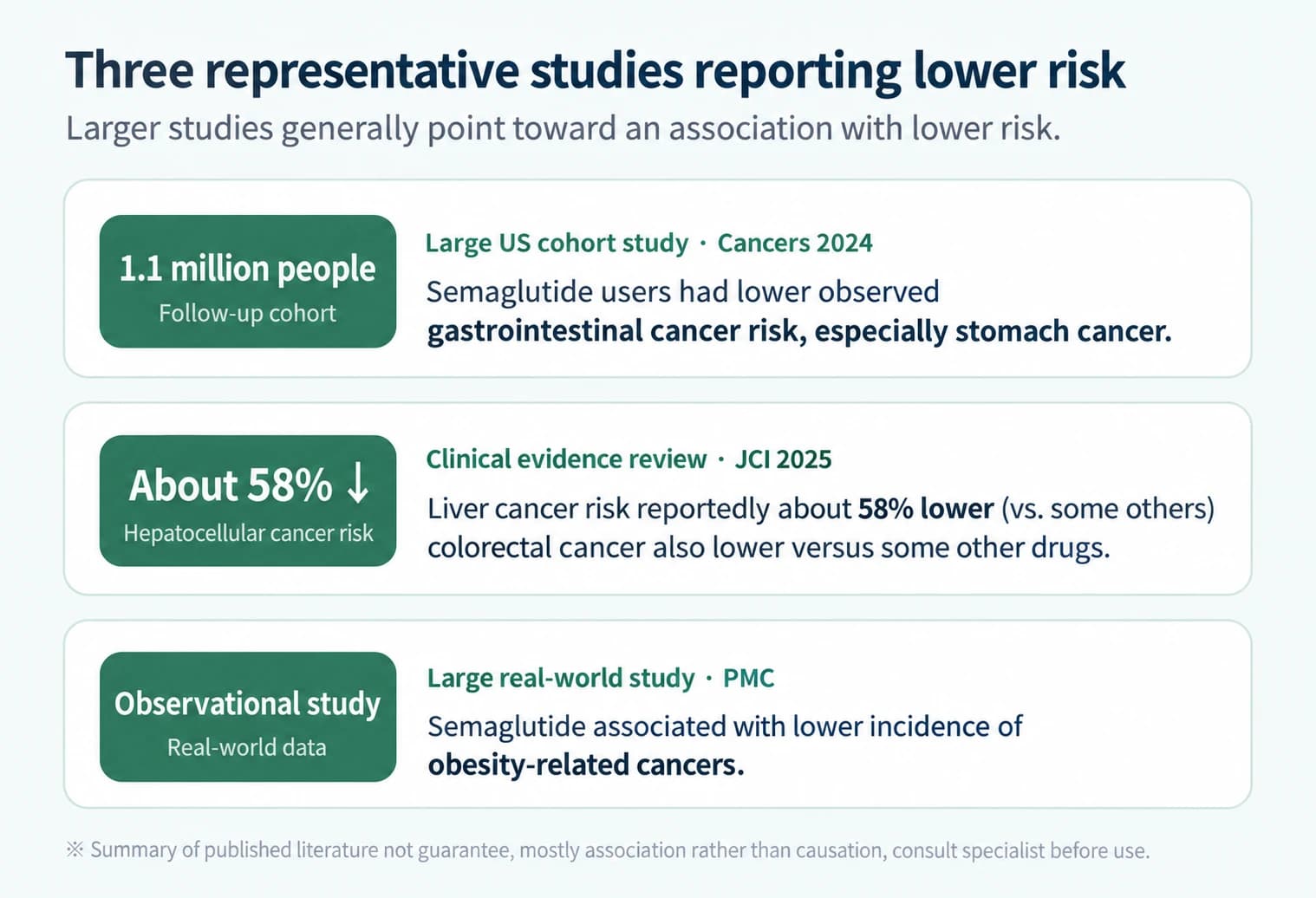
These findings suggest a link between treatment of obesity and lower observed cancer risk, but the discussion does not end there.
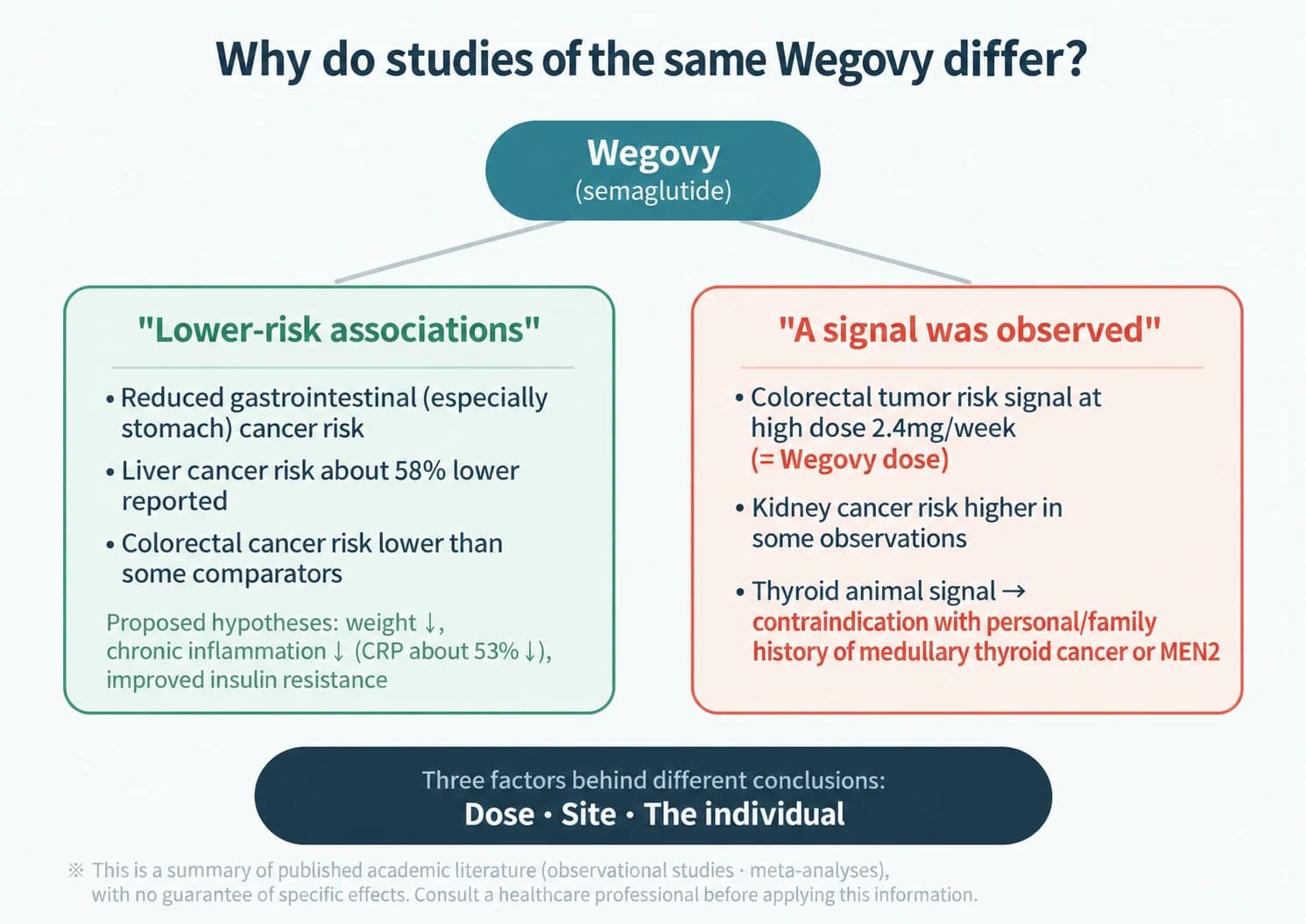
Three proposed mechanisms are weight loss, reduced chronic inflammation, and improved insulin resistance. One study cited in the original reported a roughly 53% reduction in the inflammatory marker CRP among semaglutide users.

Findings that require caution
If considered alone, the favorable results could make the medication appear universally beneficial. Other research points to important qualifications.
A network meta-analysis of 68 randomized controlled trials reported a colorectal-tumor risk signal specifically with high-dose injectable semaglutide at 2.4 mg per week—the obesity-treatment dose associated with Wegovy.
Some large observational studies reported lower overall risk but higher observed kidney cancer risk, with a call for further research (JAMA Oncology, OneFlorida+).
For thyroid cancer, animal studies in rodents produced signals underlying FDA warnings concerning medullary thyroid cancer and MEN2. Human studies have not established the same relationship clearly, but the original notes a contraindication for people with a personal or family history of medullary thyroid cancer or MEN2.
The dose, cancer site, and person receiving the medication can therefore lead to differing conclusions. The original uses the analogy of a knife being useful in appropriate hands but potentially harmful when used inappropriately. The question is how, by whom, and for whom a medication is used.
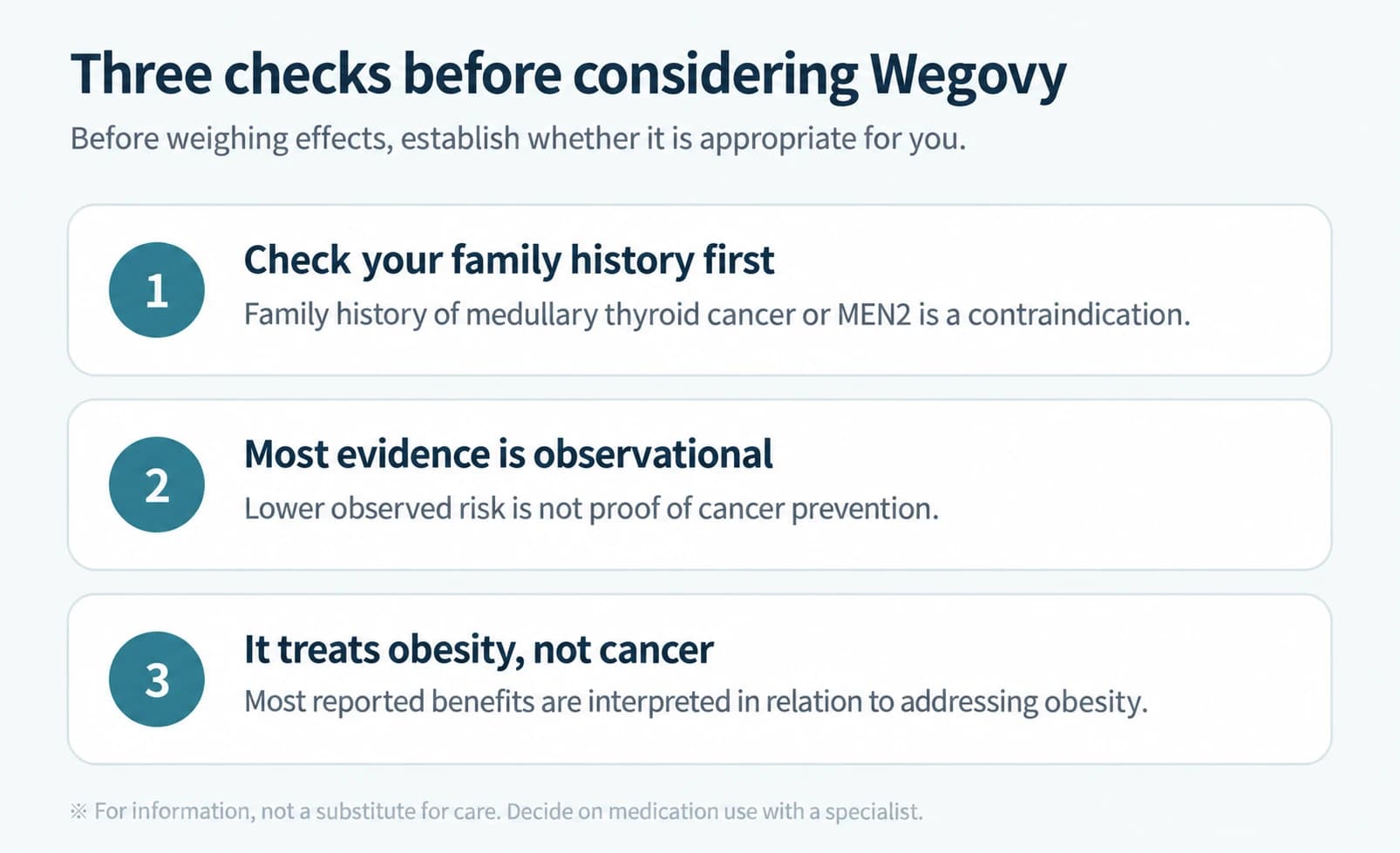
Three checks when considering Wegovy
First, review family history. Medullary thyroid cancer and MEN2 family history are contraindications cited in the original. Suitability comes before discussion of possible effects.
Second, remember that much of the evidence is observational. Lower cancer risk observed among people receiving obesity treatment is not proof that Wegovy prevents cancer. More rigorous prospective trials are needed to establish causation.
Third, Wegovy is an obesity medication, not an anticancer treatment. Most reported benefits are interpreted in relation to managing obesity. Dietary and lifestyle planning, including weight regain after stopping, also matters.
There are too many underlying variables to decide based only on an “anticancer effect” headline.
Wegovy should not be described simply as either a cancer-preventing or cancer-causing medication. It treats obesity, and its potential effects and risks depend on dose, site, and individual factors.
The literature shows both possibilities and limitations. Finding an appropriate answer involves consultation with a doctor familiar with your health, including family history, thyroid and kidney status, weight goals, and care after discontinuation.
Discuss your individual questions about obesity management and Wegovy with a clinician.
References
Levy S, et al. Differential Effects of GLP-1 Receptor Agonists on Cancer Risk in Obesity: A Nationwide Analysis of 1.1 Million Patients. Cancers (Basel). 2024;17(1):78. https://pmc.ncbi.nlm.nih.gov/articles/PMC11720624/
GLP-1 receptor agonists and cancer: current clinical evidence and translational opportunities. J Clin Invest. 2025. https://www.jci.org/articles/view/194743
Colorectal tumor risk related to GLP-1 receptor agonists and SGLT2 inhibitors: a network meta-analysis of 68 RCTs. https://pmc.ncbi.nlm.nih.gov/articles/PMC12825905/
Mechanisms by Which Pharmacotherapy May Impact Cancer Risk among Individuals with Overweight and Obesity. https://pmc.ncbi.nlm.nih.gov/articles/PMC11475810/
Weight loss interventions and obesity-associated cancers in people with type 2 diabetes and overweight/obesity: a real-world observational study. https://pmc.ncbi.nlm.nih.gov/articles/PMC12587238/
Assessing the Oncological Safety of GLP-1 Receptor Agonists: A Systematic Review and Meta-Analysis. https://pmc.ncbi.nlm.nih.gov/articles/PMC12676983/
Medical information notice
This article reviews published literature for information, not to guarantee or recommend a medication’s treatment effects. Suitability, effects, and adverse reactions vary with health, medical history, and family history. It does not replace care; medication decisions should follow a thorough consultation with a medical professional.
Source: Original post on Dr. Hyemi Yu’s Naver blog (Korean)
The original publication date and the website revision date are shown separately.