
JOURNAL
Stem cell types and eye-drop research
A historical source account: Stem cell types and eye-drop research. Context and outstanding review are distinguished.
This is a historical account of the original author’s experiences and interpretations. Research claims, numerical results, mechanisms and legal descriptions remain pending comparison with primary sources and hospital medical review. They do not establish a treatment benefit or current applicability.
The original essay introduced stem cells through a metaphor of cells retaining the body's memory of its beginnings, calling them a reset button for replacing damaged or lost tissue. That metaphor does not establish that a procedure resets aging.
1. Blood-forming stem cells
The source described hematopoietic stem cells (HSCs) in bone marrow as producing red cells, white cells and platelets and as relevant to transplantation for conditions such as leukemia and aplastic anemia. It also discussed immune-related research while noting limited differentiation into non-blood tissues and invasive collection.
The original post attributed more than 80% restoration of immune-cell diversity and normal infection resistance within 6 months after hematopoietic transplantation to Nature Medicine in 2024. The paper, the population and the interpretation remain unverified. Those figures do not describe the effects of other cell-based procedures.
2. Adipose-derived cells
The source described collecting ADSCs from abdominal or thigh subcutaneous fat and discussed research and use relating to skin, scars and hair. It proposed signaling through VEGF, FGF, PDGF and cytokines, with possible effects on microvessels and collagen. The claims of greater elasticity, less inflammation and faster healing require evidence specific to the intervention.
The post cited a 2023 Aesthetic Surgery Journal report for a 2.3-fold increase in dermal thickness compared with PRP. The precise paper and that comparison remain unverified.
The source described collection through liposuction as practical and stated that only immediate autologous use as stromal vascular fraction (SVF), rather than cultured cells, was permitted. That legal summary requires confirmation for the actual product, processing, route, indication and applicable rules.
3. Bone-marrow-derived mesenchymal cells
The original post introduced BMSCs as an early reference population in regenerative research. It discussed bone, cartilage, muscle and neural differentiation and research concerning joints, heart injury, spinal injury and immune modulation. These research areas are not interchangeable with established treatment indications. It also noted possible age-related reductions in growth or differentiation and discomfort during collection.
The source attributed an average 18% recovery in cartilage thickness within 6 months after BMSC injection in osteoarthritis to a 2024 Stem Cell Reports paper. The precise study and the outcome description remain unverified.
4. Eye-drop research
The essay discussed applying cell-derived signals to the eye, including exosome-related work involving blood- and fat-derived materials. It mentioned corneal injury, dry eye and inflammation after LASIK. Cell-derived fluid and exosomes are distinct preparations; the source's grouping requires review rather than being treated as a single treatment.
The source cited a 2025 Ophthalmology Science study claiming 46% faster corneal epithelial repair and 1.8-fold better tear-film stability after 14 days of cell-derived exosome drops. The exact paper, population and measurements remain unverified.
The original author compared this concept with an autologous-blood-derived skin ampoule, proposing direct delivery of growth-factor signals. The analogy does not establish that the preparations, route or efficacy are equivalent.
5. The source author's comparison
The post emphasized that stem cells are not one uniform category and described different biological roles through the metaphor of cellular memory.
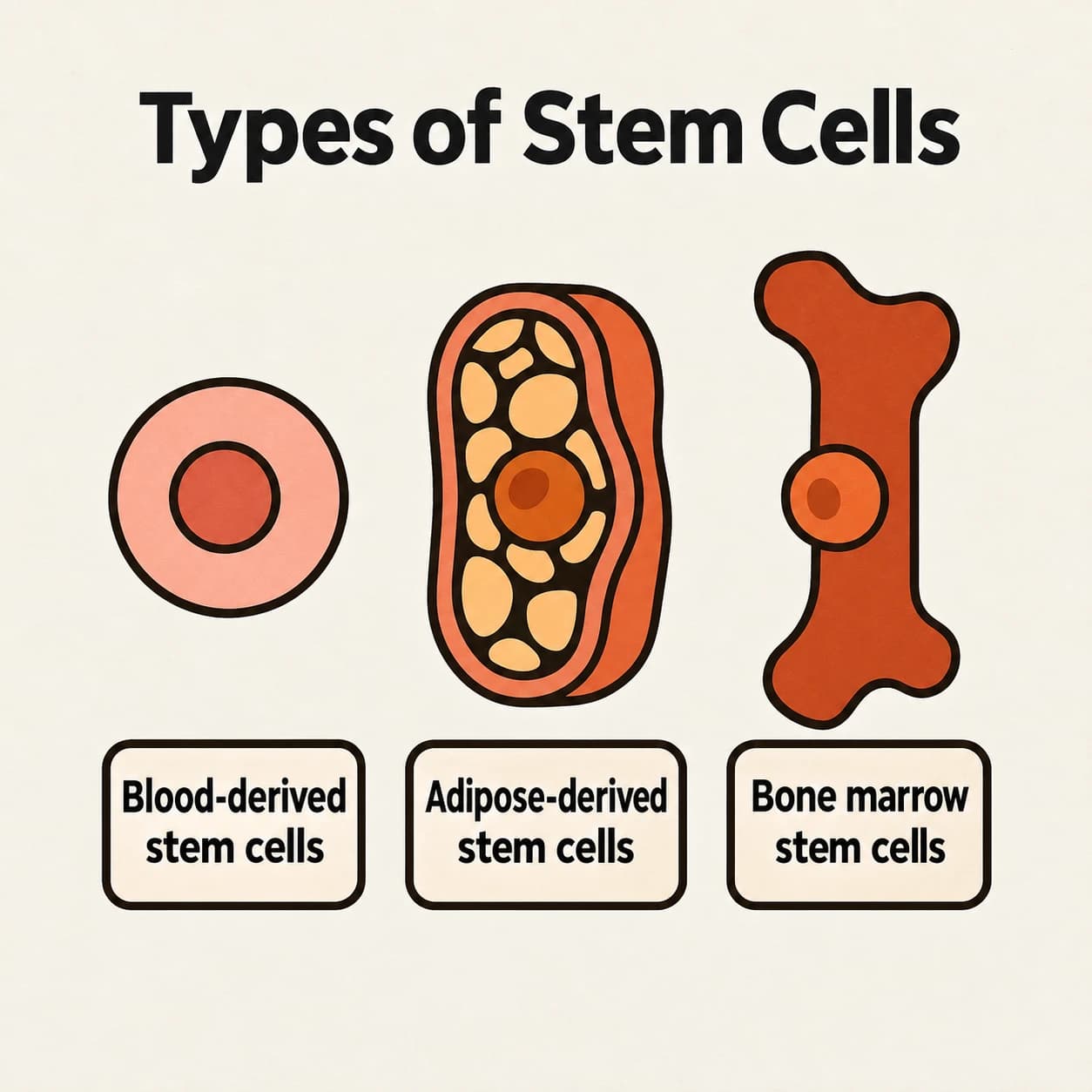
| Type | Differentiation described | Applications described | Advantages claimed | Limitations noted |
|---|---|---|---|---|
| HSC | Red cells, white cells, platelets | Leukemia, immune conditions | Self-renewal, immune recovery | Limited non-blood differentiation |
| ADSC | Skin, vessels, muscle | Aesthetic and regenerative work, scars | Accessible collection, growth factors | Culture restrictions |
| BMSC | Bone, cartilage, nerves | Joint, cardiac and neural research | Structural repair, immune modulation | Invasive collection, age effects |
This table preserves the source author's broad comparison; it is not an indication, safety or regulatory approval table.
6. The original closing reflection
The author described blood-forming cells through life, adipose-derived cells through skin and marrow-derived cells through structure, then extended the metaphor to the eye. The essay's language of restoring memory and recalling youth is figurative and should not be read as evidence that a treatment reverses aging.
The original post stated that it shared medical information rather than promoted a procedure, product or institution, noted that methods and outcomes vary, and said to consult a specialist.
Source: Original post on Dr. Hyemi Yu’s Naver blog (Korean)
The original publication date and the website revision date are shown separately.