
JOURNAL
A case discussion of melasma changes during tamoxifen use
A case discussion of melasma changes during tamoxifen use. Source observations, research context and limitations.
This article discusses the source author’s earlier literature, cases and experiences. Research populations and limitations matter; individual diagnosis and treatment require clinical assessment.
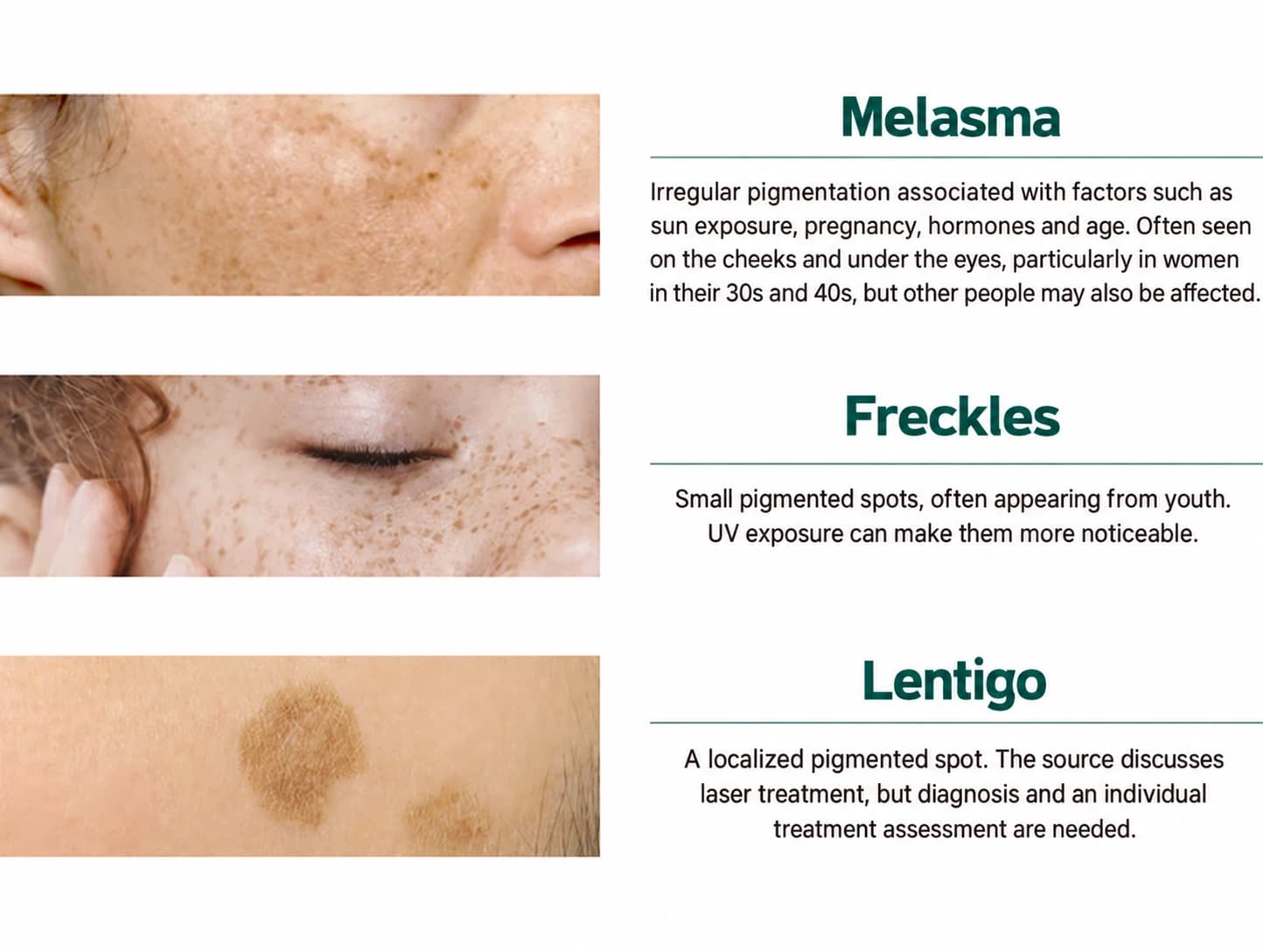
The source asks about melasma appearing or worsening during tamoxifen treatment after breast cancer. A temporal association does not automatically establish the cause.
It cites a 2009 report after approximately one month of tamoxifen and a 2019 conference case involving repigmentation in vitiligo. Exact publications and scope require checking.

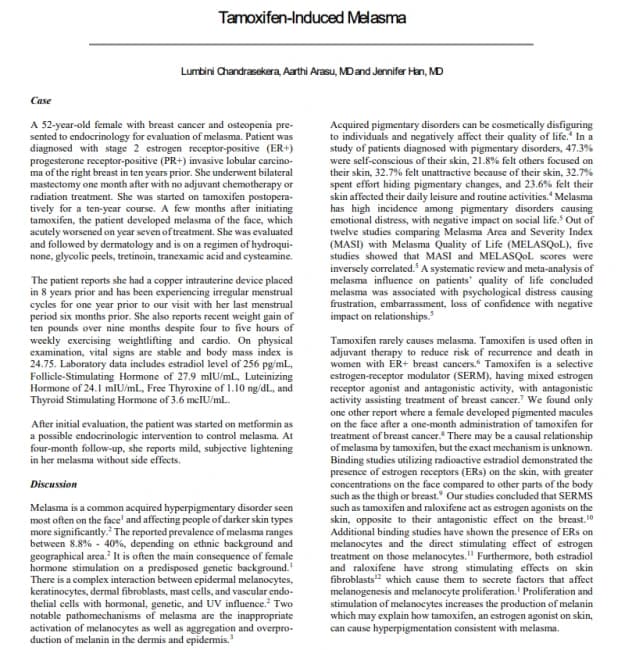
The source describes a UCLA account of a 52-year-old woman with pigmentation changes over years of treatment and several skin treatments, identified in the narrative as 2023. Dates and bibliographic details need reconciliation rather than assuming every linked report is the same case.
Tamoxifen has tissue-specific effects. The source proposes estrogen-receptor and pigment-cell pathways, alongside sun, genetics and hormonal factors. A breast “brake” and skin “accelerator” analogy is a simplification, not proof of the individual mechanism.
Management and prescribing are different
The source discusses UV and visible-light protection, limiting irritation and several topical or procedural options. Niacinamide, azelaic acid, hydroquinone, tranexamic acid and retinoids are not presented as one fixed day-and-night regimen. Cancer treatment, contraindications and adverse effects matter.
Do not stop or change tamoxifen independently. Any medication change must be discussed with the oncology team; skin care is supportive.
Pigmentation can be persistent and results vary. Sun protection and individualized care may be considered, but the source’s reassurance does not guarantee control or a particular response.
Needling or another irritating procedure may influence pigmentation in susceptible skin, but risks differ by product and procedure. Discuss a plan with the treating team rather than generalizing from one proposed mechanism.
Materials linked by the source
Source: Original post on Dr. Hyemi Yu’s Naver blog (Korean)
The original publication date and the website revision date are shown separately.