
JOURNAL
Ultrasound and hydrodissection: evidence and scope
Ultrasound and hydrodissection: evidence and scope. Source observations, research context and limitations.
This article discusses the source author’s earlier literature, cases and experiences. Research populations and limitations matter; individual diagnosis and treatment require clinical assessment.

Returning to postoperative symptoms through ultrasound
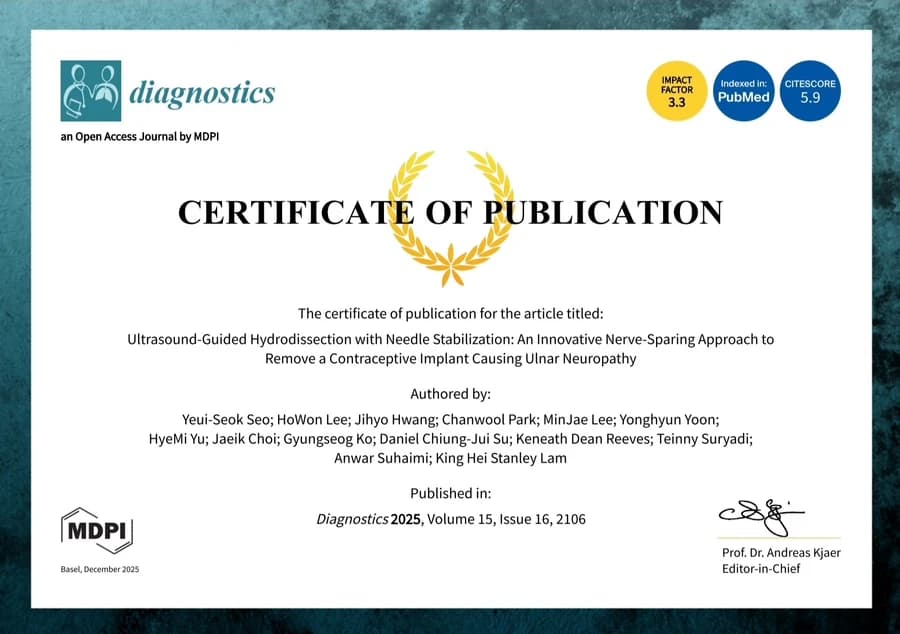
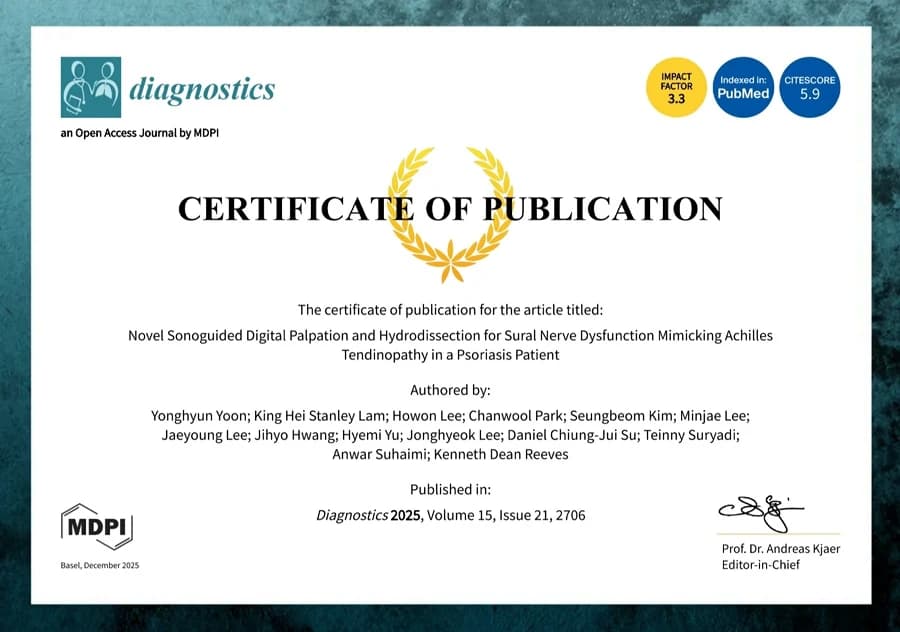
The source records the process behind two papers published in the year of writing. The author describes studying persistent pain and discomfort rather than assuming every symptom resolves with time. Some patients reported heaviness after botulinum toxin, altered expression after threads or surgery, or palpable lesions after fat grafting and biostimulators. These symptoms can have different causes.
The initial research concerned peripheral nerves in the limbs, not the face. The source compares a nerve compressed by surrounding tissue with an intact wire under furniture, as distinct from a severed wire. Hydrodissection uses fluid to separate tissue around selected structures; that analogy does not diagnose every nerve symptom.
One report concerned ulnar neuropathy associated with a contraceptive implant in the arm, using ultrasound to assess the implant and nerve relationship. The second concerned sural nerve dysfunction in a person whose pain initially resembled Achilles tendinopathy. Exact DOI, authorship, patient selection and procedure details require reconciliation with the publications. These reports do not establish facial efficacy.
The source mentioned a journal impact factor of 3.3. A journal metric is not proof of the safety or efficacy of an individual intervention. Peripheral nerve findings also cannot show that facial weakness after toxin or surgery usually comes from adhesions rather than drug action or direct injury.
The author describes learning ultrasound to understand tissue relationships and to explain possible causes to patients. The clinical aim is to investigate before intervening, with further facial research described as a future plan at the time of writing. This is a historical account of that work, not a completed comparative trial or a treatment guarantee.
Source: Original post on Dr. Hyemi Yu’s Naver blog (Korean)
The original publication date and the website revision date are shown separately.