
JOURNAL
Considerations in under-eye filler consultations
Considerations in under-eye filler consultations. Source observations, research context and limitations.
This article discusses the source author’s earlier literature, cases and experiences. Research populations and limitations matter; individual diagnosis and treatment require clinical assessment.
The source discusses people seeking help after under-eye filling produced an unexpected contour or color change. It turns to literature rather than assuming every dark circle is a volume problem.
Why the under-eye hollow can change
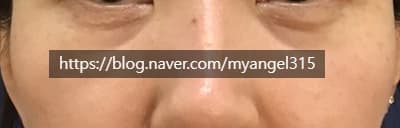
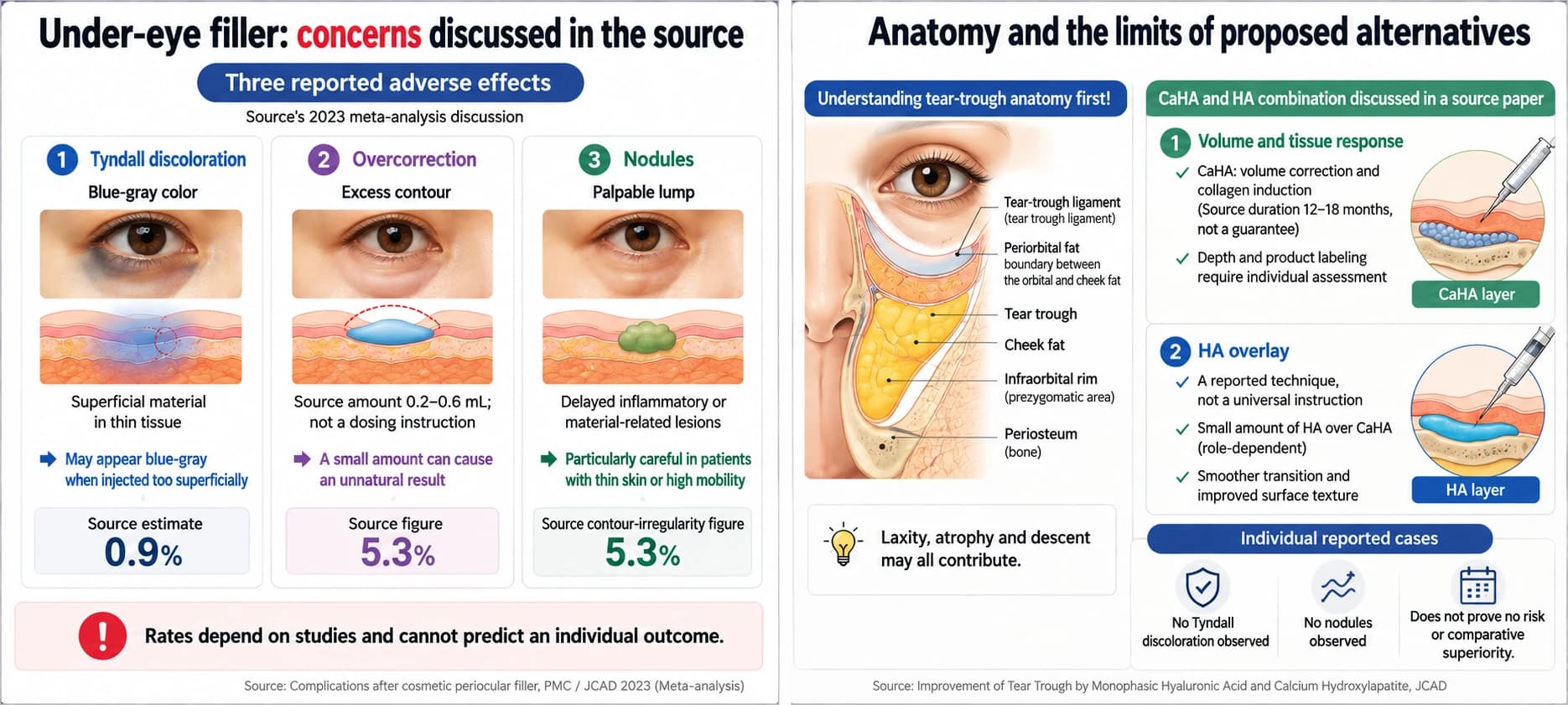
The source considers the tear-trough ligament, adjacent fat and age-related support changes. Relaxation, atrophy and tissue position may contribute in different proportions.
Reference cited: Improvement of Tear Trough by Monophasic Hyaluronic Acid and Calcium Hydroxylapatite, JCAD. Exact bibliographic details and applicability require checking.
Adverse effects discussed in the literature
The source quotes a 2023 meta-analysis as reporting approximately 0.9% Tyndall discoloration and 5.3% contour irregularity or lumps after tear-trough HA treatment. These depend on the included studies and are not individual predictions.
Blue-gray discoloration
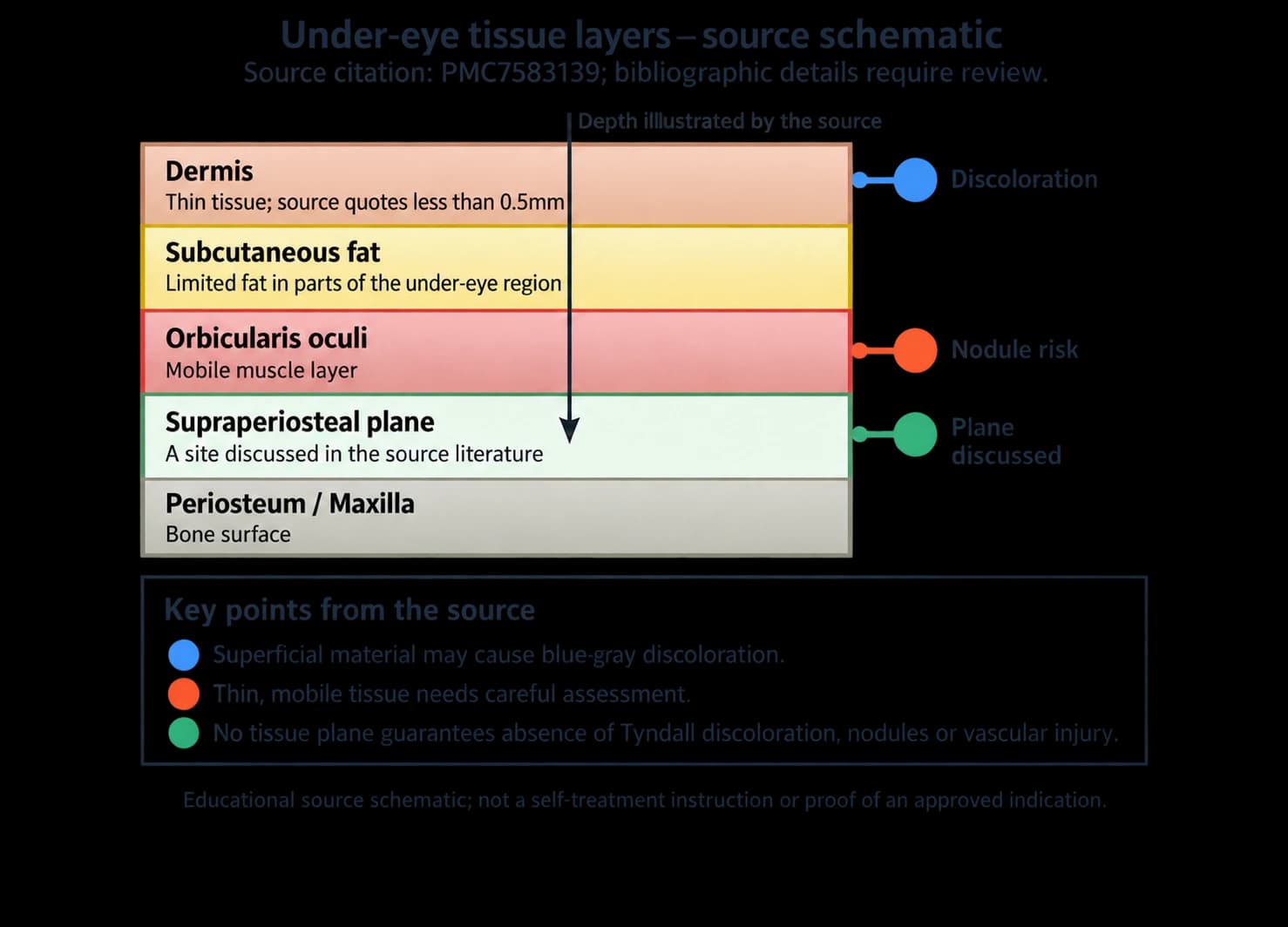
The source explains Tyndall-type discoloration as an optical effect associated with superficially placed material in thin tissue, citing Complications after cosmetic periocular filler.
Depth and anatomy matter, but no plane guarantees that discoloration or another complication cannot occur.
Excess contour or swelling
The original source quoted 0.2–0.6mL in a discussion of treatment amounts. This is a literature detail, not a dosing instruction.
Small contour changes may look like swelling and may be more noticeable in the morning. The cause requires assessment.
Nodules
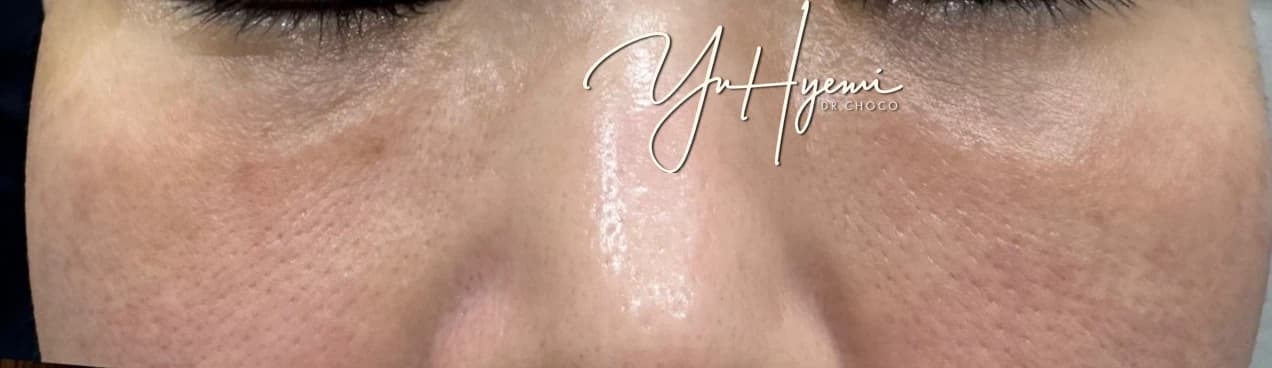
Palpable lesions can occur after collagen-stimulating or other materials and require diagnosis.
The source cites Long-Term Effects of Tear Trough Hyaluronic Acid Filler, JCAD, 2025, when discussing delayed nodules and material or inflammatory changes. HA and other biostimulators must not be merged into one mechanism.
Thin, mobile tissue calls for caution. The source’s description of a general professional consensus does not replace the underlying evidence.
How should the proposed alternatives be read?
The cited CaHA/HA literature describes particular cases and techniques. It does not establish comparative safety, a universal 12–18-month duration or a locally approved under-eye indication. Detailed injection depths and dosing were omitted.
The source describes a hybrid use of HA and CaHA. A reported technique is not a general recommendation.
No adverse event in a particular case does not establish that a combination is safer or longer-lasting than HA alone.
Assessment before product selection
Individual anatomy and the cause of a hollow, shadow, bulge or persistent lesion should be considered before deciding on further treatment.
This is a literature discussion. The original BIO affiliation is historical, and old consultation contact text was removed.
Source: Original post on Dr. Hyemi Yu’s Naver blog (Korean)
The original publication date and the website revision date are shown separately.