
JOURNAL
Functional medicine study and seeing the whole person
Functional medicine study and seeing the whole person. A historical record preserving source context, experiences and references.
This is a historical record of the source author’s experiences, reflections or shared material. Former affiliations, events and products refer to that time and are not current 1PM Clinic services or sales information. Medical claims, individual outcomes and republication rights await clinic review; benefit and safety are not guaranteed.
The more we know, the more we see; we can treat only what we recognize.
During a functional medicine study session, my body feels tired, yet my mind feels unusually clear and happy.
The more I study, the more I realize that no part of the body exists in isolation. Organs, muscles, nerves and hormones work as an intricately connected system.
In clinical practice, however, we often focus on a lesion rather than the whole person. Orthopedics, plastic surgery, anesthesiology and pain medicine, rehabilitation medicine and dermatology have different names, but they all concern the same body.
Nodules, botulinum toxin complications, facial paralysis and chronic pain may seem separate, yet I find connections among them. Stress can accompany hair loss, and a lack of sleep can affect appetite.
Without understanding such connections, merely cutting food intake or applying a hair-growth medicine may address fragments rather than the overall picture. The body is not that simple. In my view, recovery begins with the ability to examine a cause from several directions.
My body may be tired, but my brain and heart feel awake. Thank you to my study partners, rehabilitation physician Lee Go-eun (@dr_ko_eun_lee) and orthopedic physician Yoon Yong-hyun (@md_osteopath).
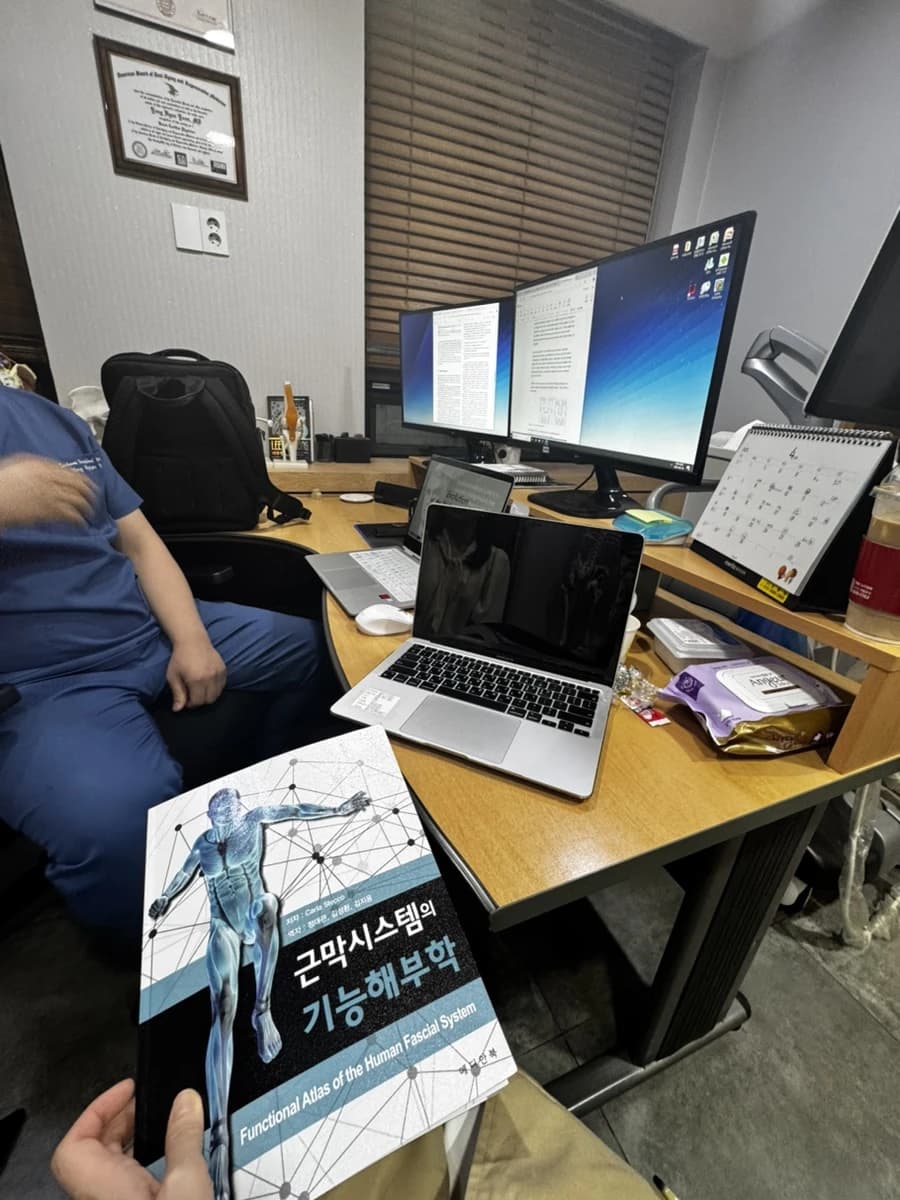
Image localization remains incomplete: the original-language source is retained for review.
Source: Original post on Dr. Hyemi Yu’s Naver blog (Korean)
The original publication date and the website revision date are shown separately.