
JOURNAL
Hair-Loss Injections and Pain: Understanding Drug Delivery Options
A literature-based look at pain and drug-delivery methods in scalp injections for hair loss.
This article provides information from published academic literature. It does not guarantee or advertise the effects of a particular device or procedure. Effects and adverse reactions vary; diagnosis and treatment decisions require an in-person medical consultation.
If you have considered or experienced scalp injections for hair loss, you may recognize these concerns:
“I want the effect, but I am afraid of the needle pain and hesitate to book again.”
“It requires repeated treatment. I do not know whether I can tolerate that sting every time.”
The scalp has a sensitive nerve supply, and injections there can feel particularly painful. Pain can therefore become a reason to stop treatment, regardless of its intended benefit.
This article explains the questions behind alternative delivery methods.

The author’s original post describes appearances on SBS, JTBC, tvN, and Channel A; publications in aesthetic and plastic-surgery journals; and a Korean-language book on slow-aging diets, among other works.
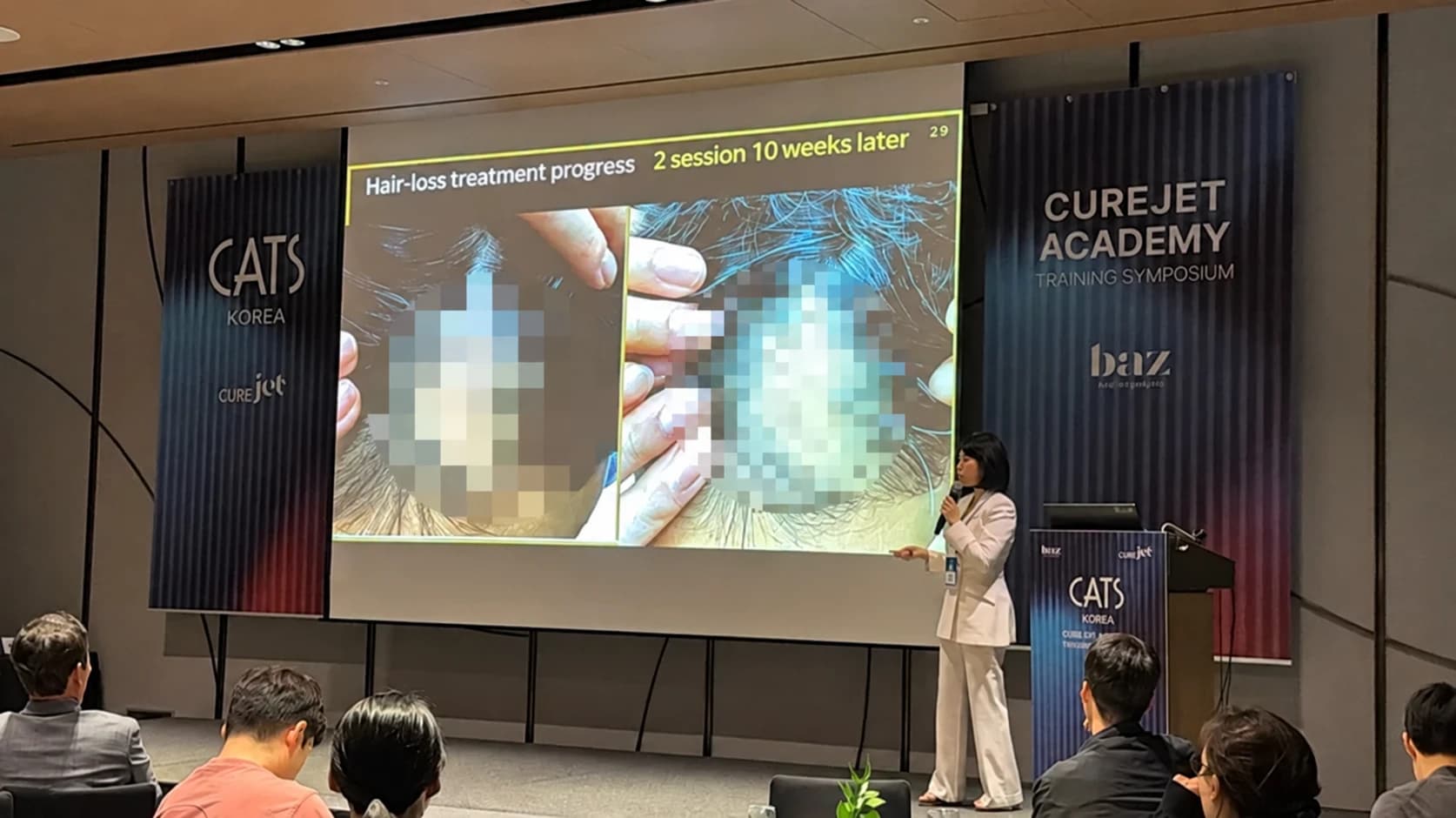
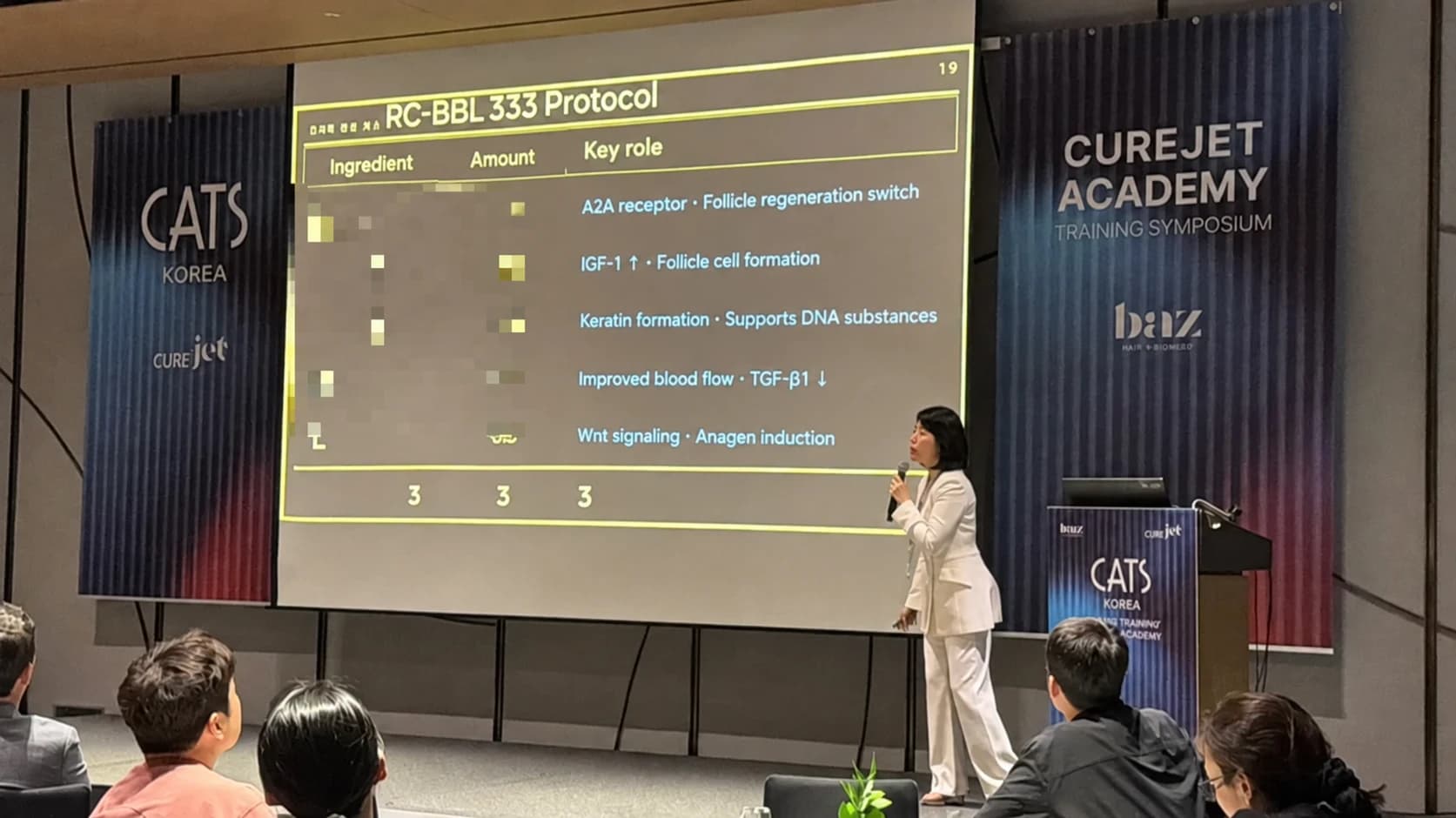
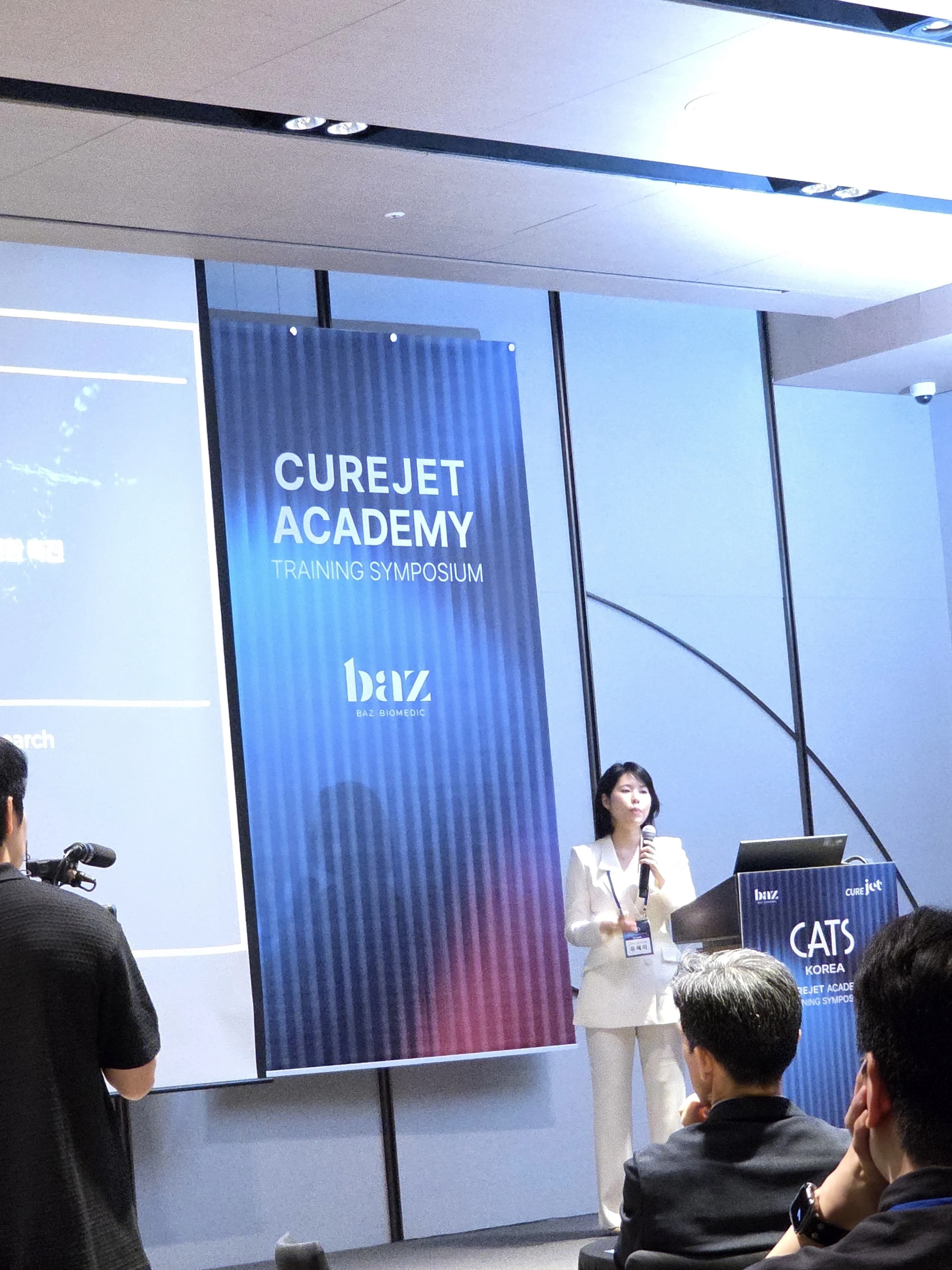
Speaking at the CATS KOREA CUREJET Academy Training Symposium
I recently participated as a speaker. One question shared by clinicians was how scalp medication could be delivered with less discomfort and greater convenience for patients.
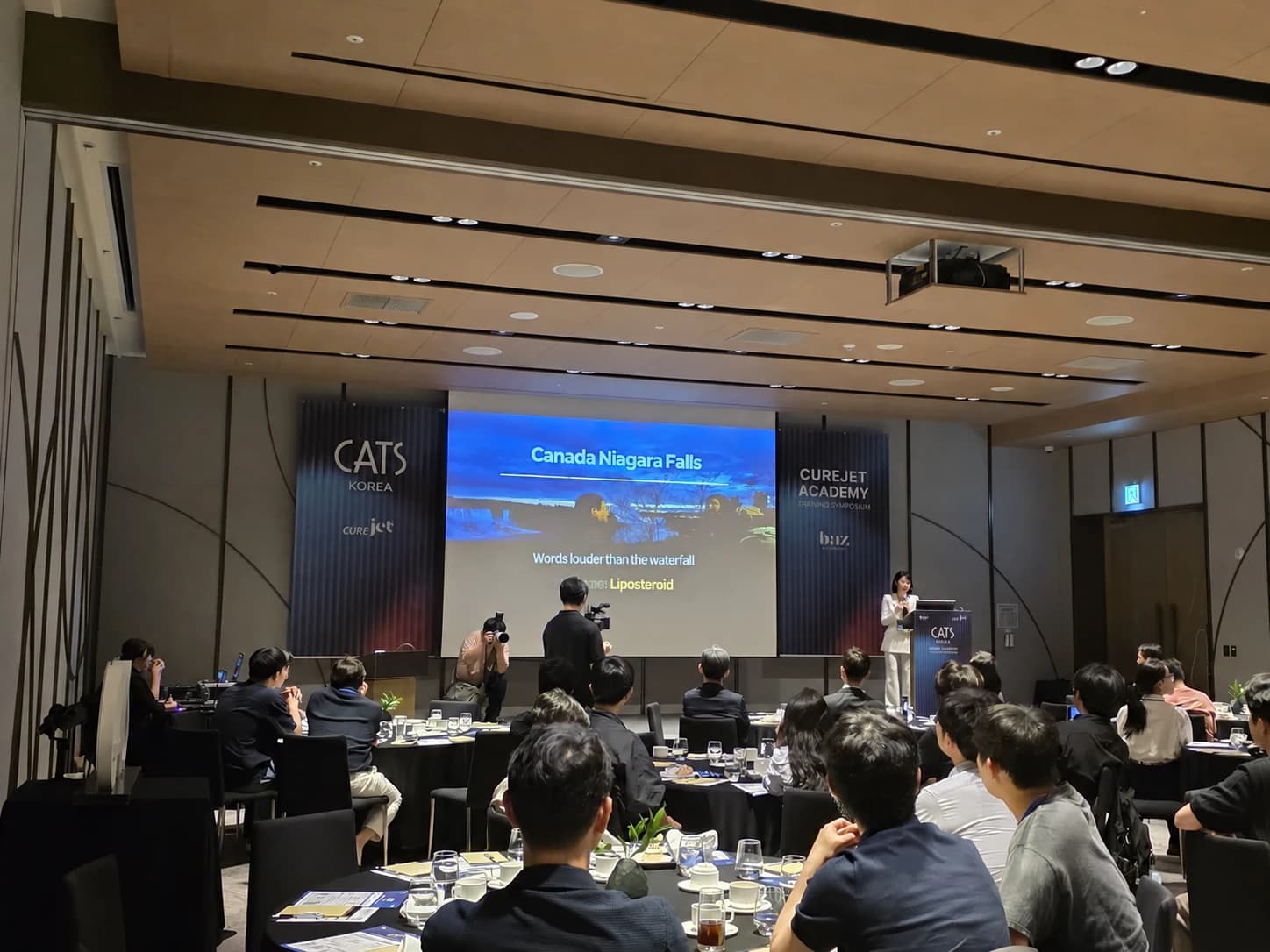
For people hesitant because of pain, this article explains the concept of delivering medication into the scalp without a needle, using academic literature. Understanding the options can help avoid unnecessary time, expense, or inappropriate choices.

1. Why consider delivering medication into the scalp rather than applying it?
Oral and topical medications exist, so why discuss injections?
Topical treatments such as minoxidil are convenient, but the scalp’s barrier makes drug penetration difficult. A review describes limitations of conventional approaches—topical treatment, oral medication, and transplantation—including irritation, systemic absorption, invasiveness, and cost. Transdermal delivery methods are being studied to improve access to hair follicles by delivering medication within the skin (PMC12389719, 2025).
The analogy is bringing a delivery inside the house rather than leaving it at the door.
2. The needle itself can be a barrier
A needle is the most common way of injecting scalp medication. A US survey cited in a 2023 review reported needle fear in approximately 24% of adults and 63% of children (Bekkers VZ et al.).
Hair-loss injections often require repeated sessions. A person may tolerate the first session but postpone later appointments because of the remembered pain. Treatment adherence can suffer.
3. Delivering medication without a needle
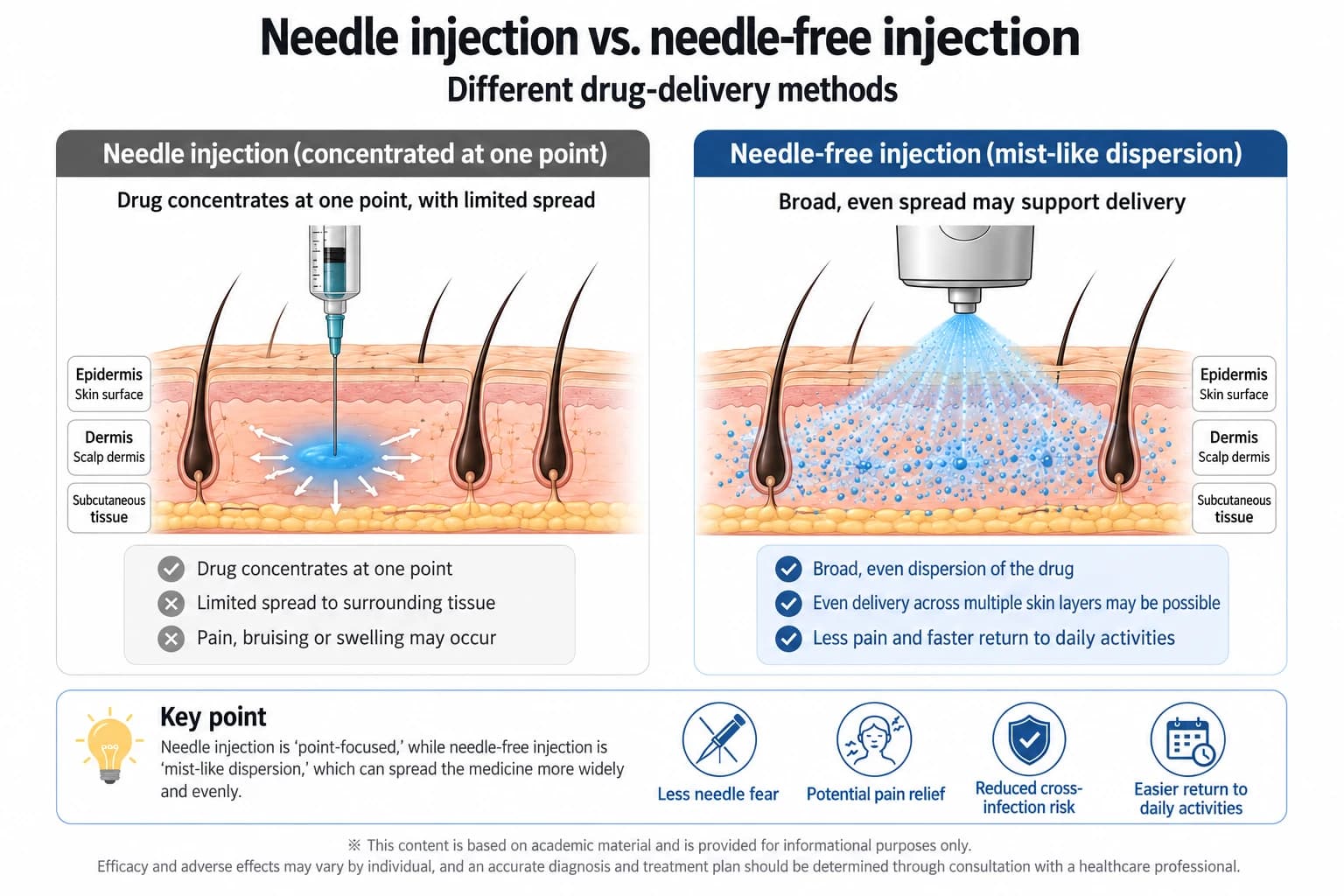
Needle-free jet injectors use a very narrow, high-speed, pressurized stream of medication to pass through the skin rather than a needle puncture.
The original article compares a conventional injection to pouring water at one point, and needle-free delivery to spraying it more widely with a mister.
A review reports more even intradermal spread with jet injectors than conventional needles. It also discusses them as an option for patients with needle fear and the absence of needle-stick injury and needle-related cross-infection risks (Bekkers VZ et al., Drug Deliv Transl Res, 2023).
Some comparative studies included in the review reported lower pain scores with jet injection. Examples cited in the original include local-anesthetic VAS scores of 1.1 versus 4.4, and a hyperhidrosis study in which half of the needle group reported intolerable pain versus 0% of the jet-injector group. These findings depend on the indication, device, and settings.
The review includes four studies of jet-injected medication for alopecia areata, with reports of regrowth and substantial variation between studies. A separate study of 541 people receiving dutasteride mesotherapy reported effects with generally mild, self-limiting adverse reactions (PMID 35816059, 2022).
4. Needle-free does not mean free of adverse effects
Scalp drug delivery can cause adverse effects with either method. Reported reactions include local redness, pain, increased or decreased pigmentation, bruising or hematoma, swelling, and itching. Many were described as mild, but responses vary.
Some reports involving older spring-powered injectors describe rare, more serious events, such as temporal artery bleeding during treatment of alopecia areata.
The review discusses how modern devices with adjustable pressure and volume may permit more appropriate settings, while emphasizing the low overall quality of evidence and the need for stronger clinical studies.
Scalp mesotherapy has also paradoxically been associated with hair loss and scarring in case reports (PMID 28160387). The drug, device, and clinician therefore matter.
The original article emphasizes the combination of an appropriate medication, an adjustable device, and a specialist familiar with scalp and facial anatomy when considering safety and convenience.
Topical medication faces a penetration barrier, while conventional injections may be difficult to continue because of pain. Needle-free delivery is being studied as an alternative, but effects and safety vary with the drug, device, and operator.
I often tell my patients, “The best hair-loss treatment is one you can continue.” Pain that leads someone to stop midway can undermine treatment.
Which method fits your scalp condition and type of hair loss cannot be determined from an article alone. Direct assessment is needed.
This is an academic review for information, not a guarantee of treatment effects. Whether and how to proceed should be decided after an in-person consultation.
References
Bekkers VZ et al. Needle-free jet injector-assisted intralesional treatments in dermatology — a systematic review. Drug Deliv Transl Res. 2023. https://link.springer.com/article/10.1007/s13346-023-01295-x
Advances in Transdermal Delivery Systems for Androgenetic Alopecia. 2025. https://pmc.ncbi.nlm.nih.gov/articles/PMC12389719/
Mesotherapy With Dutasteride for Androgenetic Alopecia. 2022. https://pubmed.ncbi.nlm.nih.gov/35816059/
Hair loss at injection sites of mesotherapy for alopecia. https://pubmed.ncbi.nlm.nih.gov/28160387/
Source: Original post on Dr. Hyemi Yu’s Naver blog (Korean)
The original publication date and the website revision date are shown separately.