
JOURNAL
Neck-nodule treatment and the risk of skin atrophy
Neck-nodule treatment and the risk of skin atrophy. Source observations, research context and limitations.
This article discusses the source author’s earlier literature, cases and experiences. Research populations and limitations matter; individual diagnosis and treatment require clinical assessment.
This article records Dr. Hyemi Yu’s clinical perspective and literature discussion. Individual diagnosis and prescription require medical assessment; a statement in the original blog does not establish legal approval of this republication.
Treating a nodule while protecting nearby tissue
The source discusses persistent neck nodules after Juvelook and concern about depressions or irregularity following attempts to treat them.
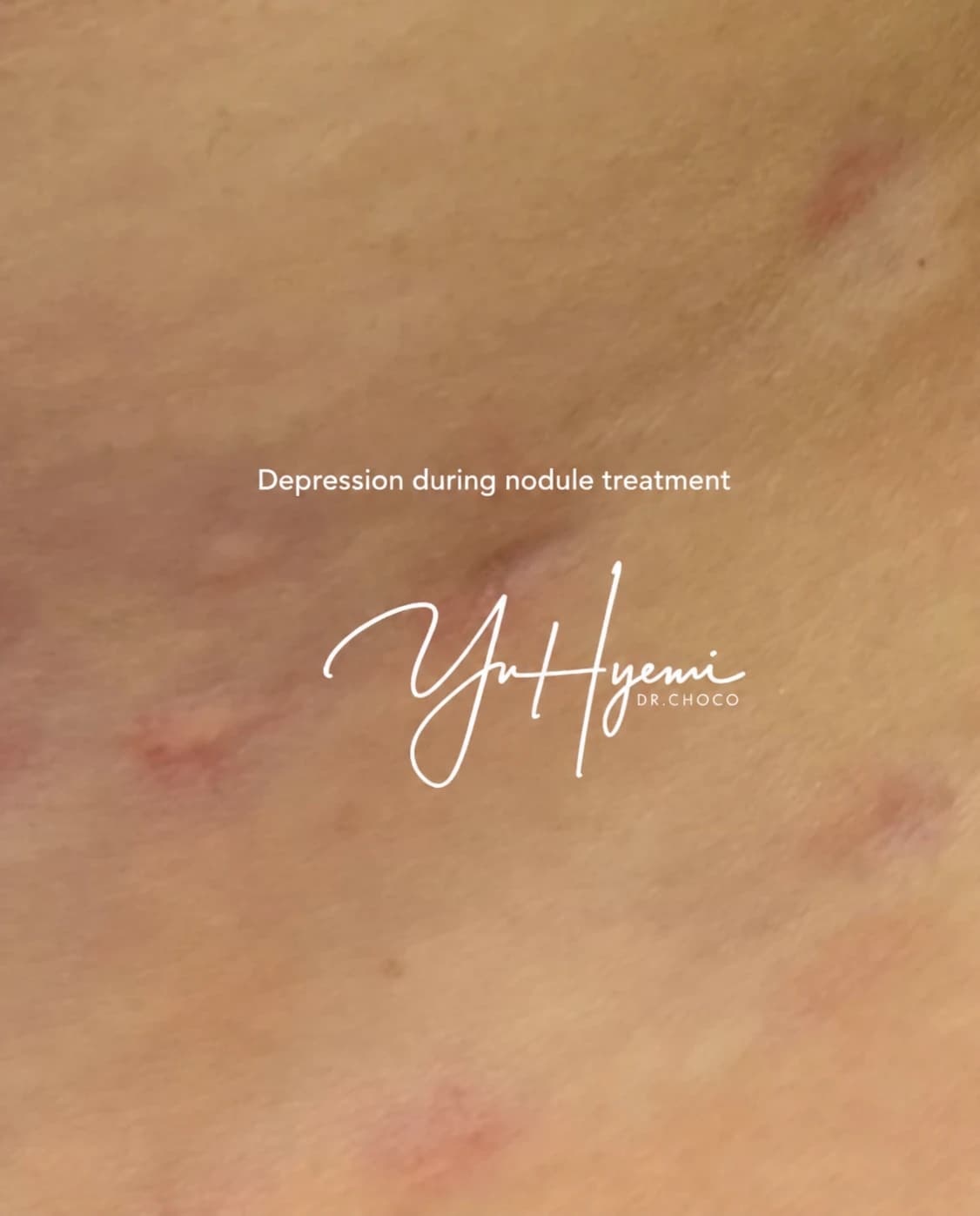
Some people in the source had persistent firm lesions or contour changes months after their original treatment. Triamcinolone can cause skin or subcutaneous atrophy. Hyaluronidase has a different role: it acts on HA and does not directly dissolve PDLLA. These agents’ indications and adverse effects should not be merged.
The author also records variable changes after CO₂ or other treatments, including cases with residual depressions or increased visibility. Those observations do not establish a uniform mechanism or response.
The source describes using ultrasound and combinations including RF needles, hydrodissection and hyperbaric oxygen, with removal considered in selected unresponsive cases. The relative contribution and evidence for each require separate review; this is not an established combination protocol.
Material preparation, anatomy and tissue condition may influence risk. Treatment goals should include symptoms, function and appearance, with realistic discussion of persistence, bruising, pigmentation, atrophy and other risks rather than removal at any cost.
Source: Original post on Dr. Hyemi Yu’s Naver blog (Korean)
The original publication date and the website revision date are shown separately.