
JOURNAL
A physician’s two-month personal account of semaglutide
A physician’s two-month personal account of semaglutide. Source observations, research context and limitations.
This article discusses the source author’s earlier literature, cases and experiences. Research populations and limitations matter; individual diagnosis and treatment require clinical assessment.
The author records trying semaglutide personally to understand the experience before discussing it with patients. Personal use does not establish general efficacy or safety, even when the writer is a physician.
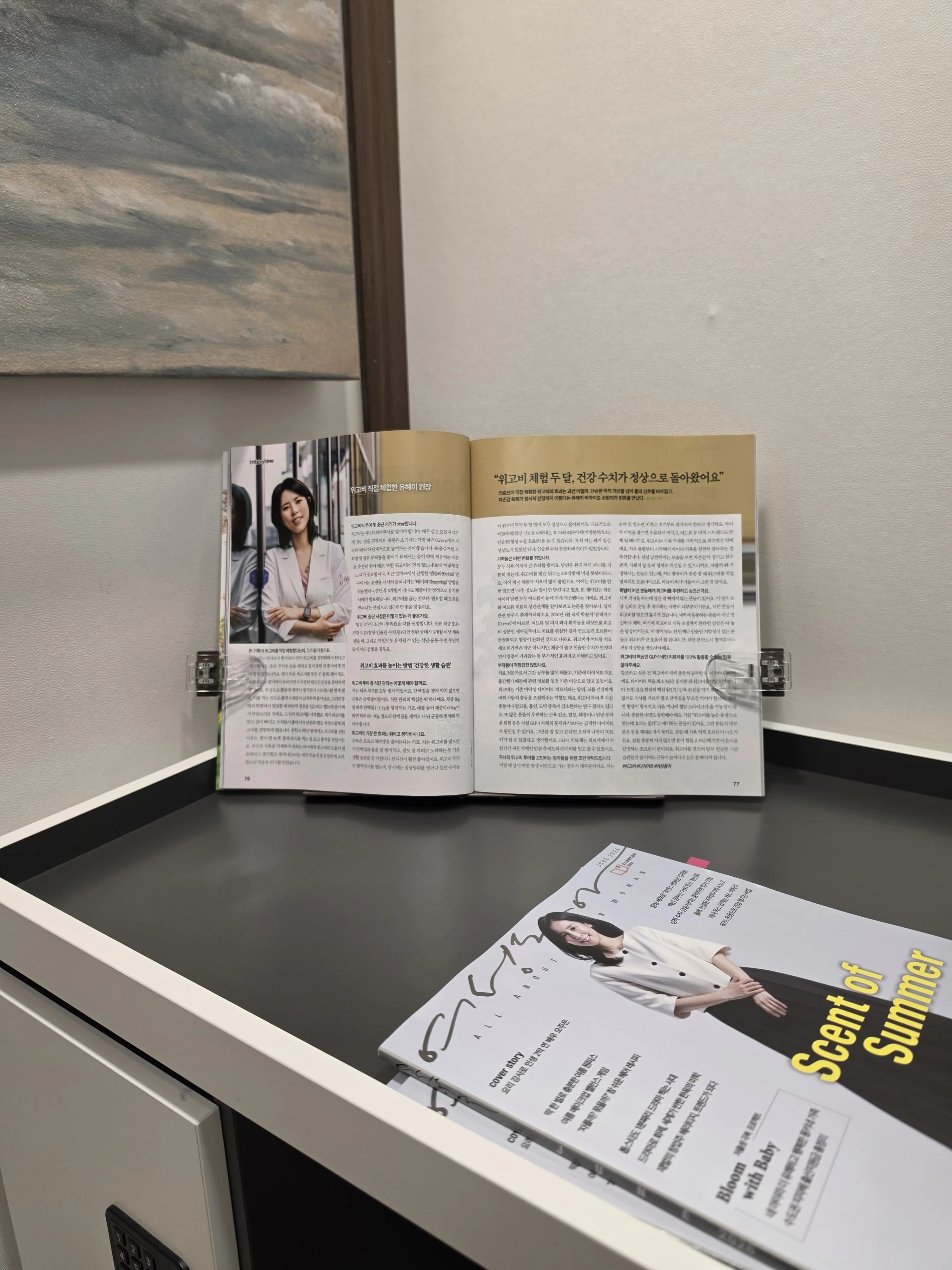
The source refers to an interview in the June 2026 issue of Women’s Donga. Reuse of the interview and related images requires permission review.
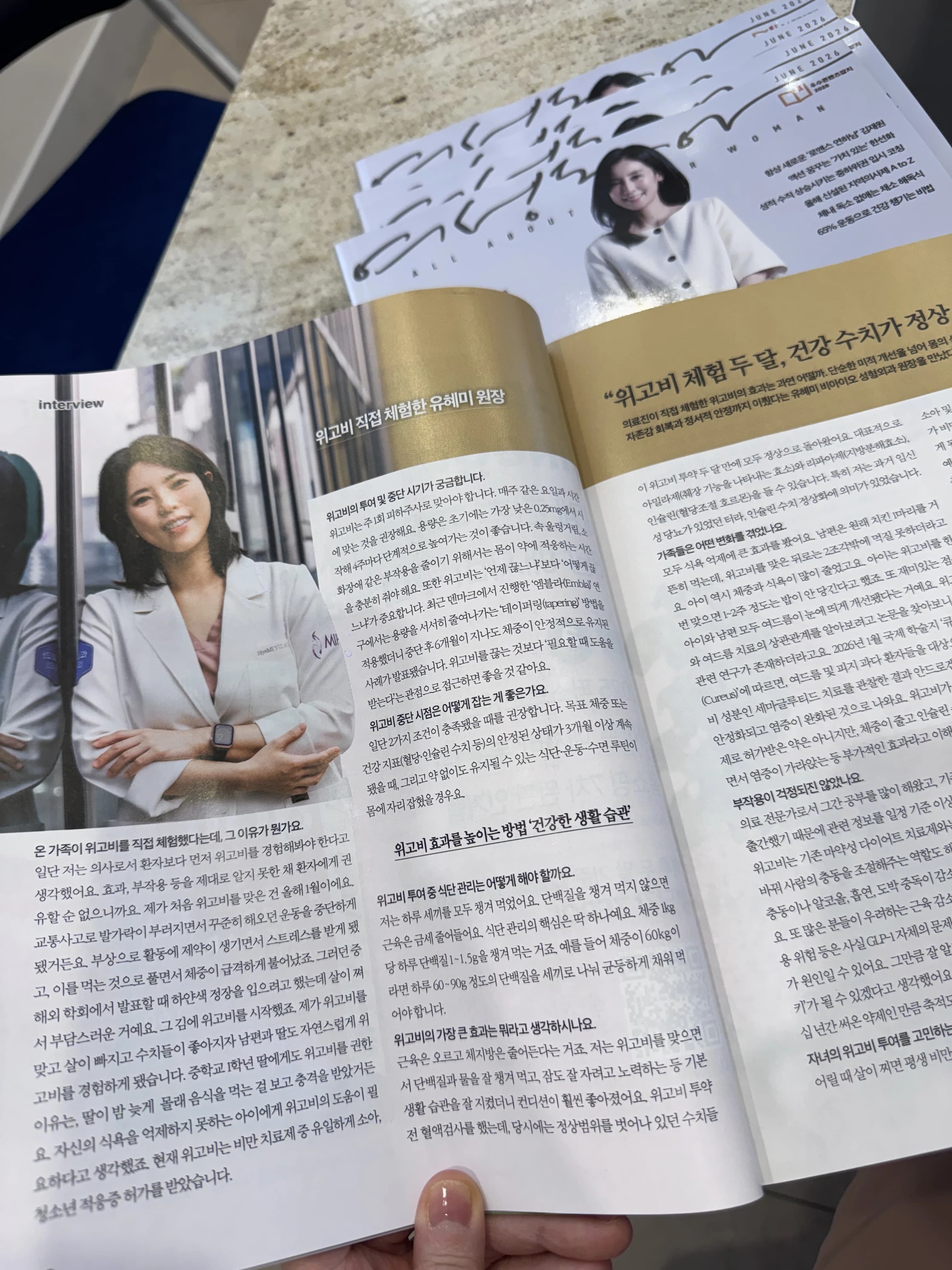
The original lists a former BIO affiliation, surgical specialty, media appearances, lectures, papers and books. These are historical claims that require verification rather than current contact or approved credentials.
The author’s experience and published research should be read separately. Neither a title nor a personal trial removes uncertainty.

Changes reported by the author
The author describes a toe fracture after an accident, reduced activity, increased eating and starting semaglutide before an overseas presentation. Over two months, some previously abnormal blood markers reportedly changed, including insulin-related values in the context of a history of gestational diabetes. These are individual observations without a controlled comparison.
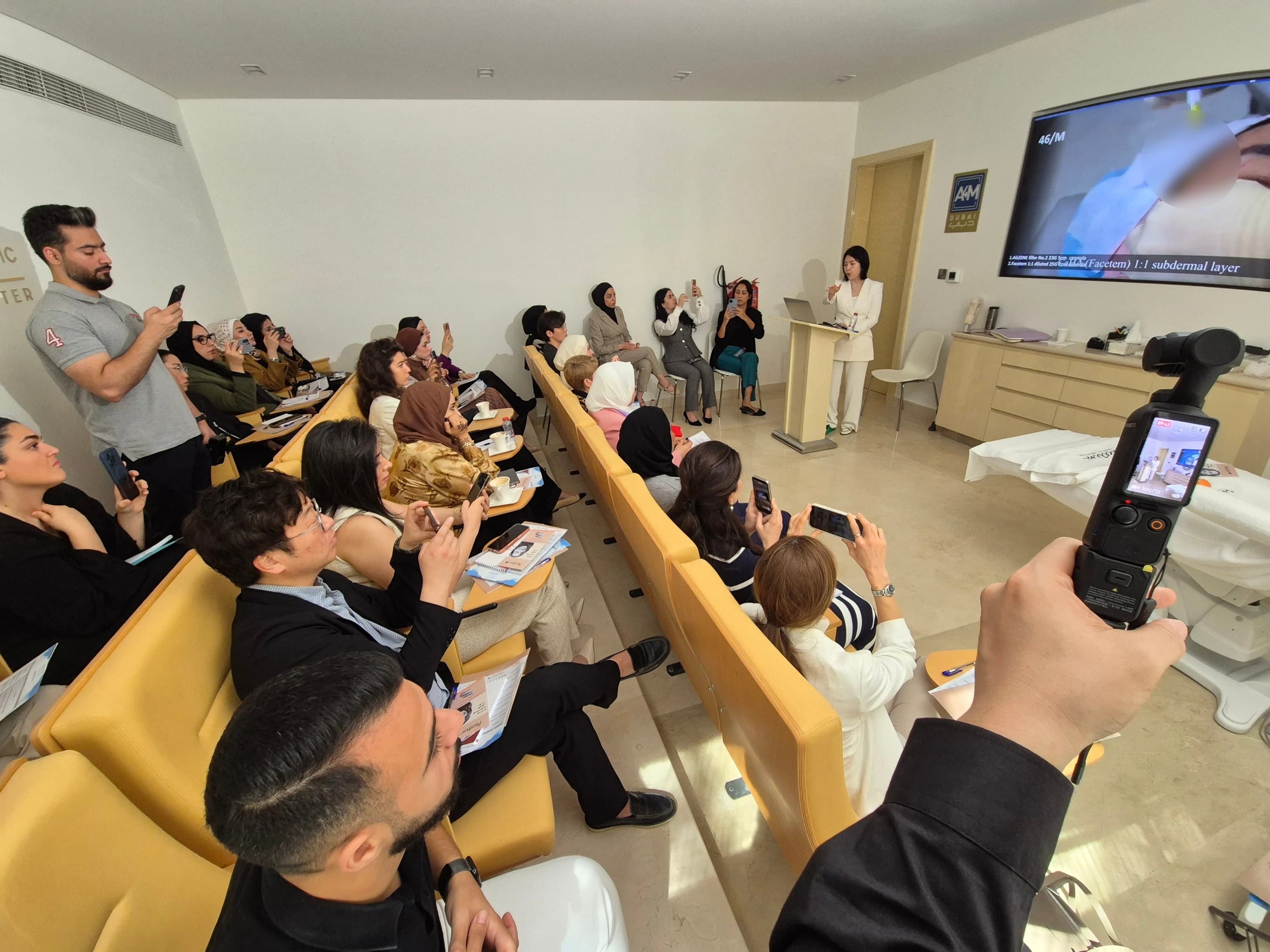
Source caption: the author presenting in Dubai in a white suit after a period of reduced activity following a fracture.
Withdrawal and long-term planning
The source cites an Embla real-world conference report involving roughly 2,200 people and discusses lower average doses and tapering. The evidence is observational and does not prove an optimal dose or a universal withdrawal plan. The author’s three-month stability and lifestyle criteria are personal clinical practices, not established stopping rules. Continued therapy may be appropriate for some people.
Nutrition, sleep and muscle in maintenance
The source emphasizes adequate nutrition, sleep and muscle. Protein examples of 1–1.5g/kg/day or 60–90g at 60kg depend on the individual, including kidney health. Detailed dose-escalation amounts and four-week steps were omitted. Prescribing follows current labeling and clinical assessment; regain is not explained by muscle loss alone.
Skin observations
The author recalls acne or sebum changes in family members and cites a 2026 Cureus observational paper of 110 adults with follow-up discussed over 24 months. Semaglutide is not presented as an approved acne treatment. Medication, weight and metabolic changes cannot be separated without stronger controlled evidence.
Before starting treatment
Understand the expected benefits, risks, eligibility and monitoring with the prescribing clinician. A personal account cannot determine whether the medicine is appropriate for another person.
The author’s closing reflection
The source describes semaglutide as a tool affecting appetite and metabolism. That metaphor does not guarantee correction of every metabolic problem.
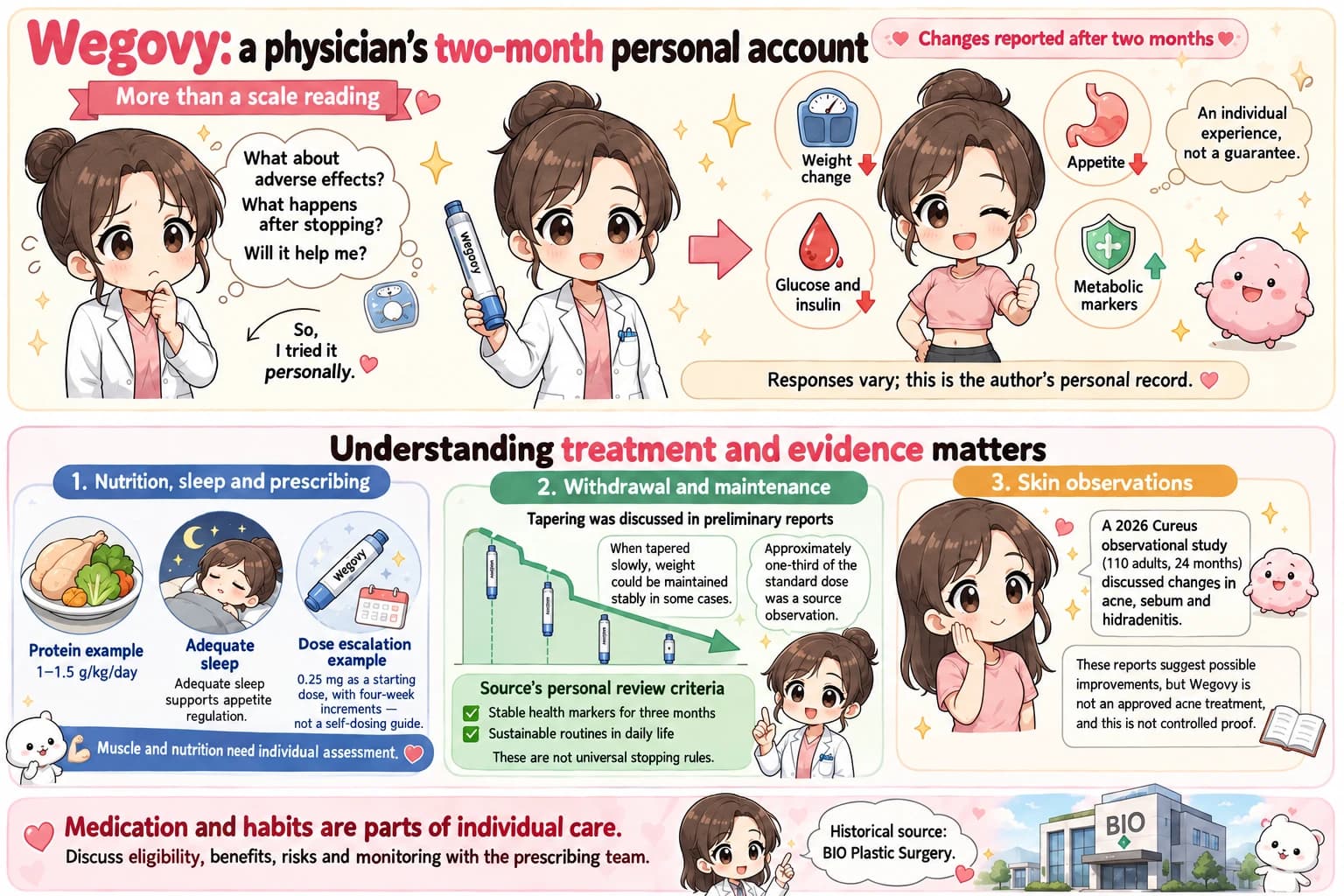
This is an individual physician’s account, not proof of general safety or efficacy. Starting, maintaining or changing treatment requires the prescribing team.
Sources linked by the original
Embla conference/institutional report: https://www.eurekalert.org/news-releases/1044340
Jabin A, et al. The Impact of GLP-1 Agonists on Acne, Hidradenitis, and Sebaceous Activity. Cureus. 2026;18(1):e101212. https://pmc.ncbi.nlm.nih.gov/articles/PMC12884193/
Observations and conference reports are not the same as established indications.
Semaglutide is a prescription medicine. Individual history, eligibility, benefits and adverse effects require clinical assessment; this account does not replace care.
Source: Original post on Dr. Hyemi Yu’s Naver blog (Korean)
The original publication date and the website revision date are shown separately.