
JOURNAL
Reflections on sleep and weight management
Reflections on sleep and weight management. Source observations, research context and limitations.
This article discusses the source author’s earlier literature, cases and experiences. Research populations and limitations matter; individual diagnosis and treatment require clinical assessment.
Sleep, activity and a personal account
The source draws from the popular book Powerful Sleep: Secrets of the Inner Sleep Clock by Kacper M. Postawski and reflects on exercise, temperature and sleep. Feeling sleepy after exercise is a personal response; a 30-minute treadmill session is not a universal treatment for insomnia.
The source compares daily temperature variation with a diving board: a larger drop is imagined to lead to deeper sleep. This is an illustration, not a validated measure of sleep depth or a prescription.

The source calls the daily pattern a circadian or sleep clock. Lack of a workout does not mean the body’s circadian rhythm becomes flat.
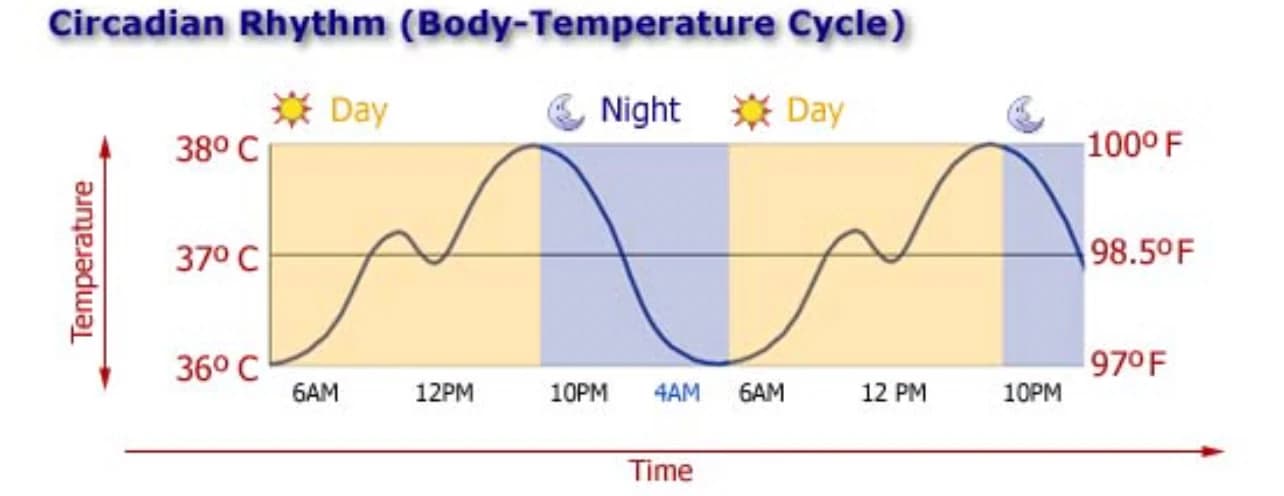
The original mentions a 36–38°C graph and early-morning low temperature, then describes the author’s 15–20-minute morning run. That graph does not establish a universal range or required routine. Walking can benefit health and energy expenditure; exercise does not need to reach 40 minutes before fat is used.
Sleep difficulties have multiple causes and cannot be assigned simply to daytime behavior. Late vigorous activity may affect some people differently from others; finishing exactly three or four hours before bed is not a universal rule. Adequate recovery and a sustainable schedule matter, while persistent sleep problems or exercise-related illness warrant assessment. The source’s old fundraising link was removed.
Source: Original post on Dr. Hyemi Yu’s Naver blog (Korean)
The original publication date and the website revision date are shown separately.