
JOURNAL
Surgical scars: healing and treatment timing
Surgical scars: healing and treatment timing. Source observations, research context and limitations.
This article discusses the source author’s earlier literature, cases and experiences. Research populations and limitations matter; individual diagnosis and treatment require clinical assessment.
After surgery, a scar may gradually become thicker, red or raised even when the operation itself went well. Patients often ask whether they could have done something differently during healing.
Historical source caption: Dr. Hyemi Yu during her earlier BIO Plastic Surgery affiliation; an Oxford lecture on Radiesse and scar treatment. The graphic also lists a book, a 2026 publication and television appearances. These historical credentials require verification and are not current booking information.
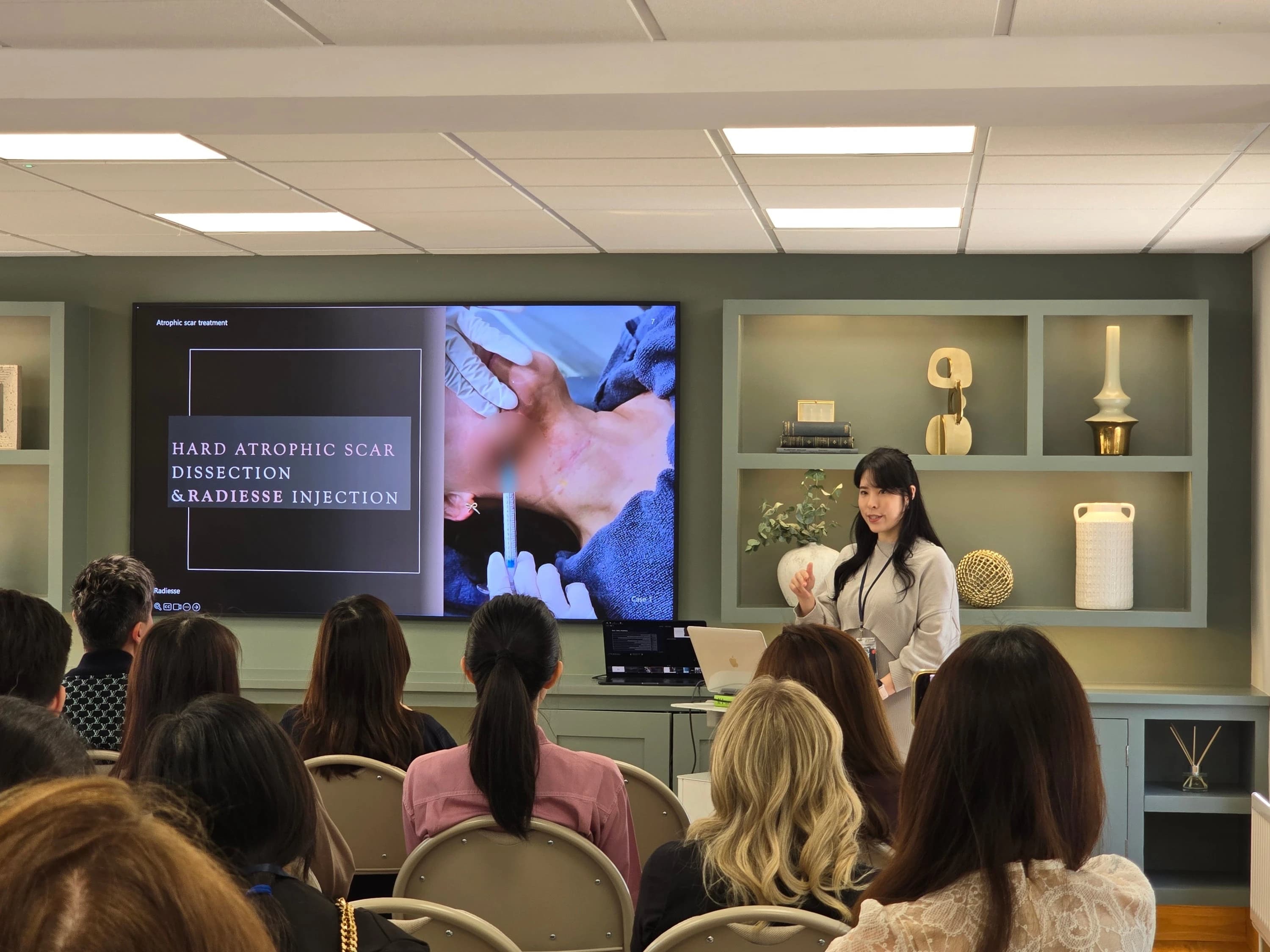
Patients sometimes say they were told that surgery went well but did not understand scar care until the wound became thick. Drawing on clinical experience, the source discusses research into botulinum toxin and postoperative scarring. This is an introduction to a developing field rather than a promise of prevention.

Tension and scar formation
Muscle movement can place repeated tension across a healing incision. Mechanical forces may contribute to excessive collagen deposition and hypertrophic scars. Reducing tension is one consideration in early wound care.
What has been studied?
A 2021 Scientific Reports split-scar randomized trial cited by the source compared higher and lower doses of botulinum toxin A within the same surgical scar, injected immediately after the procedure, with assessment six months later. The source identifies the paper as PMC8249595.
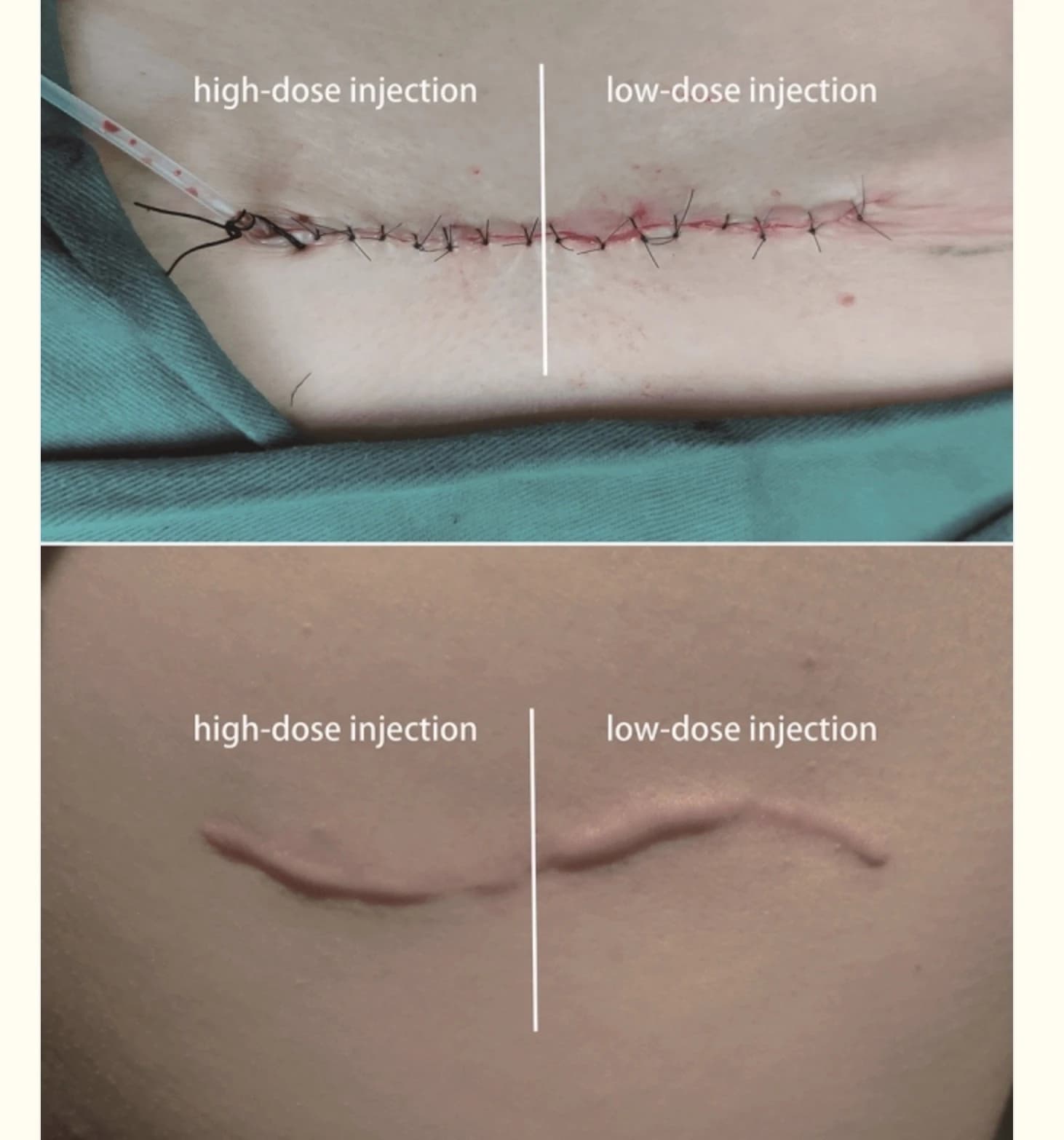
The source quotes the study as finding better postoperative scar appearance on the higher-dose side, within the studied therapeutic range, than on the lower-dose side. This dose comparison does not mean that more toxin is generally better or that every surgical scar should receive it.
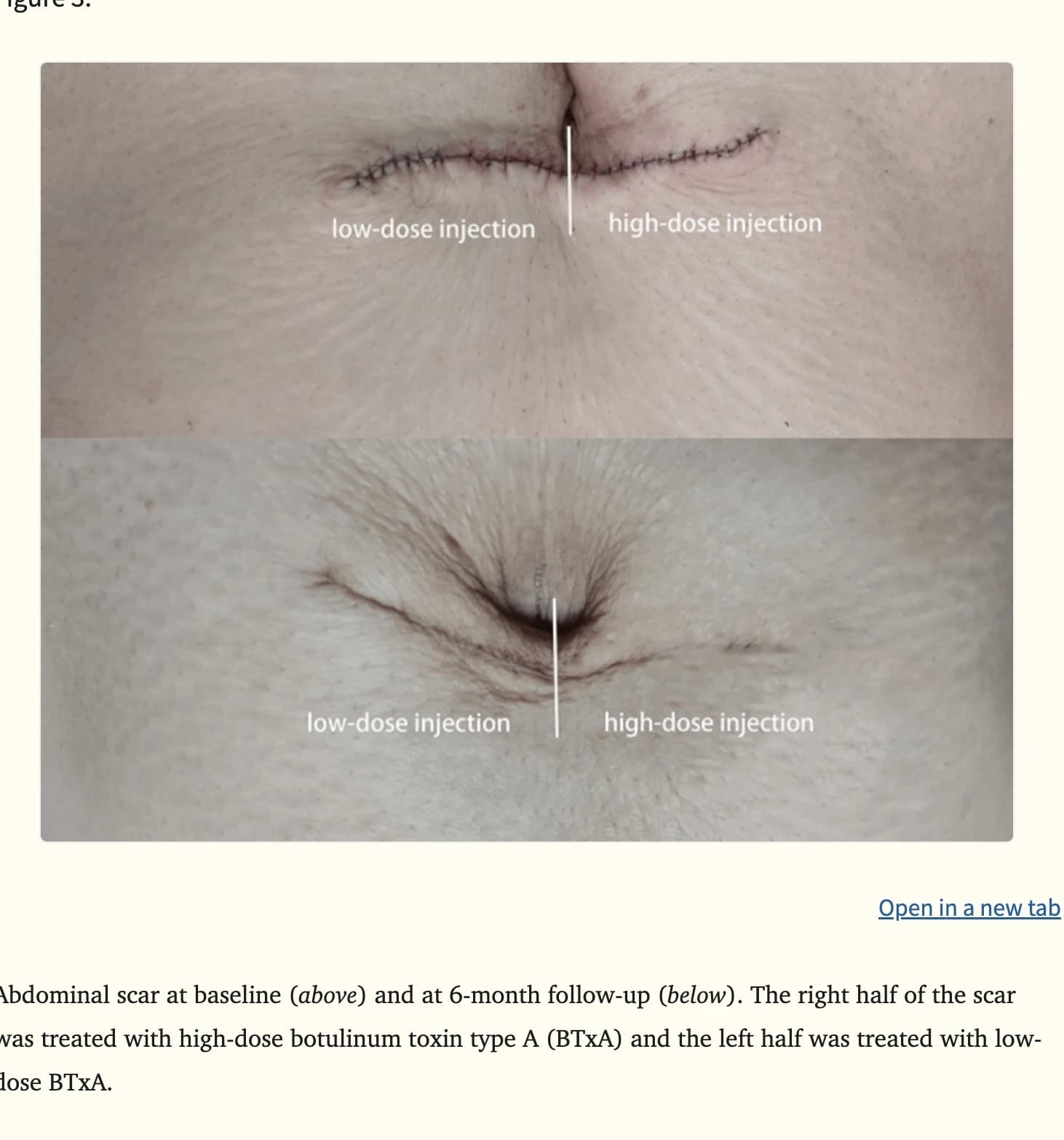
The source reports statistically significant differences in scar width and incision visibility on the modified Stony Brook Scar Evaluation Scale, with p values below 0.01, and greater patient-rated satisfaction on a visual analog scale.
Proposed mechanisms beyond muscle relaxation
The patients had cutaneous lesions removed without direct muscle surgery. Changes observed after intradermal injection led the authors to discuss possible cellular mechanisms in addition to tension reduction. The source cites earlier work by Xiao and colleagues.
Earlier experimental studies proposed effects on fibroblast proliferation, cell death and differentiation into myofibroblasts. These proposed mechanisms do not establish the explanation for every patient’s scar response.
The source discusses possible inhibition of excessive fibroblast proliferation, reduced collagen accumulation and modulation of TGF-β1-related signals. These are mechanisms under investigation.
Timing in the research
The cited trial used injections immediately after closure. Other reports discussed injection from immediately after surgery to nine days later. Early healing is an important phase, but missing a particular date does not make a scar permanently untreatable. Established scars require assessment according to their condition.
Botulinum toxin for scar prevention remains an area of research. Responses depend on skin, location, scar type and other health conditions. Discuss an individual plan with the treating clinician.
Reference as cited in the source, with author details requiring reconciliation: Chen Z, Chen Z, Pang R, et al. The effect of botulinum toxin injection dose on the appearance of surgical scar. Scientific Reports. 2021;11:13670. PMC8249595.
This article introduces research and does not guarantee a treatment outcome or replace individual medical assessment.
Materials linked by the source
Source: Original post on Dr. Hyemi Yu’s Naver blog (Korean)
The original publication date and the website revision date are shown separately.